
Ceramic Plate CNC Cutting Machine
Specify ceramic plate CNC cutting from material composition, plate condition, finished dimensions and support requirements, with tooling and cut quality confirmed using sample plates.

Specify ceramic plate CNC cutting from material composition, plate condition, finished dimensions and support requirements, with tooling and cut quality confirmed using sample plates.

Define foam ceramic profile processing from the section drawing, material sample, support and tooling sequence, then confirm forming and finishing duties with a representative trial.

Review mobile slab lifting from surface contact, slab mass, pickup orientation, aisle geometry and placement requirements before confirming the vacuum trolley configuration.

Review integrated ceramic plate cutting and edge processing from material state, finished dimensions, restraint and discharge requirements, then compare connected stations with separate operations for the intended product mix.

Evaluate bridge cutting for foam ceramic blanks by cut geometry, table movement, locating references and support conditions, with tooling and finished quality confirmed using the actual material.
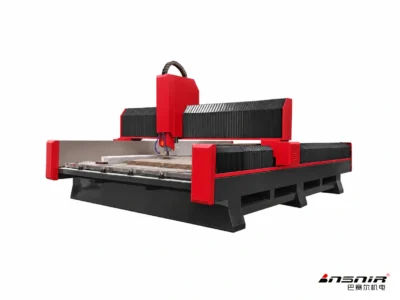
Review foam ceramic engraving from relief depth, feature geometry, material samples and finished quality, then confirm tooling, support and workholding against the actual component before selecting equipment.
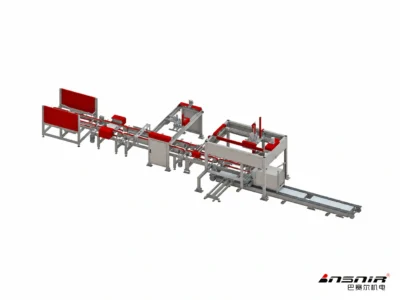
Review tile unpacking from the actual incoming package, removable protection layers, required output orientation and waste route, then confirm automatic opening duties with representative pack samples.

Configure tile stack formation around incoming formats, tiles per stack, surface contact, support and discharge conditions, with sample trials and line interfaces defined before equipment selection.

Compare round-table cutting, profiling and polishing duties from finished diameter, edge section, workholding and tooling before selecting a tabletop processing route.

Review operator-led stone cutting from slab support, straight and angled cuts, blade selection and workshop handling before confirming the machine configuration.
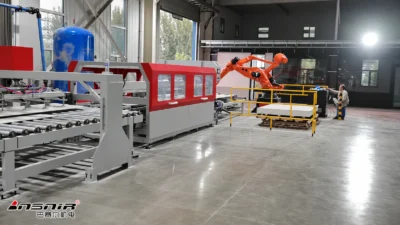
Review tile and slab inline cutting from material condition, cut plans, support and upstream/downstream interfaces before confirming the configured line.

Compare equipment routes for ceramic tile, stone, waterjet cutting, handling, packaging and specialist production, starting from the incoming material, required finished product and factory interfaces before selecting individual machines.
Scope concrete curb equipment from the product family, mix, forming method and approved curing route, comparing individual machine responsibilities with integrated transport, access and factory utility requirements before line selection.

Compare flat ceramic membrane manufacturing with ceramic plate cutting by product composition, process state, finished element and handling needs, then define the appropriate production stages and line interfaces.

Compare foam ceramic cutting, engraving and bridge cutting duties from the actual material and finished drawing, with support, tooling, fragile sections and visible finish guiding the equipment review.
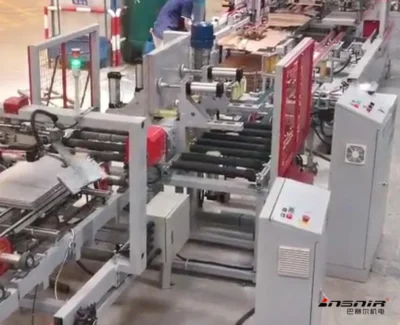
Compare conventional tile, long narrow tile and large slab packaging routes by support, protection, pack design and logistics handoff, with film application and unpacking treated as separate duties.
Define an automated concrete curb production route around product geometry, concrete recipe, forming, supported transport and approved curing requirements, with process and equipment responsibilities confirmed before line configuration.
Coordinate flat ceramic membrane manufacturing across extrusion, cutting, storage, coating, firing, inspection and packaging, with process timing, product handling and supply boundaries defined for the actual membrane element.
Plan foam ceramic cutting around material composition, raw and finished dimensions, edge quality and workpiece support, with tooling and handling confirmed through representative material trials before production commitments.

BASAIR reviews project-configured thick-tile lines combining upper-and-lower cutting with single- or multiple-saw arrangements and single- or double-side grinding. Select the route from your material, finished section and support requirements.

BASAIR supplies project-configured edge-polishing machines for tombstones and stone components. Compare edge profiles, workpiece support, tooling sequences and machine configurations for your material and production requirements.

Ceramic Tile Waxing & Surface Treatment Machine This equipment route begins only after the tile surface is clean and dry enough for the selected treatment. Its responsibility is to meter and apply an identified surface

Choose the cutting route from the finished tile Choose dry scoring for suitable straight splits, wet multi-blade cutting for repeat strips, or compare CNC positioning for mixed sizes. Review my tile cutting job A production
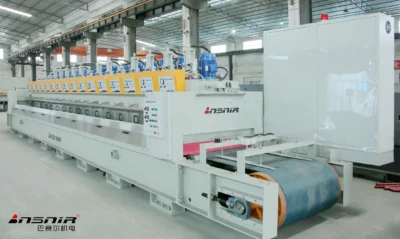
Choose the surface finish and the line connection Plan a polishing line around the incoming tile, the finish you need and where it joins your existing line. Review my tile finish and line Visible machine:

Define the system from water sources, reuse duties and discharge limits Input A plant water balance covering each wastewater stream, flow and peak, solids, particle size, chemistry, operating schedule, current tanks and the water-quality requirement

A belt filter press is a continuous-feed mechanical dewatering machine that brings conditioned slurry through gravity drainage and progressively applied belt/roller pressure, then discharges separated cake while the belts are washed for reuse. Feed conditioning,

Project evaluation guide · continuous solid–liquid separation Vacuum Ceramic Disc Filter Project Evaluation A vacuum ceramic disc filter is not selected from slurry flow alone. It is a continuous filtration route that must be checked
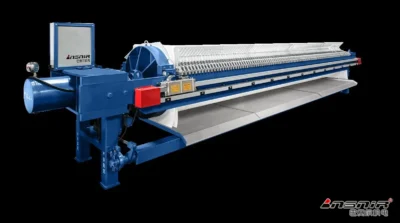
A filter press dewaters slurry in batches by filling a plate pack, separating liquid through filter media and forming solids into cakes. The press is one node in a slurry and process-water system. It must

An explosion-protected dust-collection project is an engineered hazard-control review, not a collector model that can be approved from its name or photograph. The review begins with the actual dust, process, ignition sources, enclosure and jurisdiction,
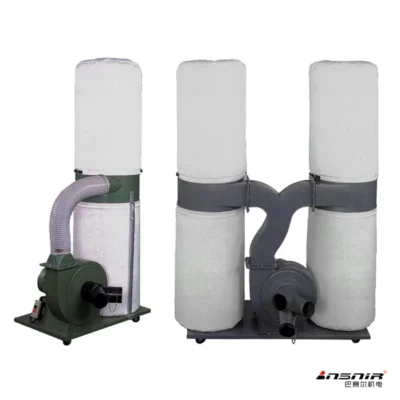
A portable dust collector is a local dust-capture arrangement for one workstation, or a small number of changing pickup points, whose hood, hose, airflow, pressure duty, filtration and collected-dust handling are selected together. Portability here
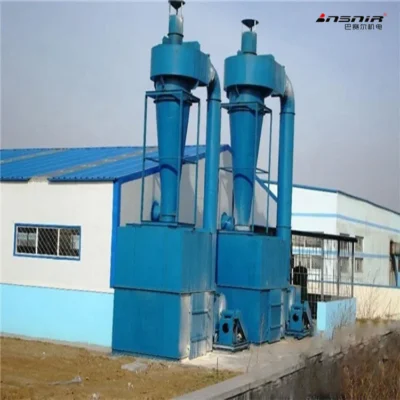
A cyclone dust collector separates suitable particles by directing the dust-laden air into a rotating flow and discharging separated material from the cone. In many industrial dust systems it is a pre-separator that reduces coarse

An industrial baghouse dust collector is one part of a dust-control system that begins at the dust source and ends at collected-dust discharge. Collector size cannot be selected from machine power or factory area alone.

The intensifier is one component in the waterjet pressure system. Confirm the duty, water quality and cooling interfaces for your project. A waterjet is not complete when the cutting table arrives. The working system must

This page covers two different procurement routes. A shared-bridge dual-head waterjet is selected to run one three-axis vertical head and one five-axis head on the same machine, individually or together on matched trajectories when spacing
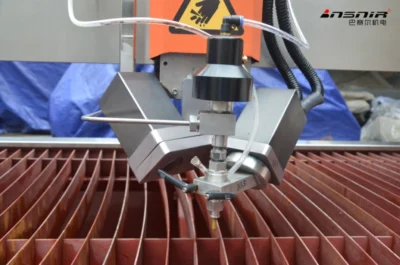
Configure a waterjet for bevels, miter joints and angled contours in ceramic tile, stone and sintered slab. Review my cut Start with your material, thickness and a drawing or target angle. Compare AB and AC
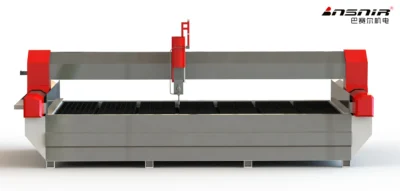
Choose this route when every programmed cut uses a head held perpendicular to the sheet. This three-axis waterjet moves in X and Y to follow straight lines or two-dimensional contours, while Z controls cutting-head height

A CNC stone machining center is selected from the actual tool paths, workholding and software flow required for holes, slots, inner openings and profiled edges. “CNC” or an assumed axis count is not enough. The

Quartz and sintered-stone sample blocks can be finished by a flexible single-edge route or by a two-stage double-edge line. The right choice depends on sample width, thickness, four-edge requirement, chamfer faces, product mix and daily

A countertop backsplash edge machine is for long, narrow front or rear upstand strips whose straight face, chamfer and small radius must be formed and polished as one repeatable edge task. It is not a
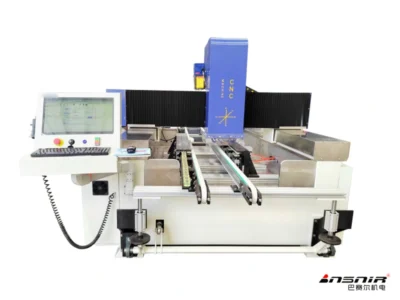
A sink inner-edge polishing machine starts from an already cut opening and turns that blank edge into the specified finished profile. It is not the machine that decides the sink outline, cuts an arbitrary new

Milling-head detail from the dedicated cut-and-mill reference. It illustrates opening work, not a complete machine layout or a finished polished sink edge. 1. Define the hole blank before asking for a finished sink edge This

1. Decide whether the 45° edge is full-length or retained at the ends A sintered-stone mitering machine prepares a 45° joining edge. The first decision is not speed or head count: it is whether the
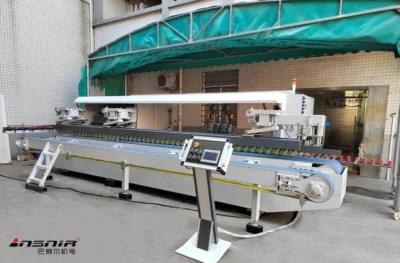
1. Define the visible outside edge before choosing heads This page covers external countertop-edge shaping and polishing: straight edges, specified upper/lower chamfers and selected rounded profiles. It does not cover a sink’s internal edge, retained-end
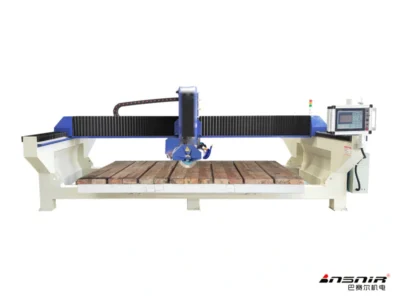
Choose a countertop cutting machine from the finished drawing, not from the machine name alone. Send the slab material and size, finished countertop drawing, sink and tap openings, edge and surface requirements, required output, and

This machine family finishes the two straight side edges that can remain after the main stone profile has been shaped and polished. It is not a substitute for creating or polishing the front contour. Two

This is an integrated profile line: four shaping positions create the continuous contour and eight polishing positions refine that shaped face. It differs from a shaping-only machine and still does not automatically finish the two
This machine family shapes one continuous stone profile from a straight blank; it does not complete the polishing stage. The wheel set defines the geometry, so one installed profile set produces one approved contour at
This machine family processes square-section stone columns and baluster blanks one face at a time. A complete four-sided part requires four controlled passes with consistent indexing between faces. It is not a rotary lathe or

This machine family wet-polishes the top surface of stone mosaic after the pieces have been assembled on mesh or otherwise bonded into a stable sheet. It is not a loose-chip tumbler, mosaic cutting machine or

This machine family is for wet polishing the top face of small stone strips and pieces—not for polishing a vertical edge. BASAIR can collect the application, define the line interfaces and coordinate the partner configuration.

A stone surface polishing line is the finishing stage after the slab has been made sufficiently flat and consistent in thickness. Its job is to carry the face through a controlled abrasive progression under repeatable

Calibrating removes controlled stock to bring a stone or quartz workpiece toward a consistent thickness and flatter face before final polishing. This page keeps two partner machines separate: a wider two-head YSG family and a
A thickness splitter divides a narrow thick strip into thinner blanks through its thickness. The YSQZ-150 reference uses four saw heads—two from each side—to create the split. The resulting faces can retain a small step
This machine prepares a repeatable L-shaped stone blank with one horizontal and one vertical saw station. It is a dedicated blank-making step for corner or line work. It is not a general promise to cut

Use this page when the purchasing task is repeatable straight subdivision of large slabs—not variable-angle bridge-saw work or small-tile multi-blade production. Small tiles, mosaic pieces and narrow-strip multi-blade cutting belong to the separate E105 Multi-blade
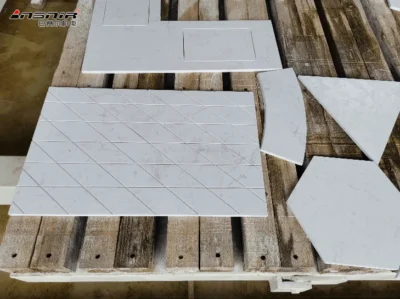
Match slab geometry to a confirmed bridge-saw configuration Start with your slab and cut drawing. Verify which cuts need blade tilt, rotation or milling. Review my slab drawing A BASAIR bridge-saw arrangement with bridge, table

Protect finished tile surfaces before handling and packing Input Clean, dry tiles; the approved protective-film roll; tile size, thickness, finish and orientation; film substrate, width, thickness, adhesive and roll data; target face, edge margin and
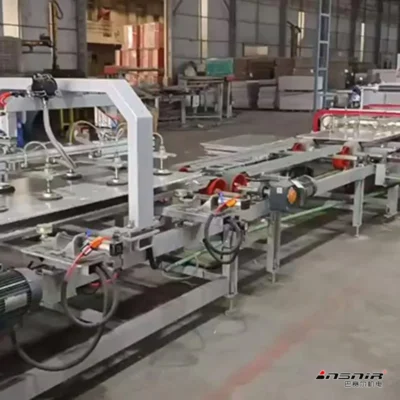
A large-slab packaging line is a project-configured route that protects a defined slab through support, lifting, wrapping or protective materials, packing, pallet/trestle/crate handoff and final logistics. The slab dimensions alone do not determine the line:
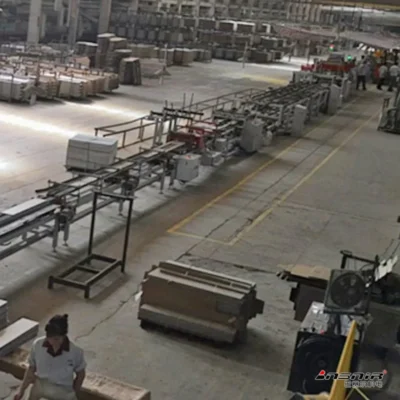
Long and narrow tiles need a packaging route built around span, support spacing, edge exposure and the way a slender pack is lifted and stacked. BASAIR coordinates the buyer’s product, package and factory interfaces; the
Define the tile range and the finished pack. Then agree how it leaves the line. Plan my tile packaging line Source layout reference showing format change, packing, strapping, stack transfer, wrapping/turning and robot palletizing stages.