
Project evaluation guide · continuous solid–liquid separation
Vacuum Ceramic Disc Filter Project Evaluation
A vacuum ceramic disc filter is not selected from slurry flow alone. It is a continuous filtration route that must be checked against the actual feed, the required filtrate and cake duties, cleaning behavior, utilities, downstream handling, and the result of representative filtration trials.
This page defines the information needed to evaluate that route. It does not publish a standard model table or promise capacity, cake moisture, filtrate quality, energy use, or ceramic-slurry compatibility before engineering confirmation.
What “vacuum ceramic disc filter” means here
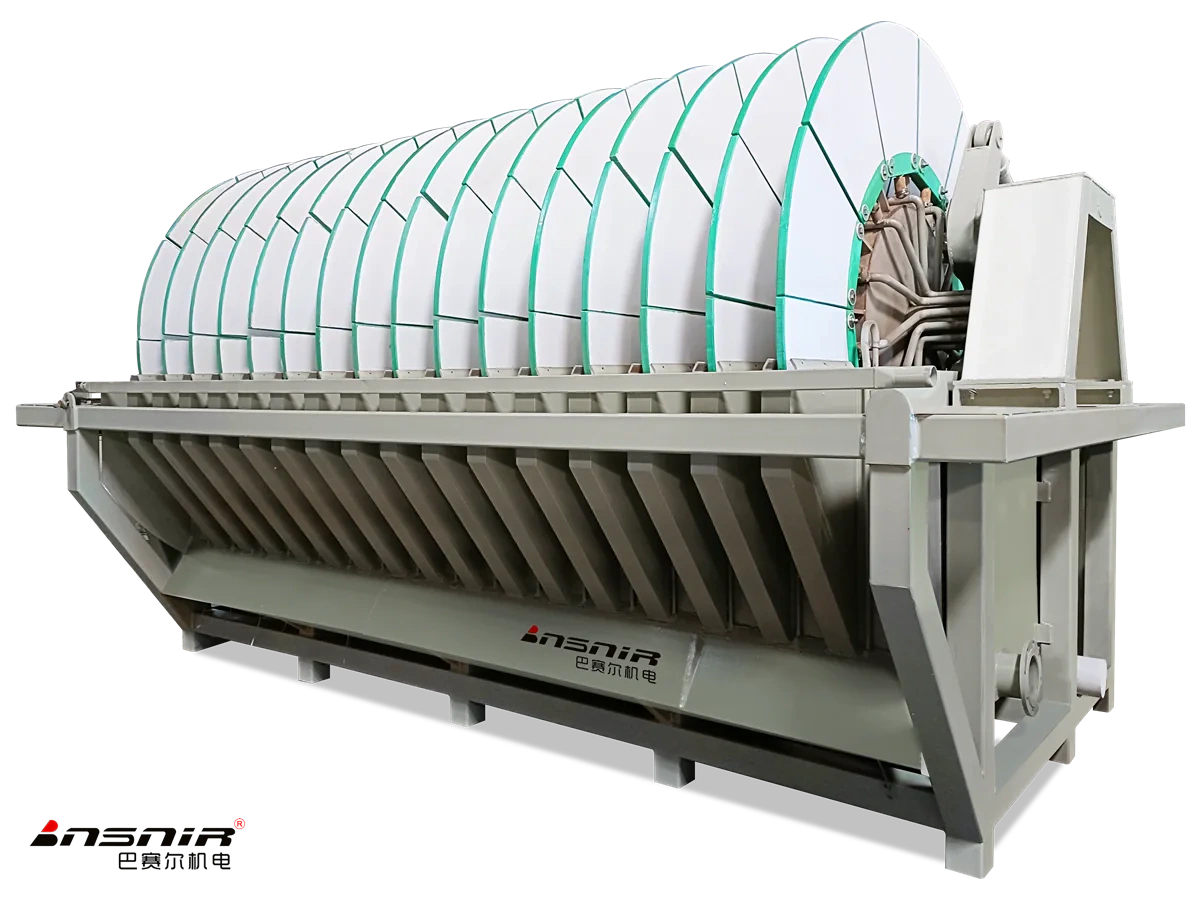
Definition: a vacuum ceramic disc filter uses multiple microporous sector plates arranged as rotating discs. The sectors pass through an agitated slurry bath; liquid is drawn through the sector media while solids form a cake on the surface. Rotation then carries the cake through dewatering, discharge, and media-cleaning zones. The exact discharge and regeneration sequence depends on the confirmed supplier design.
Identity boundary: BASAIR’s older source page combines disc images and disc-count fields with body text describing a circumferential drum medium. Those statements are internally inconsistent. This project page follows only the visible disc-sector route. It does not reuse the older drum description, RN model table, or values derived from either.
When should a project evaluate the disc route?
Put vacuum ceramic disc filtration on the shortlist when the plant expects a genuinely continuous dewatering duty and can provide a reasonably stable, well-characterized feed. Evaluation should continue only if representative testing confirms cake formation, release, filtrate behavior, and sustainable cleaning for the actual slurry.
- Potential fit: continuous feed; controlled solids concentration and particle-size distribution; manageable fluctuations; a defined destination for filtrate; and continuous cake removal that matches downstream conveying or storage.
- Test before deciding: fine or clay-rich solids, variable additives, sticky cake, changing mineralogy, uncertain media compatibility, or tight cake and filtrate targets.
- Do not assume suitability: the word “ceramic” describes the filter sectors, not universal compatibility with every ceramic-manufacturing slurry.
- Do not specify by nominal flow alone: solids loading, particle distribution, rheology, temperature, pH, feed stability, cake release, and cleaning response can change the required route and equipment scope.
Vacuum disc filtration or filter press?
The choice is a process decision, not a claim that one technology is always superior. A pilot or laboratory filtration test should use representative feed and agreed measurement methods before the project fixes either route.
| Decision point | Vacuum ceramic disc route | Pressure-filter route | Evidence needed |
|---|---|---|---|
| Operating pattern | Rotating, continuous filtration and cake discharge. | Normally a batch, dead-end cycle: fill, filter, optional squeeze or wash, open, and discharge. | Hourly and daily solids load, shifts, surge capacity, and acceptable interruption pattern. |
| Driving force and media | Vacuum and capillary action through microporous ceramic sectors; cake forms on the sector surface. | Feed pressure across cloth-covered chamber or membrane plates; the selected plate and cloth system controls the cycle. | Bench or pilot results, media compatibility, cake release, and blinding tendency. |
| Best reason to shortlist | The project needs continuous duty and the feed stays inside a tested operating window. | The duty benefits from a pressure-driven batch cycle, or feed variability and target dryness favor a configurable plate-and-cloth route. | Agreed cake, filtrate, availability, labor, cleaning, and downstream acceptance criteria. |
| Cleaning and wear focus | Sector regeneration method, scraper setting, backwash or chemical-cleaning compatibility, and vacuum-path condition. | Cloth selection, cloth washing, plate sealing, feed-port condition, and cake discharge. | Cleaning trial, reagent safety data, expected maintenance access, and wear-parts plan. |
| Decision warning | Do not infer performance from another mineral duty or from the number of discs. | Do not infer performance from plate size, pressure, or chamber count alone. | Use the same representative slurry and measurement basis for both routes. |
For a pressure-driven alternative, review the filter press for slurry dewatering. For the complete plant context, start from dust, sludge, and water-treatment equipment.
Define every process and utility interface
| Interface | Buyer must define | Engineering must confirm |
|---|---|---|
| Feed slurry | Source process, normal and peak flow, operating hours, solids concentration and variability, density, particle-size distribution, mineral or material composition, clay fraction, pH, temperature, viscosity or settling behavior, and additives. | Test-feed envelope; feed tank and agitation duty; pump and pipe sizing basis; overflow, drain, sampling, and upset handling. |
| Filtrate | Destination, reuse point, target suspended-solids or turbidity basis, allowable carryover, buffer volume, and any treatment or discharge boundary. | Filtrate receiver, separator, vacuum-pipe arrangement, monitoring point, return pump, surge and overflow scope, and acceptance method. |
| Filter cake | Target handling condition, moisture measurement method, acceptable range, destination, discharge height, storage time, and downstream conveyor, skip, truck, or reprocessing route. | Cake formation and release from tests; scraper or discharge arrangement; chute geometry; residual cake requirement; guarding and cleanup access. |
| Cleaning and regeneration | Available water quality, temperature, pressure and flow; permitted chemicals; safety-data sheets; effluent destination; maintenance window. | Backwash, chemical, ultrasonic, or combined method if applicable to the selected unit; reagent concentration and compatibility; cleaning frequency; spent-liquid containment. |
| Vacuum and air | Site elevation, ambient conditions, available compressed-air pressure and quality, and whether air is reserved for instruments or process duty. | Vacuum set, receiver and separator scope; design vacuum; seal-liquid or drain needs; and whether the confirmed discharge design requires compressed air. The old source text is not a compressed-air specification. |
| Electrical and controls | Voltage, phase, frequency, control standard, network or signal requirements, plant interlocks, and local electrical or safety rules. | Connected and operating loads, motor list, control-panel scope, instruments, alarms, permissives, emergency stops, guarding, cable boundary, and integration points. |
| Civil and layout | Available footprint and height, access route, lifting limit, floor condition, drainage, climate, and maintenance clearances. | General arrangement, operating weight and loads, anchor plan, platforms, lifting points, drains, removal routes, and installation split. |

Information required before a quotation
A useful request should contain measured data, not only a desired machine size. Submit the following as one project package:
- Process duty: source process, normal and peak slurry flow, hours per shift, shifts per day, planned availability, current bottleneck, and reason for considering a continuous route.
- Representative feed data: sampling date and point, solids by weight, density, particle-size distribution, composition or mineralogy, clay content if relevant, pH, temperature, viscosity or settling observations, additives, and known day-to-day variation.
- Required outputs: how cake moisture and filtrate quality will be sampled and measured, acceptable target or range, downstream cake handling, filtrate reuse point, and discharge boundary.
- Trial material: representative sample volume, preservation and shipping constraints, plus permission to use the agreed laboratory or pilot method. A non-representative jar sample is not enough for a final guarantee.
- Existing process: thickener, feed tank, agitator, pump, current dewatering equipment, water balance, cleaning practice, layout drawing, photos, and operating problems.
- Utilities and site: power supply, clean-water quality and availability, compressed air, drainage, ambient conditions, elevation, floor and lifting limits, maintenance access, and local safety requirements.
- Commercial scope: delivery location, required documentation language, installation split, commissioning expectation, spare-parts period, project schedule, and who owns civil works and utility tie-ins.
What BASAIR and the equipment supplier must confirm
| BASAIR project side | Equipment-supplier engineering side | Joint written output |
|---|---|---|
| Check that the buyer’s duty, samples, utilities, layout, and acceptance basis are complete enough for evaluation. | Confirm the offered unit is a genuine disc-sector design and identify model, filtration area, number of discs and sectors, wetted materials, and media construction. | Data sheet tied to the buyer’s revision-controlled duty. |
| Coordinate the commercial scope and identify included, optional, and buyer-supplied items without hiding plant interfaces. | Issue the feed operating envelope, trial method and result, process sequence, cleaning method, vacuum system, utilities, alarms, safety devices, and maintenance requirements. | Process description, general arrangement, flow or piping-and-instrument basis, utility list, motor list, and scope matrix. |
| Keep statements on capacity, cake, filtrate, consumption, schedule, service, and compliance conditional until the responsible party accepts them in writing. | State the conditions, tolerances, measurement methods, exclusions, and remedy process behind any proposed performance commitment. | Project-specific acceptance schedule; no carry-over from the old RN table or another industry’s application. |
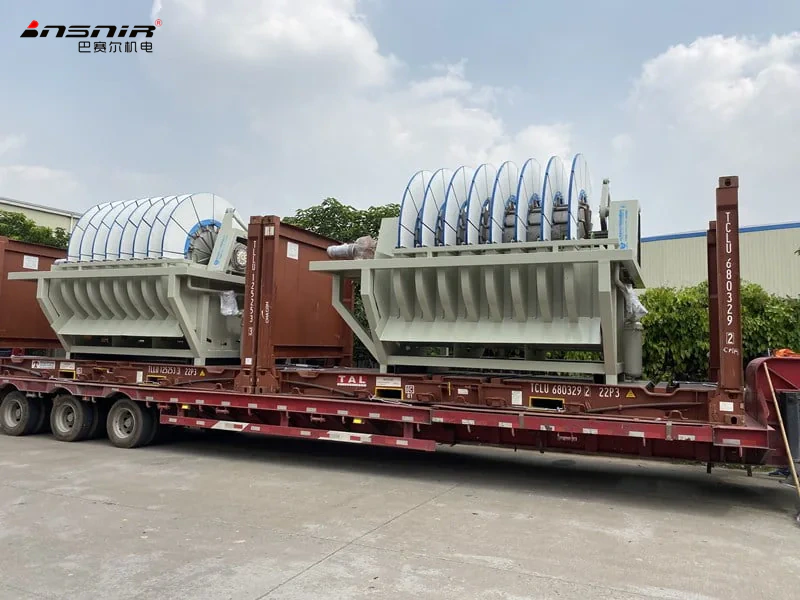
| Confirm document, packing, shipment, installation, commissioning, and spare-parts responsibilities in the quotation. | Confirm transport splits, lifting points, preservation, reassembly, commissioning checks, wear parts, and recommended inspection intervals. | Delivery and site-readiness plan with named responsibility for every boundary. |
Procurement checklist
Ask the quotation to mark every item as included, optional, or by buyer. At minimum, check:
- disc-filter body, shaft and drive, trough, agitation, sector plates, headers or rotary valve, scraper or cake-discharge parts, guards, and access platform;
- feed tank, agitator, feed pump, recirculation, isolation, sampling, flushing, overflow, and drain connections;
- vacuum pump, receiver, filtrate separator or tank, vacuum piping, seals, instruments, return pump, and drain handling;
- backwash, chemical or ultrasonic cleaning equipment only where required by the selected design, including clean-water and spent-liquid boundaries;
- cake chute, conveyor or receiving container, cleanup access, transfer height, and downstream storage or disposal interface;
- control panel, motor-control boundary, sensors, alarms, interlocks, emergency stops, plant communication, cables, and local electrical responsibility;
- general arrangement, foundation loads, anchor plan, piping and instrument information, motor and utility lists, operation and maintenance documents, and acceptance procedure;
- commissioning consumables, start-up support, operator training if included, initial wear parts, recommended spares, sector handling tools, and packaging or transport protection.
Build the decision around the full water circuit
The disc filter is one module. Feed thickening, equalization, chemical conditioning where required, filtrate buffering, cake handling, cleaning effluent, and water reuse can decide whether the route works as a system. Review the complete slurry dewatering and process-water reuse solution before freezing equipment scope.
Send the duty data, current process drawing, representative slurry information, required outputs, site utilities, layout, and project schedule. BASAIR can then coordinate the route review and identify which points still require supplier testing or engineering confirmation.