
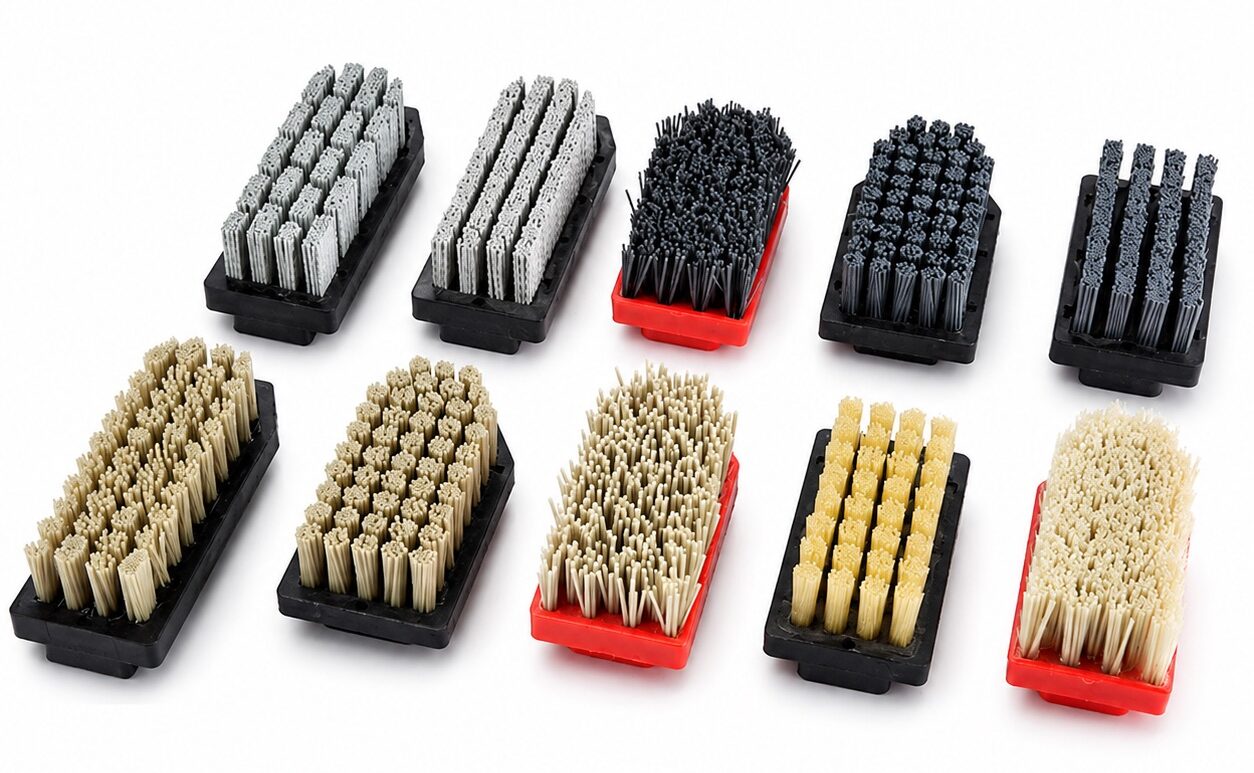
BASAIR supplies Fickert abrasive brushes for ceramic tile and stone surface finishing. These brushes are used on automatic polishing and brushing lines to create matte, textured, antique or soft-touch surface effects.
The product range includes silicon carbide Fickert brushes and diamond Fickert brushes for different surface-finishing requirements.
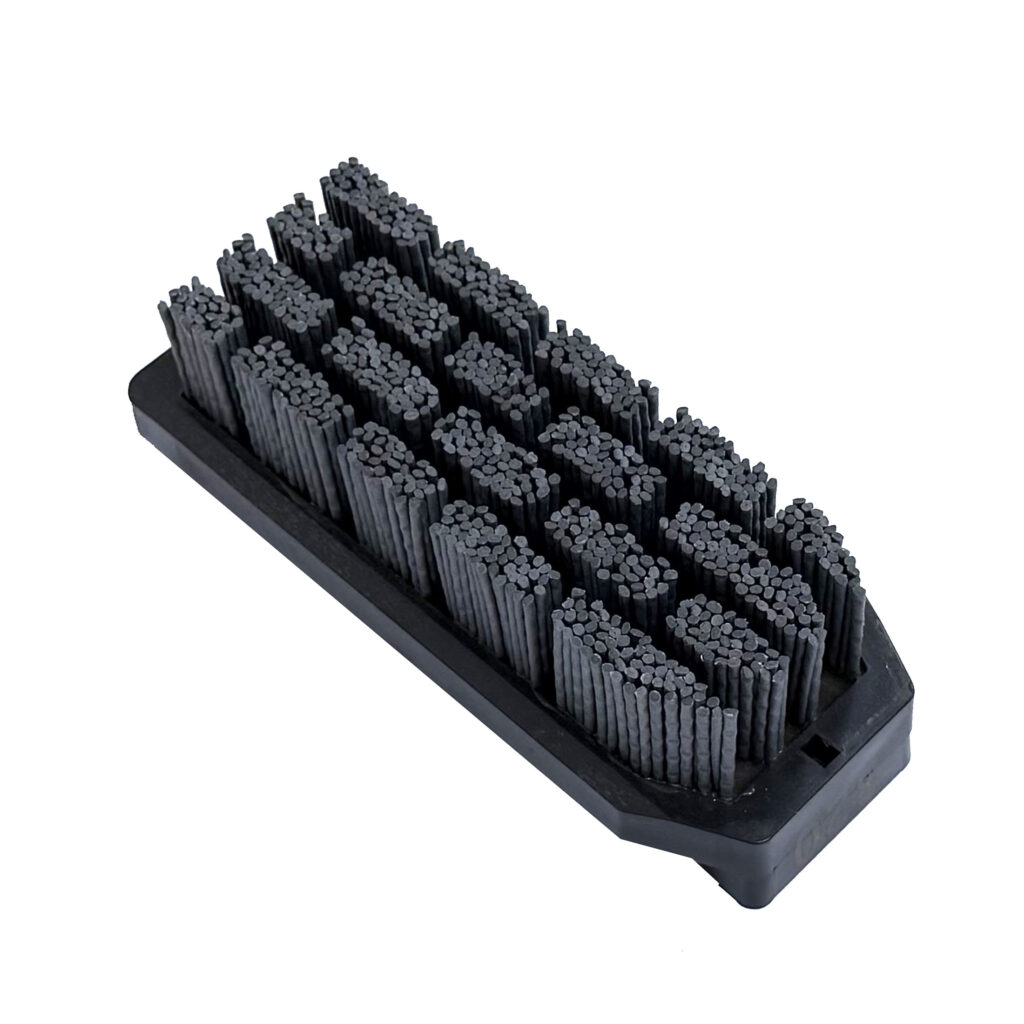
Silicon carbide Fickert brushes are the most widely used abrasive tool for creating controlled matte, textured, antique and leather-look surface effects on ceramic tile, porcelain and stone. Each brush is built from silicon carbide abrasive wire fixed onto a rectangular Fickert-format head, and installed directly onto automatic polishing or brushing lines using standard Fickert-type holders — making them a drop-in replacement across most mainstream production lines.
The abrasive wire is a blend of silicon carbide grain and high-strength nylon (nylon 610/612), arranged in a wavy filament pattern that gives the wire high resilience: it rebounds quickly under working pressure so the abrasive keeps even contact with the tile surface across the full width of the brush, rather than wearing unevenly at the center or edges.
Because the finish depends heavily on grit selection and sequence, silicon carbide brushes are typically run as part of a multi-stage grit sequence (coarse to fine) rather than as a single pass — coarser grits open up texture and remove more material, while finer grits refine the surface toward a smoother matte or satin result.

Choosing the right silicon carbide Fickert brush depends on several factors working together, not grit alone:
| Item | Specification |
|---|---|
| Grit Options | 36# / 46# / 60# / 80# / 120# / 180# / 240# / 320# / 400# / 600# / 800# / 1000# / 1200# / 1500# / 2000# / 2500# / 3000# |
| Material | High-quality silicon carbide abrasive and imported high-strength nylon |
| Filament Composition | Silicon carbide grain (approx. 25–28%) combined with high-strength nylon 610/612 |
| Filament Design | Wavy filament profile for fast rebound and even surface contact |
| Base Design | Beveled-edge base with 4-row drainage layout; usable down to under 2mm residue |
| Manufacturing Process | Made with a special process for sharp cutting performance and strong wear resistance |
| Suitable Surfaces | Textured surfaces, antique tiles, dry-grain tiles, matte tiles and textured ceramic tiles |
| Available Types | T1 (L140) / T2 (L170) |
| Customization | Specifications can be selected according to customer requirements |
Rubber Fickert brushes are made from a rubber compound bonded with premium silicon carbide abrasive grain, using a graded (stepped) grinding process that BASAIR develops in-house. By precisely controlling abrasive particle density across the brush profile, the rubber brush removes the glaze surface tension gradually instead of cutting it uniformly, so it can bring the tile down to a 5°–10° soft-sheen (soft-light) finish without damaging the glaze layer underneath. The result is a silk-like smooth touch feel combined with a visible sense of depth and layering on the tile surface — an effect that is difficult to achieve with a standard silicon carbide brush alone.
Because the rubber body itself flexes slightly under working pressure, the brush conforms to minor surface irregularities on the tile, which helps produce a more even soft-light effect across the whole panel and reduces the risk of localized over-grinding (“hot spots”) that can occur with rigid abrasive tools.
| Item | Specification |
|---|---|
| Name | Rubber Brush |
| Model | T1-L140 |
| Bond / Material | Rubber compound bonded with premium silicon carbide abrasive grain |
| Process Options | With shock-absorbing pad / Without shock-absorbing pad; Coarse teeth / Fine teeth |
| Grit Options | 60# / 80# / 120# / 180# / 240# / 320# / 400# / 600# / 800# / 1000# / 2000# / 3000# |
| Target Finish | 5°–10° soft-sheen (soft-light) surface, no glaze damage |
| Suitable Surfaces | Polished and glazed porcelain tile requiring soft-light adjustment |
| Machine Compatibility | Automatic continuous polishing / brushing lines with Fickert-type holders |
| Customization | Grit, tooth style and damping option can be configured per customer requirement |
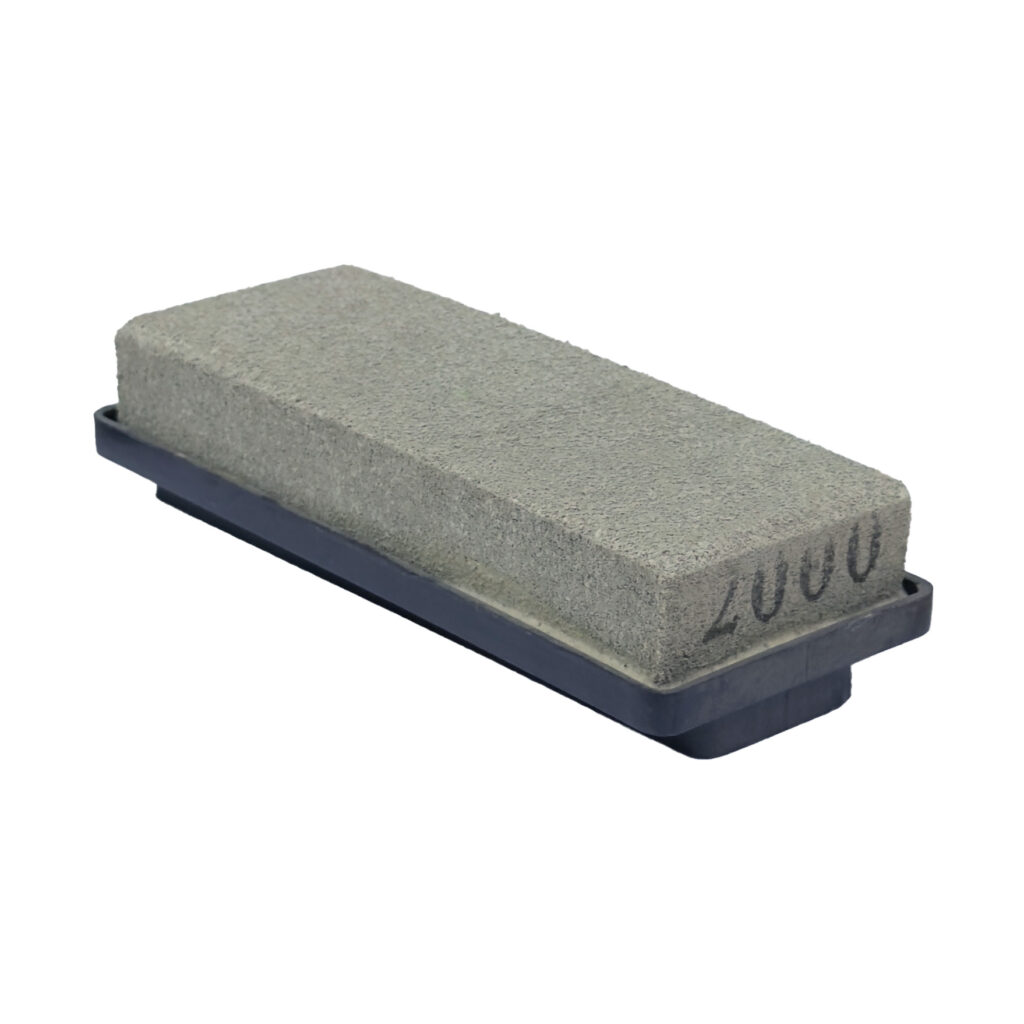
Fiber grinding blocks are made from an ultra-fine molecular sponge (non-woven fiber) impregnated with selected abrasive grain. Unlike a rigid resin or silicon carbide brush, the fiber matrix is soft and porous, which lets the abrasive make light, even contact across the tile or stone surface rather than concentrated point contact. This makes the fiber block especially effective for gloss (光度) adjustment work: it can bring a ceramic tile surface to a soft-light or matte effect, and on natural or engineered stone it is commonly used to significantly boost surface gloss without generating the heat build-up or swirl marks that harder tools can leave behind.
The open, non-woven structure also resists clogging — worn abrasive and polishing debris are carried away through the fiber rather than trapped on the working face, so the block keeps a consistent cutting action for longer and is easier to keep clean between production runs than a solid bonded pad.
| Item | Specification |
|---|---|
| Name | Fiber Grinding Block |
| Model | T1-L140 / T2-L170 |
| Bond / Material | Ultra-fine molecular fiber (non-woven) impregnated with selected abrasive grain |
| Density | 5P / 6P / 7P / 9P |
| Grit Options | 60# / 80# / 120# / 150# / 180# / 240# / 320# / 400# / 600# / 800# / 1000# / 2000# |
| Target Finish | Soft-light / matte on ceramic tile; increased gloss on stone |
| Suitable Surfaces | Ceramic tile and natural / engineered stone requiring gloss-level adjustment |
| Machine Compatibility | Automatic continuous polishing / brushing lines with Fickert-type holders |
| Customization | Grit and density can be configured per customer requirement |
| Comparison | Silicon Carbide Fickert Brush | Rubber Fickert Brush | Fiber Grinding Block |
|---|---|---|---|
| Core Material | Silicon carbide bristle + nylon | Rubber compound + silicon carbide | Non-woven molecular fiber + abrasive |
| Typical Effect | Matte / textured / antique | Soft-light (5°–10°), silk touch | Soft-light or matte (tile) / higher gloss (stone) |
| Working Feel | Firm, aggressive cut | Cushioned, gradual cut | Soft, conformable, low-marking |
| Best Used For | Heavy texturing, antique tiles, dry-grain tiles | Fine gloss control without glaze damage | Final gloss blending, haze/scratch removal |
| Density / Format Control | Grit sequence | Grit + tooth style + damping pad | Grit + density (P-value) |
| Size Options | T1 (L140) / T2 (L170) | T1 (L140) | T1 (L140) / T2 (L170) |
Your details are only used to respond to your enquiry.


