
Ceramic Tile Waxing & Surface Treatment Machine
This equipment route begins only after the tile surface is clean and dry enough for the selected treatment. Its responsibility is to meter and apply an identified surface product, perform the specified roller/pad or buffing duties, provide the required dwell or conditioning path, and hand a verified surface to compatible downstream packaging. The chemistry and the machine must be approved separately, then checked together on representative tiles.
“Wax,” “nano” or “protective agent” is not a sufficient specification. Final station count, applicator form, product amount, contact action, dwell/conditioning and verification depend on the approved chemical product, incoming surface, line speed, environment and downstream film or packaging. This page does not promise gloss, stain resistance, chemical resistance or protection performance without a defined product, method and accepted trial.
Place treatment after polishing, cleaning and drying
| Stage | Its responsibility | Not assumed on this treatment machine |
|---|---|---|
| Line polishing machine | Creates the specified mechanically polished or Lappato surface. | The surface-treatment machine does not replace the abrasive sequence or repair an unsuitable polished geometry. |
| Tile surface cleaning machine | Removes specified slurry, abrasive residue or other upstream contamination. | An application roller or pad is not automatically the upstream cleaning machine. |
| Suction & air-knife dryer | Delivers the residual-moisture and surface-temperature condition required by the treatment instructions. | The surface-treatment machine does not make an uncontrolled wet tile suitable for treatment. |
| Waxing and surface treatment machine | Meters, applies, works in, conditions and/or buffs an approved product according to the confirmed duty. | Not every quoted line includes every duty; station scope must be itemized. |
| Protective film laminating machine | Applies the confirmed film after the treated surface reaches the required condition. | The surface-treatment machine does not establish film adhesion, non-transfer or storage compatibility without a joint trial. |
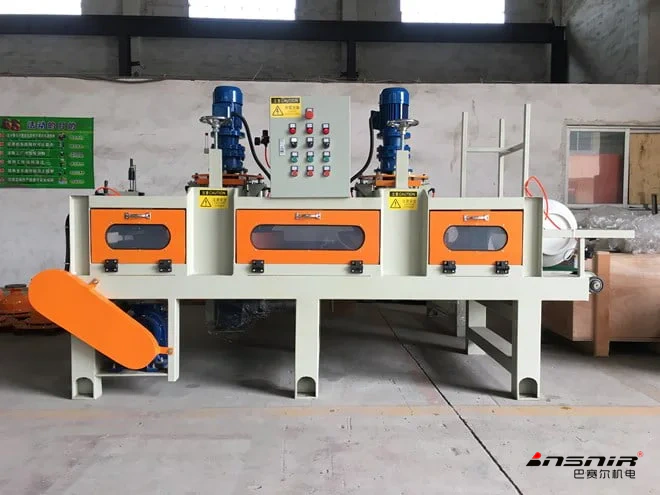
Confirm the treatment product before configuring application hardware
Obtain the exact product name, supplier, batch/packaging form, Technical Data Sheet (TDS) and Safety Data Sheet (SDS) for every proposed liquid, wax, paste or other treatment. The chemical supplier’s instructions control storage, preparation, application range, conditioning/cure, incompatibilities, personal protection and disposal. The machine supplier should state which of those conditions the proposed equipment can hold and monitor.
| Chemical input | Machine decision it supports | Evidence required |
|---|---|---|
| Identity and physical form | Tank/feed path, pump or metering method, seals, tubing, applicator and cleaning procedure. | Exact label, TDS, SDS and current batch/packaging information; not a generic “nano” description. |
| Preparation and application instructions | Mixing/agitation, dosing range, application pattern and control points. | Supplier instructions plus the project’s trial record for the actual tile surface. |
| Conditioning or cure | Required residence length, number of stations, heat/air or other utilities if specified, and release point for inspection/packing. | Time/temperature/humidity or other conditions from the product supplier, confirmed by trials. |
| Safety, cleaning and waste | Containment, ventilation/interface needs, operator access, cleanout method and waste-collection boundary. | SDS, site risk assessment and local requirements; the equipment page does not grant chemical or regulatory approval. |
Use the wax and nano surface-treatment consumables route to identify the exact product and documentation. A consumable and a machine can be supplied together only after their separate responsibilities and evidence are confirmed.
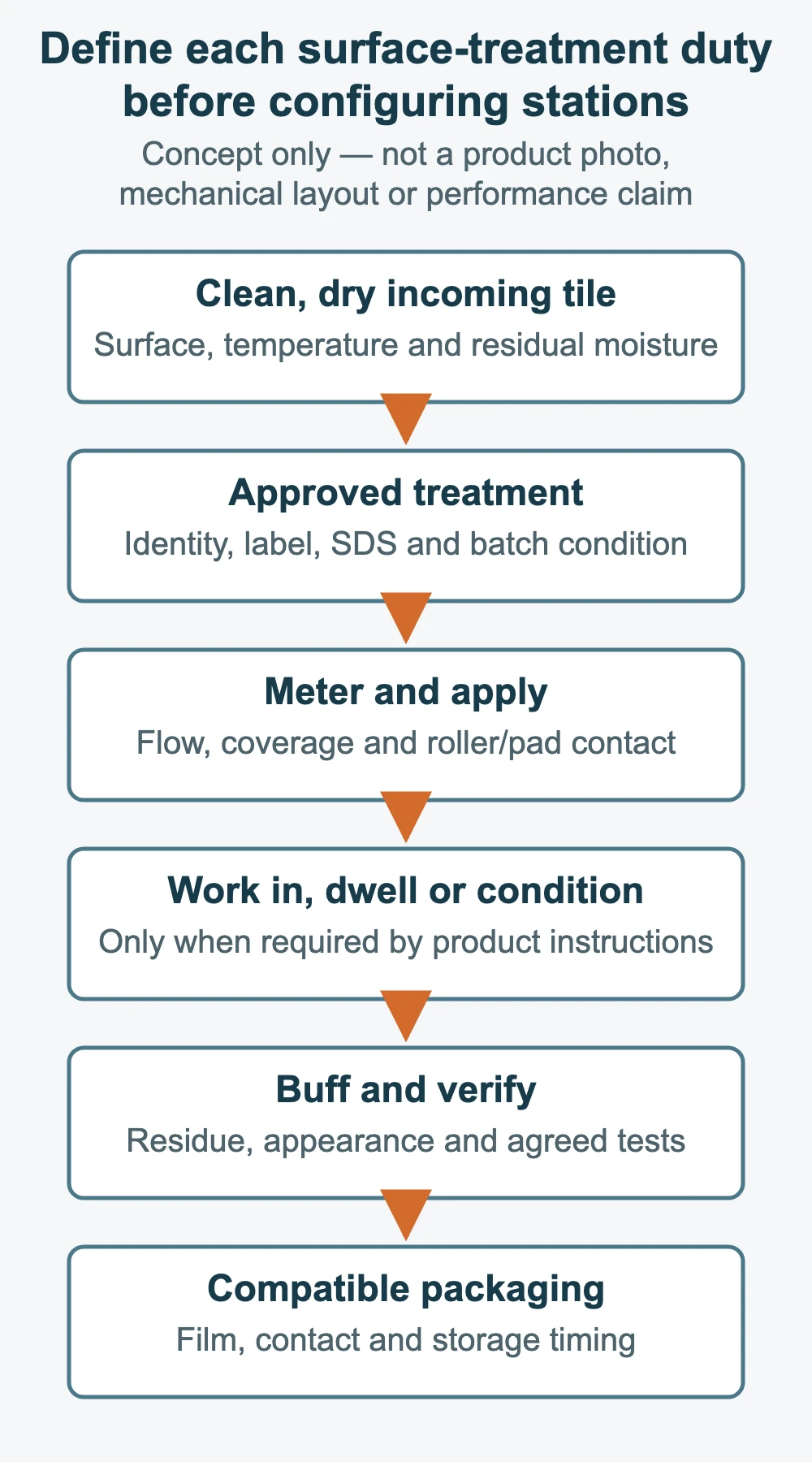
Itemize application, roller/pad and buffing duties
One line name can hide several different actions. A quotation should state which stations spread material, work it into the surface, remove excess, clean residue or buff the final face. Station count follows those duties plus line speed and required dwell; it is not fixed by the word “waxing.”
| Duty | What to specify | What to verify in trial |
|---|---|---|
| Meter and spread | Feed method, controlled amount, start/stop response, tile detection and transverse coverage. | Coverage across the face and from tile to tile, with no unsupported promise of a universal dose. |
| Work in or distribute | Roller/pad/brush function, material, contact pattern, pressure/height setting, rotation or movement and cleaning/change method. | Streaks, missed areas, edge loading, visible patterns, heat or surface damage under the tested condition. |
| Dwell or condition | Required time and environmental/energy condition from the chemical instructions, plus the available line length and speed. | Whether the treated tile reaches the specified condition before the next contact or packaging step. |
| Remove residue or buff | Separate station responsibility, pad format, contact action, collection/cleaning and replacement criterion. | Residue, haze, local gloss difference or material transfer at the accepted inspection time. |
When the duty is buffing rather than applying treatment, compare the actual pad format and machine interface through polishing and buffing pads. A pad name alone does not establish chemical compatibility, direction, speed or contact pressure.
Control incoming condition, line speed and utilities
| Condition | Buyer input | Configuration/acceptance question |
|---|---|---|
| Incoming tile | Body, processed surface, size/thickness, surface temperature, residual moisture and known residue. | Can the surface cleaning and suction/air-knife drying stages reliably deliver the product-specified clean/dry condition at production speed? |
| Treatment amount and line speed | Supplier instruction range, target production speeds and tile gaps by product family. | Can metering and contact/dwell remain within the tested conditions across the requested speed range? |
| Ambient/process condition | Temperature, humidity, airflow and any conditioning requirement stated by the chemical supplier. | Which conditions are monitored or controlled, and which remain the factory’s responsibility? |
| Utilities and waste | Power, compressed air, water/cleaning media, ventilation, drainage and waste collection available at the station. | Exact connection, containment and responsibility boundaries for the offered duties. |
| Changeover and cleaning | Product families, chemical changes, batch size, permitted carryover and cleaning instructions. | What must be drained, flushed, replaced, reset and verified before the next product? |
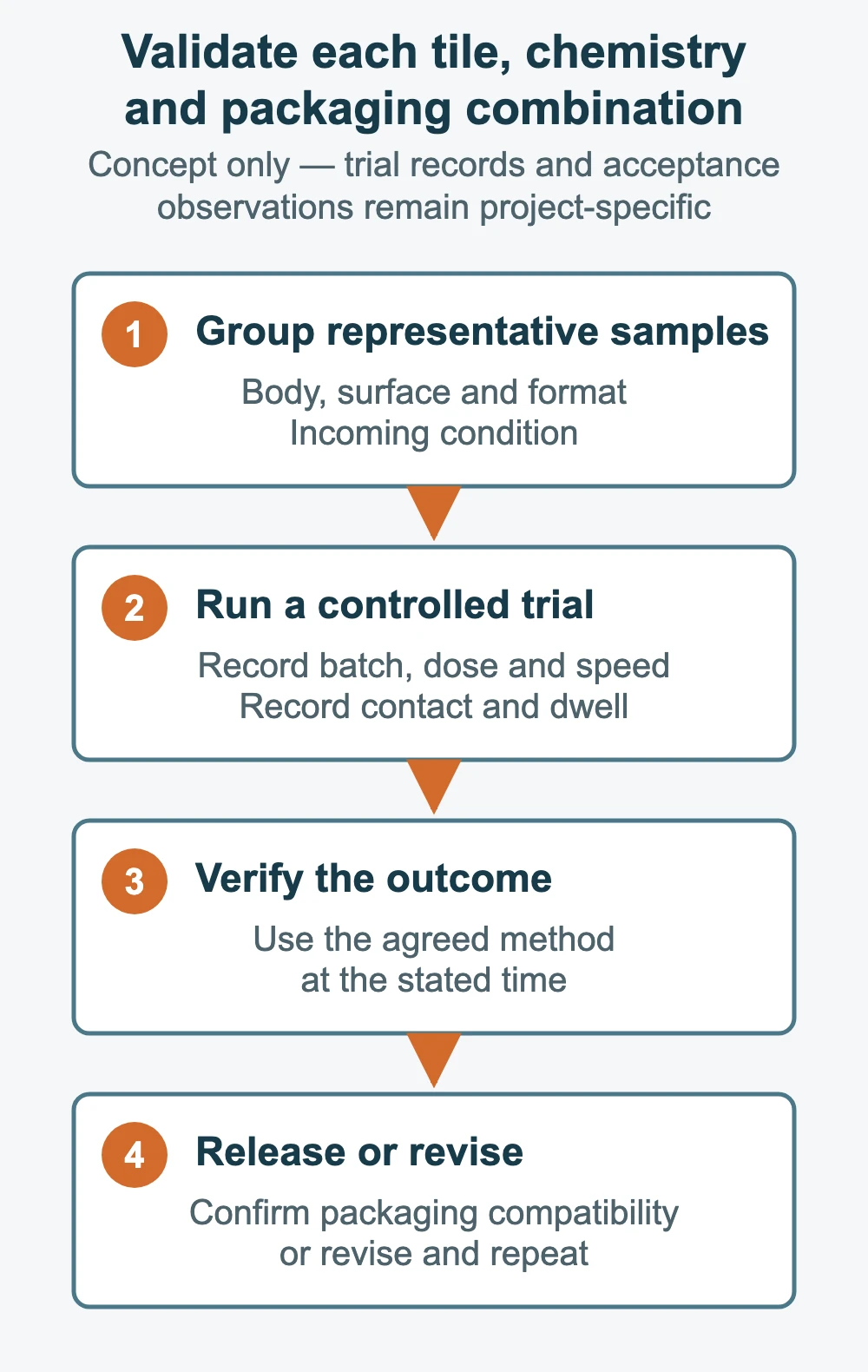
Verify the treated surface before film or packaging
Agree on representative tile families, chemical batch, settings, inspection time and test method before the trial. Record dose, speed, roller/pad condition, dwell and environment. Evaluate only the properties relevant to the project’s stated target, such as visible uniformity, residue, gloss measurement or a defined resistance test. Do not generalize a result beyond the tested surface, product, batch and condition.
Packaging compatibility is a separate acceptance step. Check whether the treated surface transfers material, marks under contact, affects film adhesion, blocks after stacking or changes after the intended storage interval. Use the actual film, separator, carton/contact material and stacking condition where they matter. Do not release the product to the protective film laminating machine or packing merely because it looks dry at line exit.
For the full upstream and downstream sequence, see the ceramic tile finishing line solution.
Information needed for a surface-treatment proposal
- Tile body, processed surface, finish family, minimum/maximum size and thickness, plus representative samples.
- Upstream polishing, cleaning and drying equipment; measured incoming surface condition, temperature and residual moisture.
- Exact treatment product, label, supplier, packaging/batch form, current TDS and SDS.
- Required duties stated separately: meter, spread, work in, dwell/condition, remove residue, clean and/or buff.
- Supplier instruction for product amount, preparation, application, conditioning/cure, cleaning, safety and waste.
- Roller, pad or brush preference/interface where an existing standard must be retained, with photos and dimensions.
- Required line speed by tile/chemical family, shifts, changeover frequency and batch size.
- Ambient conditions and available power, air, water/cleaning media, ventilation, drainage and waste handling.
- Buyer-defined target, reference samples, inspection/test method, measurement locations and inspection time.
- Actual protective film or packaging contact materials, stacking/storage condition and compatibility checks.
- Plant layout, infeed/outfeed direction and height, control signals, footprint and maintenance access.
Request a waxing and surface-treatment review with the project data, product documents, tile samples, target evidence and packaging materials. BASAIR can then define which application and finishing duties belong in the machine scope and which remain chemical, upstream or downstream responsibilities.