
Choose the cutting route from the finished tile
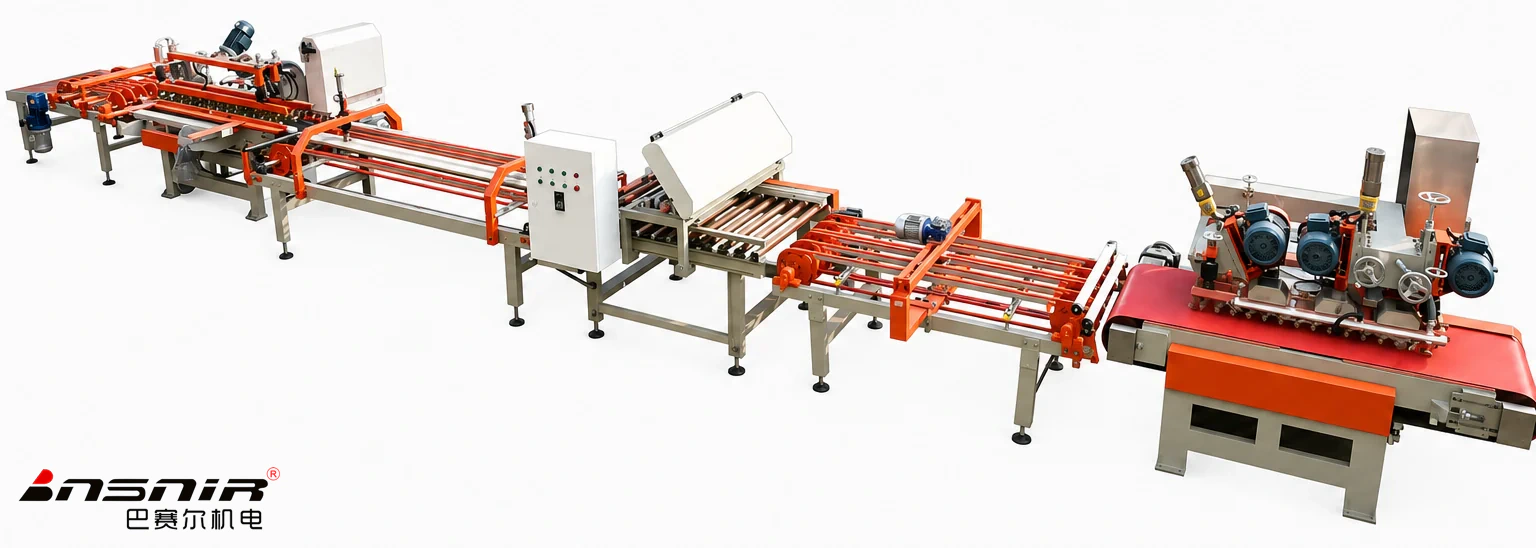
Ceramic tile cutting systems use different separation principles for different products. Dry scoring and controlled splitting is not sawing; a multi-blade wet cutter uses blades and spacers to produce repeated strips or mosaic blanks; a CNC cutter prioritizes programmed positioning and mixed geometry. Select the process before selecting a machine.
This page is the cutting-system comparison entry point within ceramic tile finishing and tile secondary processing. Final configuration depends on tile body, surface, thickness, raw and finished sizes, cut pattern, edge quality, output and utilities.
Straight divisions: dry score and split
Start here when the tile body and glaze can follow a controlled fracture. Prove the score, support and split on representative tiles; add edge finishing if the split edge is not saleable.
Strips, mosaic blanks or mixed sizes
Repeated parallel strips point toward wet blade-stack cutting; frequent size changes call for a review of programmed positioning and handling. CNC describes control and positioning, so confirm the actual cutting mechanism.
Compare the separation principle first
| Process | How separation occurs | Best starting fit | Main constraints |
|---|---|---|---|
| Dry scoring and splitting | A scoring tool creates a controlled line; a following force separates the tile along it | Approved tile bodies and straight divisions where a repeatable split can be demonstrated | Body/glaze response, scoring force/path, split support, edge/chipping and product direction |
| Multi-blade wet cutting | Rotating diamond blades remove a kerf; spacers locate blades for repeated widths | Strips, mosaic blanks and repeated parallel cuts at production-line output | Blade/spacer stack, support, water/cooling, kerf, slurry, cut-edge finish and downstream drying |
| Automatic CNC cutting or manual CNC cutting | Programmed positioning coordinates the approved cutting mechanism and part handling | Mixed sizes, programmed batches or tasks where positioning flexibility matters | Actual cutting principle, nesting, loading, software, cycle, part support and downstream edge work |
Dry cutting machine in the workshop
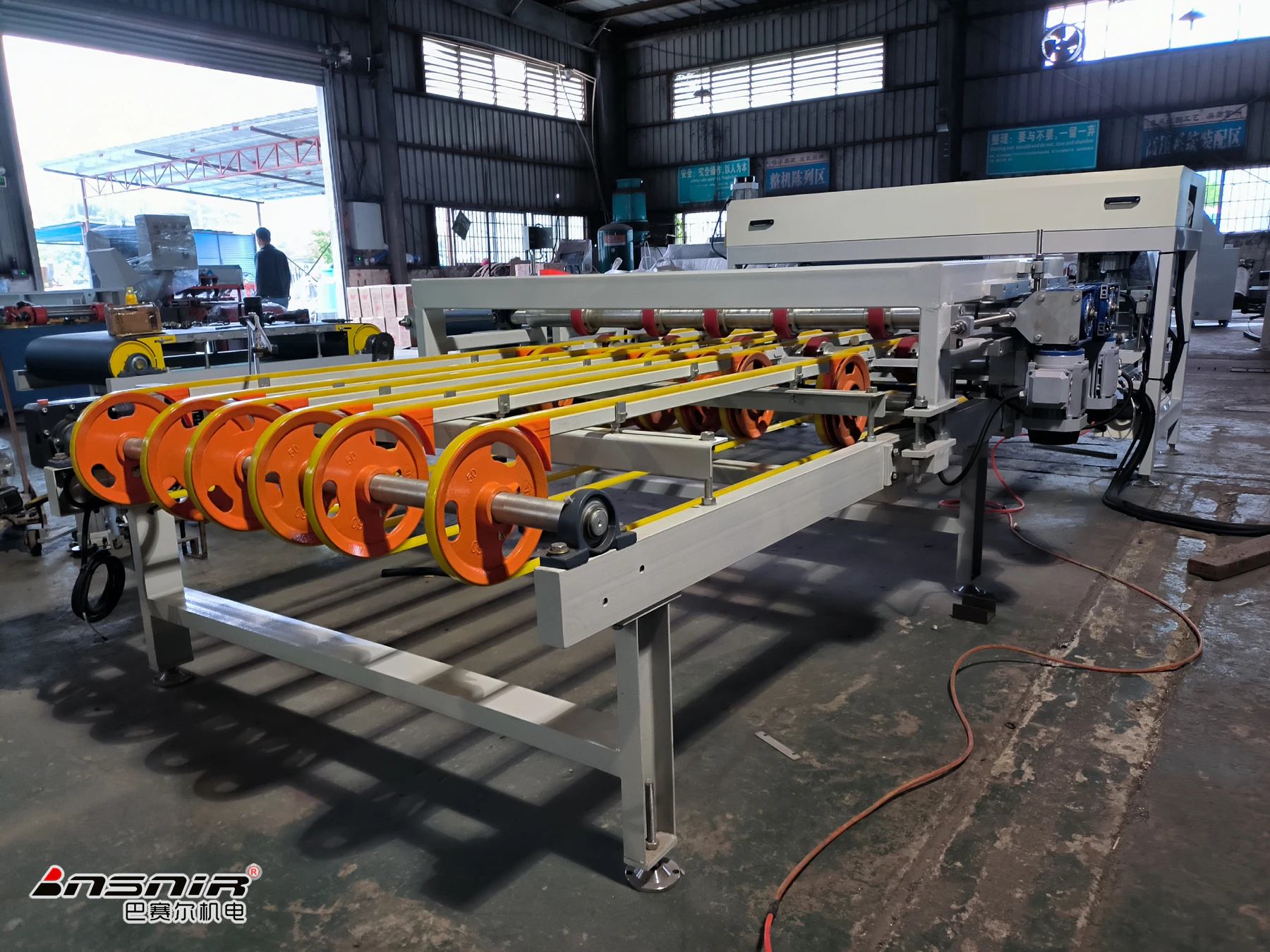
Dry scoring and splitting is a material-dependent fracture process
A score-and-split route does not saw through the full thickness. The system must create a consistent score and then support and load the tile so the fracture follows that path. Tile body, glaze, texture, thickness, residual stress and cut direction can change the result.
Use representative tiles from the real range. Inspect chipping, fracture deviation and edge condition across batches and directions. If the saleable product requires a ground or chamfered edge, include that downstream stage rather than assuming the split edge is finished.
Multi-blade cutting is a blade-stack and water-management system
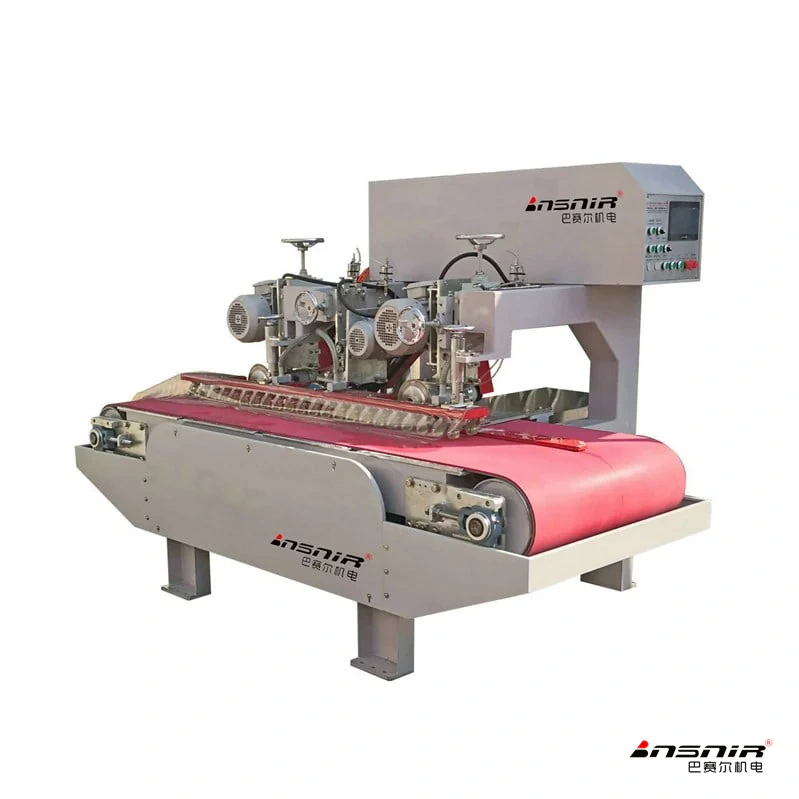
In a multi-blade cutter, diamond saw blades and spacers set the cutting stack. The finished size is influenced by spacer thickness, blade body/segment width, runout, clamping and cut behavior. Provide the complete stack drawing rather than only a target strip width.
Wet cutting also requires controlled water delivery, guarding/splash management, slurry collection and downstream cleaning or drying. Confirm how narrow cut pieces are supported and transferred without turning or jamming.
CNC cutting changes positioning and production flow
CNC does not identify one cutting mechanism. The proposal must state how the tool cuts, what geometry the axes can produce, how the tile is located, and whether loading/unloading is manual or automatic. Program import, reference setting, nesting and changeover time matter when the product mix is high.
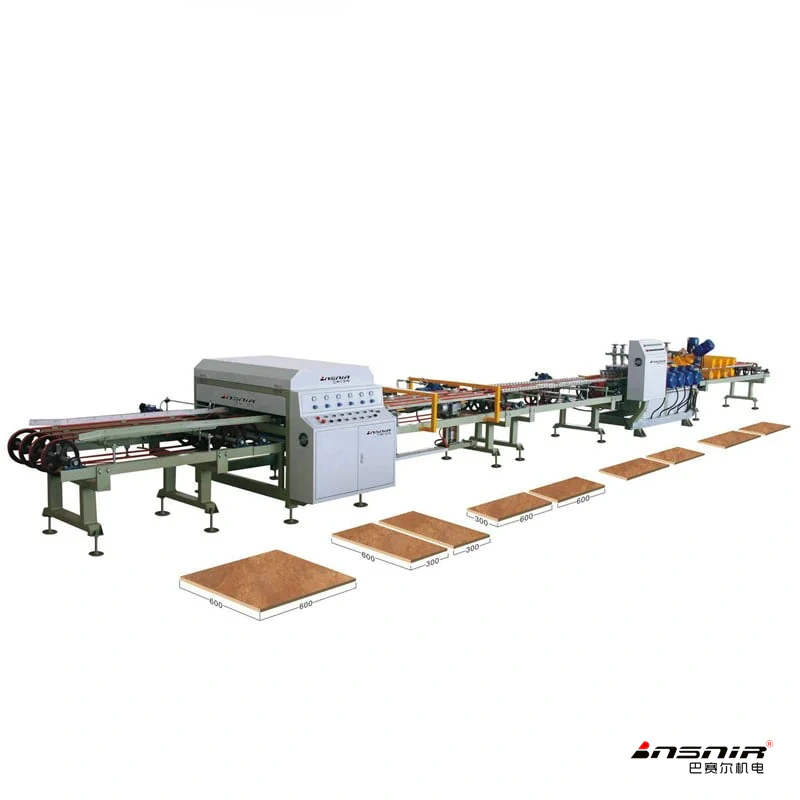
Line interfaces and acceptance checks
- Infeed: raw size, orientation, surface protection, datum, gap and loading method.
- Cutting station: principle, tool, support, cutting direction, dust or water and accessible adjustment.
- Outfeed: number and width of pieces, narrow-piece stability, separation, reject handling and downstream orientation.
- Edge stage: whether cut pieces go directly to packing or to squaring, chamfering, profiling or polishing.
- Environmental system: dust capture for dry processes or water/slurry management for wet cutting.
- Acceptance: width, length, diagonal, chipping, fracture/cut-edge condition, breakage, output and changeover on representative products.
For a coordinated product route, see the mosaic and strip production solution. The solution should use only the stages required by the actual finished product.
Information needed for a ceramic tile cutting proposal
- Tile body, water absorption if known, glaze/surface, thickness and representative photos
- Raw size, all finished sizes, cut layout and permitted kerf/allowance
- Daily product mix, batch quantities, required output, shifts and changeover frequency
- Required cutting principle if fixed, or samples for score/split and blade-cut evaluation
- Target edge condition, chipping limit and required downstream edge operation
- Existing blade/spacer data or score/split settings, plus machine/line constraints
- Infeed/outfeed direction, working height, layout, handling and narrow-piece transfer
- Electrical supply, water, drainage, slurry or dust-collection interfaces
Request a ceramic tile cutting-system review
Cutting principle, working range, blade/score arrangement, output, edge result and utilities depend on the tile, cut layout, selected configuration, representative trials and engineering confirmation.