
A cyclone dust collector separates suitable particles by directing the dust-laden air into a rotating flow and discharging separated material from the cone. In many industrial dust systems it is a pre-separator that reduces coarse loading before a baghouse or another final filter. It should not be treated as a universal standalone emissions solution.
For the wider choice between dry-dust collection, slurry dewatering and process-water treatment, start with dust, sludge and water treatment.
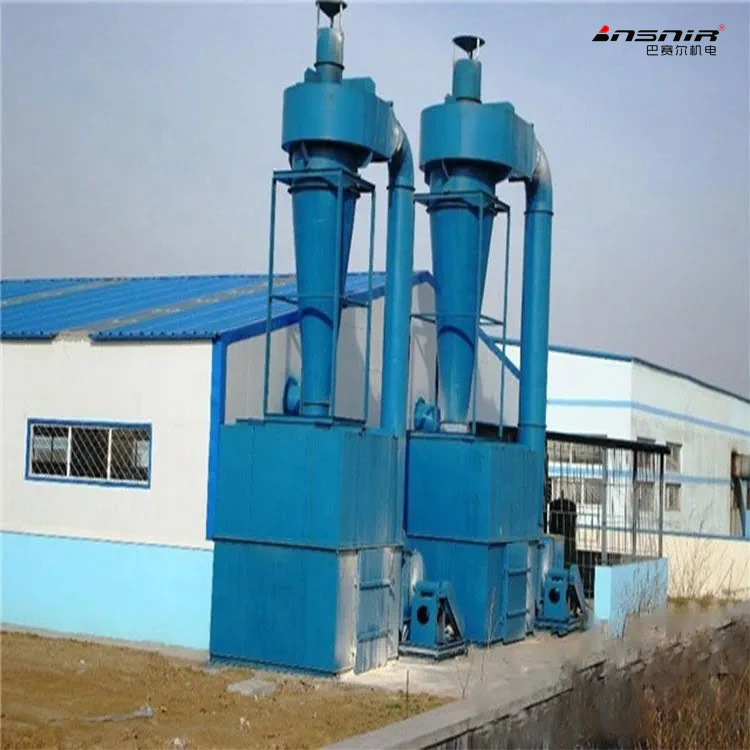
State what comes after the cyclone
| Duty | When to evaluate it | Downstream boundary | Key evidence |
|---|---|---|---|
| Pre-separator | Coarse or heavy loading may be removed before final filtration | Connect outlet to the selected baghouse or other final collector | Representative particle/loading data and complete-system pressure calculation |
| Process separator | The separated coarse fraction has a defined process or recovery purpose | Product receiver, air return and any remaining fine-dust control | Mass balance, material quality and receiver interface |
| Proposed standalone collector | Only after the required outlet condition and particle behavior are defined | Discharge/return point and applicable local requirements | Project-specific performance basis and verification method |
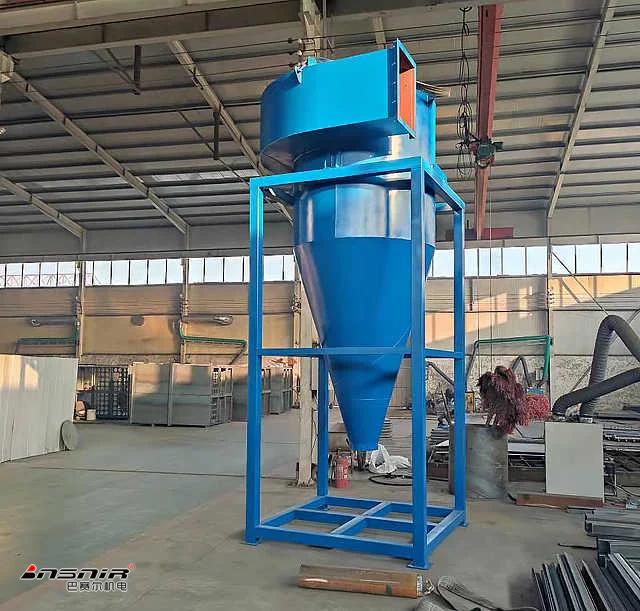
Use representative particle and loading information
Provide the process source, particle-size information if available, bulk density, moisture, temperature, abrasiveness and loading range. Separation depends on both particle behavior and gas-flow conditions; a result from one dust cannot be transferred to another without review.
If fine airborne dust remains important at the outlet, include final filtration in the system. The cyclone can reduce load and wear in suitable cases, but it does not eliminate the need to define the required downstream air condition.
Include the cyclone in the full resistance calculation
The inlet, body, outlet and connected ducts create pressure loss. The fan operating point must be selected after adding hoods, branches, cyclone, final filter, clean-air duct and other fittings. Also confirm inlet velocity basis, wear protection where abrasive dust is present, access for inspection and a duct layout that avoids unplanned deposition.
Keep the cone outlet sealed and flowing
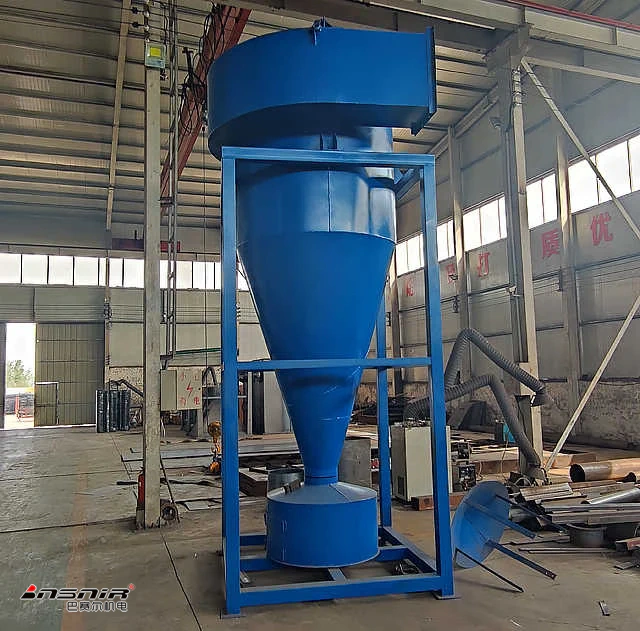
A cyclone cannot separate consistently if air leaks through an uncontrolled dust outlet or if material bridges in the cone. Define the receiver, rotary valve, flap, drum or other discharge device; the expected dust amount; level monitoring; container-change method; and the way secondary dust release is prevented.
Verify the cyclone as part of the installed system
Record the operating sources, air conditions, inlet/outlet test points, fan setting, dust receiver condition and downstream filter state. Verification may include pressure readings, collected material, downstream loading and visible system behavior under an agreed test method. Do not judge the cyclone only by whether dust appears in the receiver.
No universal separation efficiency or outlet concentration is promised. Final values depend on particle distribution, loading, gas conditions, geometry, system pressure and the agreed test.
Information to send for cyclone selection
- Process source and representative dust data, including particle information if available.
- Airflow basis, temperature, moisture and loading range.
- Whether the cyclone is a pre-separator, process separator or proposed final collector.
- Downstream baghouse/filter, fan and duct-route information.
- Available height and footprint, indoor/outdoor conditions and wear concerns.
- Dust receiver, discharge method and removal schedule.
- Applicable hazard and local compliance requirements.
For the complete dry-processing route, see the planned dry tile processing and dust control page.