
This machine family wet-polishes the top surface of stone mosaic after the pieces have been assembled on mesh or otherwise bonded into a stable sheet. It is not a loose-chip tumbler, mosaic cutting machine or edge polisher. BASAIR can collect the sheet and finish requirements, define upstream/downstream interfaces and coordinate the partner configuration; the final arrangement remains project-specific.
Request a mosaic polishing review
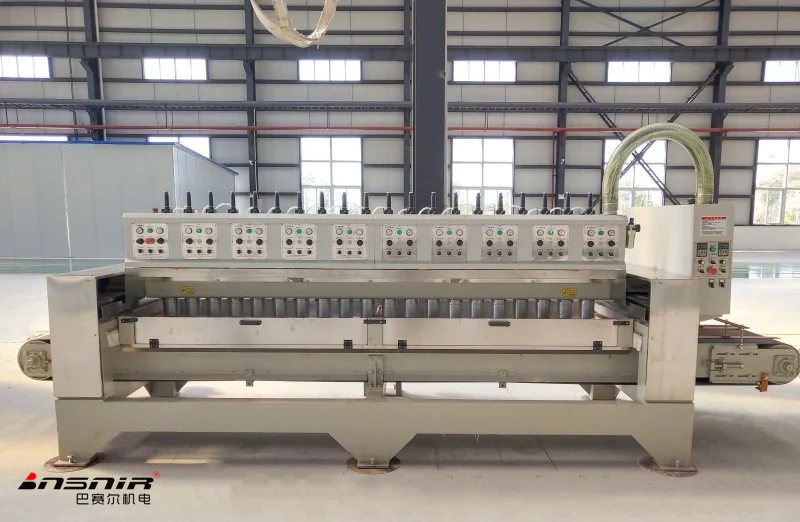
1. Confirm the sheet state before choosing the polisher
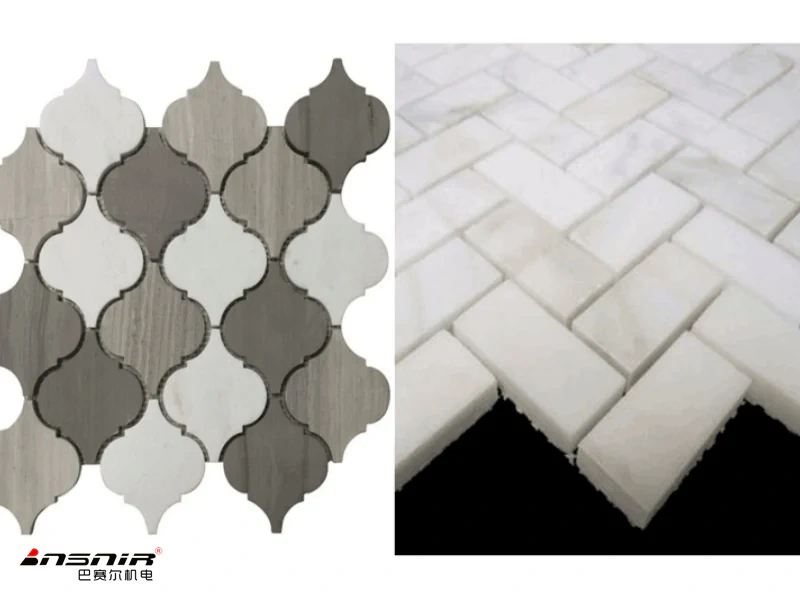
The key input is not just mosaic chip size; it is whether the complete sheet can remain flat and intact under water, belt transport and repeated head pressure. State the mesh type, adhesive, curing time, sheet dimensions, joint pattern, relief between pieces and allowable movement. If pieces are still loose, poorly bonded or deliberately uneven, stabilise the upstream assembly process before specifying automatic top polishing.
E408 handles the upper face of a sheet. It does not cut the individual chips, flatten the backing by pressing, polish vertical chip edges or correct large thickness variation without an appropriate upstream calibration step.
2. Match width, thickness and head sequence to the mosaic
| Selection point | YSU-400 source reference | Order-specific confirmation |
|---|---|---|
| Polishing stages | 20 wet-polishing heads, 125 mm head reference | Incoming face, required removal, material response, grit progression and final sample |
| Working width | 600 mm processing width on a 700 mm conveyor | Actual sheet width, guide clearance and whether multiple sheets can enter without interference |
| Thickness | 8–50 mm | Total sheet thickness including backing, piece-to-piece height variation and changeover range |
| Feed reference | 0.6–3 m/min | Sustainable speed after material, removal, head pressure, adhesive integrity and inspection stops are proven |
These figures identify the cited YSU-400 model only. They are not an unconditional BASAIR range or production promise.
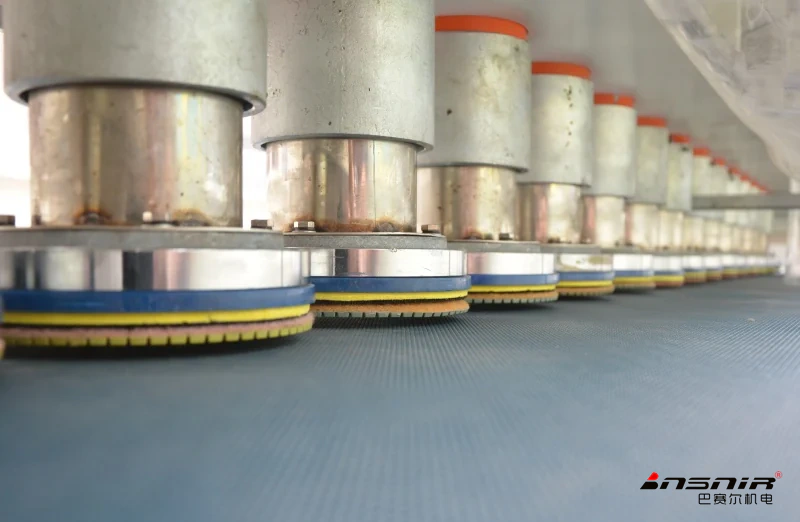
3. Control backing, guidance and abrasives as one process
Upstream, cut and assemble the chips, apply the agreed backing and allow the adhesive to cure for the specified time. The entry sheet should be sufficiently flat and rigid to meet the guides without folding, skewing or shedding pieces. Lateral guides locate the sheet; the belt and polishing pressure do not substitute for correct bonding.
Assign each head a purposeful stage from initial levelling or scratch removal through refinement and final polishing. Select the stone abrasive or other approved wet-polishing system by material, head interface and target surface; do not copy a grit sequence from another stone without a sample trial. After polishing, plan rinsing, inspection, drying and any separate edge or sheet-sizing operation.
4. Provide utilities, water treatment and safe maintenance space
The YSU-400 source table lists 33.7 kW total power, about 490 L/min water and 50 L/min air, with a 5.8 × 2.2 × 2.0 m envelope and approximately 3,500 kg weight. Treat these as source-model references. Confirm voltage, frequency, installed load, air pressure/quality, clean-water pressure, return-water quality, drainage fall, floor loading and foundation for the actual offer.
Wet polishing produces fine stone slurry and can wash uncured adhesive or released chips into the return system. Provide screening where needed, settling or dewatering capacity, controlled recirculation and cleaning access around the water hood. The installation also needs guarded moving parts, emergency stops, lockout for head and belt maintenance, non-slip floors, lifting access for heads or motors, and enough aisle space to remove a failed sheet without unsafe reach. Local electrical and workplace requirements remain site responsibilities to be confirmed.
5. Send a complete sheet and process submission
| Submit | Required detail |
|---|---|
| Mosaic and backing | Stone type, chip shape/size, mesh, adhesive, cure condition and photos of the back and face |
| Sheet dimensions | Minimum/maximum L × W × total T, chip height variation and flatness tolerance |
| Surface target | Incoming finish, permitted removal, target sample and acceptance method |
| Production | Sheets/hour, mix, shift pattern, changeovers and expected scrap/rework handling |
| Line interfaces | Assembly/cure upstream; rinse, dry, inspect and edge/size operations downstream |
| Site services | Power, water, compressed air, slurry route, floor loading, layout and safe access |
For loose small strips rather than an assembled sheet, review the small stone polishing machine. The wider family is mapped in stone, sintered stone and countertop equipment and the stone profile and small-piece processing solution.