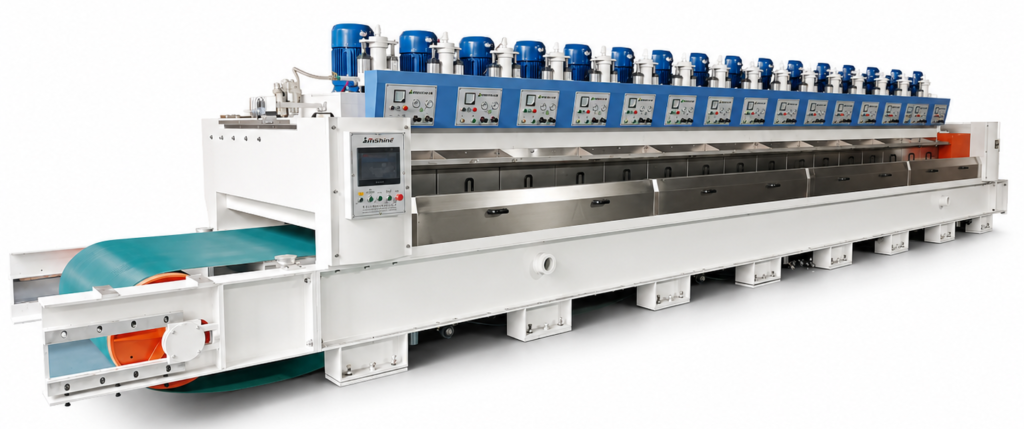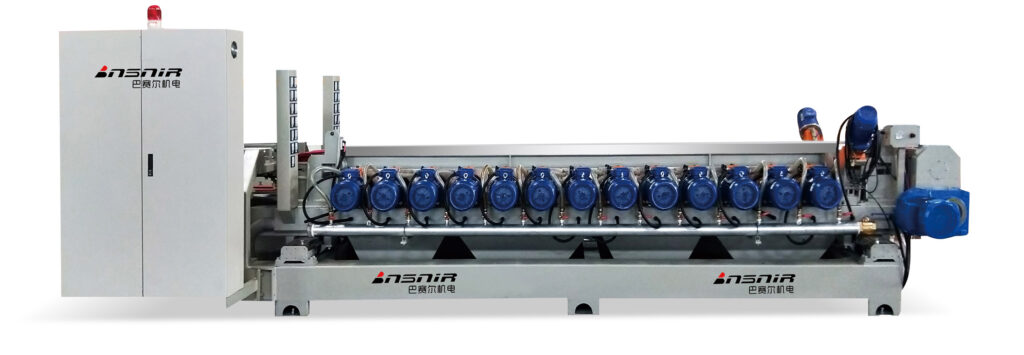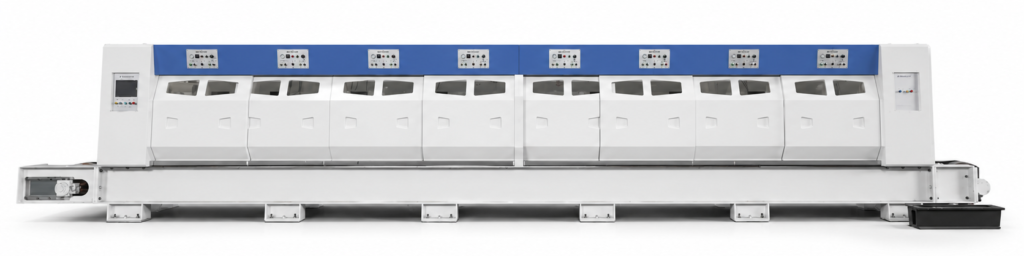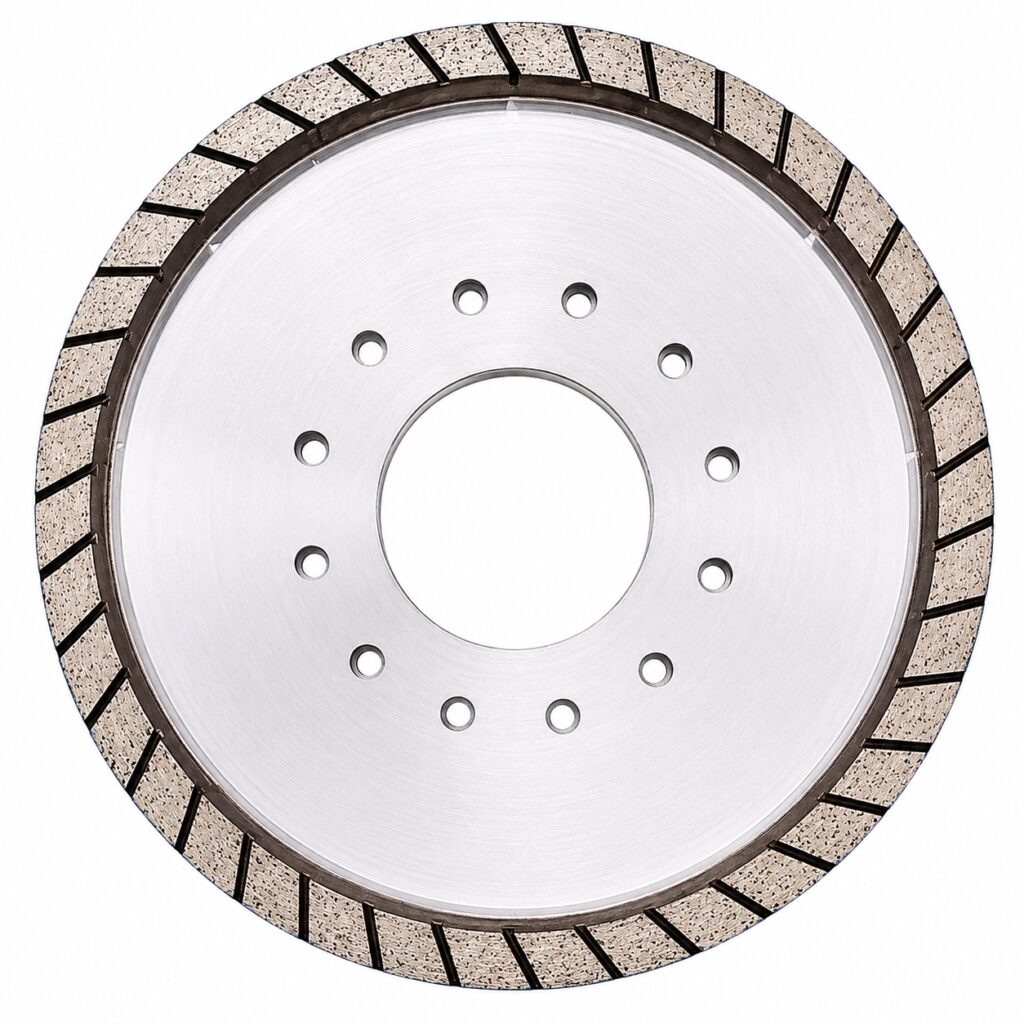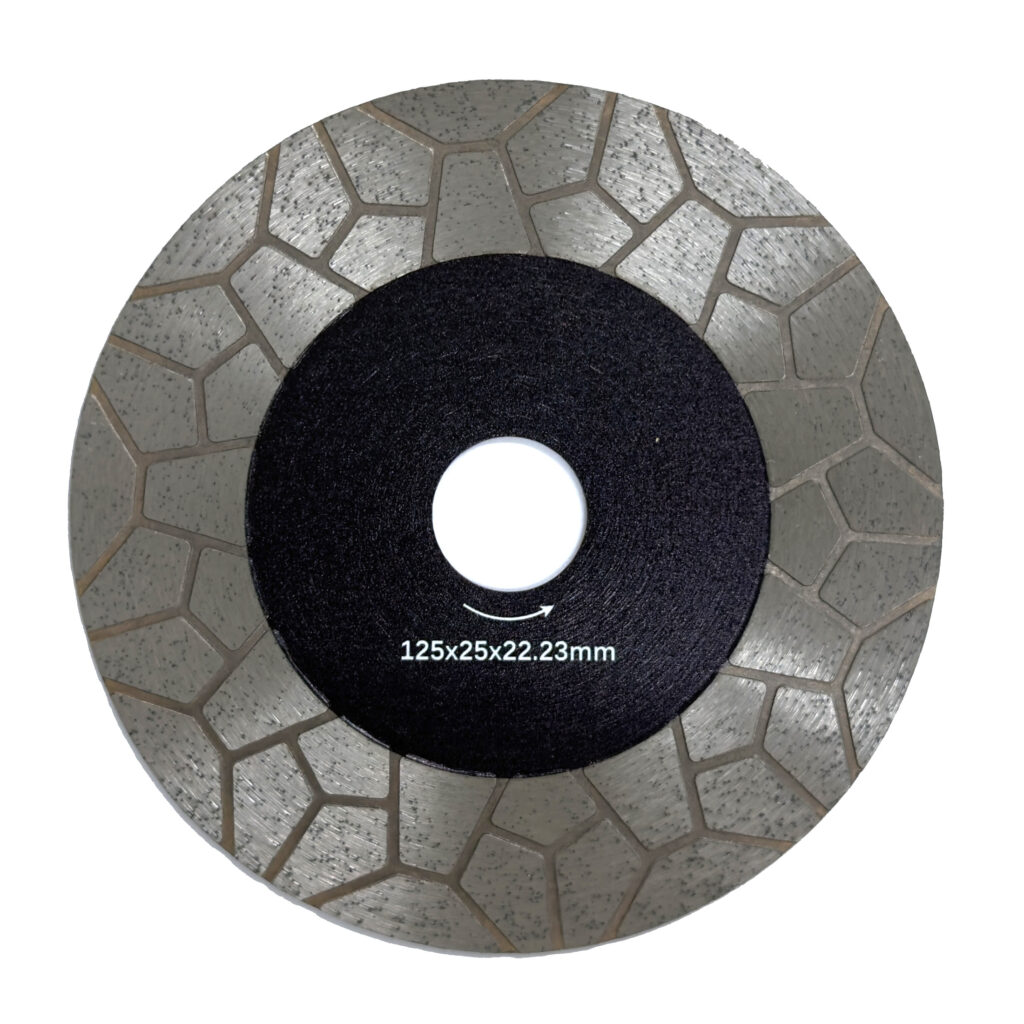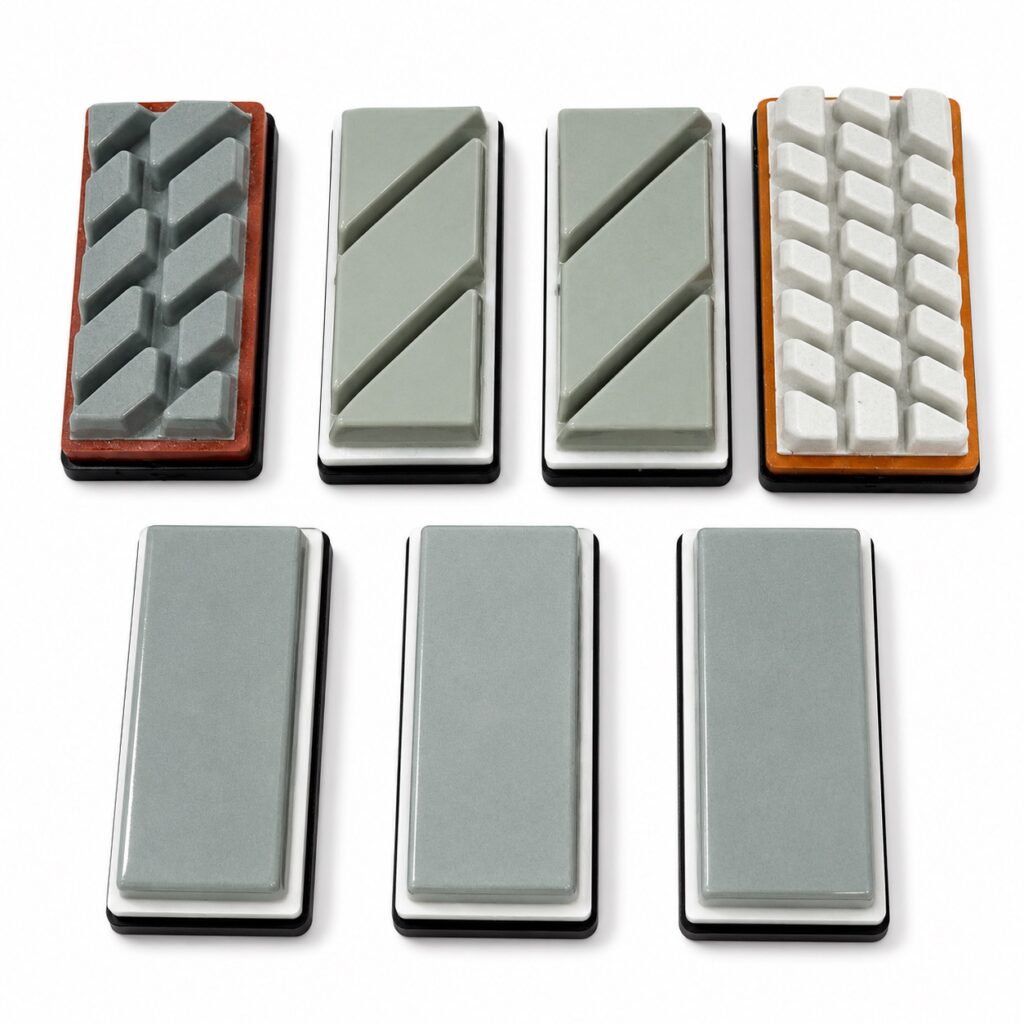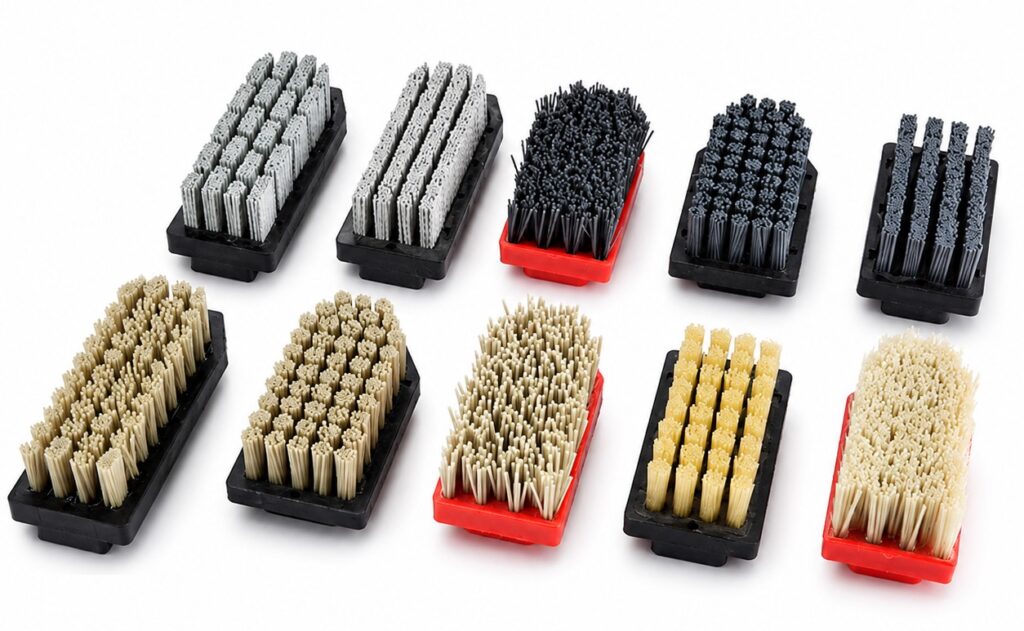
A lappato line runs abrasives past the point of usable output before anyone plans to touch them, or pulls sets early on a schedule that no longer matches how the tiles are actually finishing. Both outcomes trace back to the same gap: replacement timing set by habit or by a supplier’s generic claim rather than by what the plant’s own line is producing. Setting a defensible trigger and reorder point means separating what the factory should trend from what a single inspection can tell it, and keeping planned wear apart from damage that has nothing to do with normal duty.
Identify the Output and Defect Signals Worth Trending
Before any replacement rule can be trusted, the plant needs to know which signals actually move with abrasive condition and which only appear to. Accepted output is the most direct of these, because a lappato abrasive’s contribution to line performance shows up first as a change in what passes final inspection, not as a change in the abrasive itself. Where the plant already holds a running history of accepted output under stable conditions, a departure from that history is meaningful; where no such history exists, a single reading says little because there is nothing to compare it against.
Defect trend works the same way but needs more care in interpretation. A rising defect count can originate in abrasive wear, but it can equally originate in upstream feed variation, holder condition, or a process parameter that shifted independently of the abrasive. Treating a defect trend as automatic proof of abrasive wear risks replacing tooling that was not the cause, while ignoring it risks running abrasive past the point where it was contributing to the defect. The signal is useful once it is read alongside the abrasive’s own condition and the process conditions at the time, not read on its own.
Gloss or visual change sits in the same category. A shift away from the plant’s finish target is a legitimate input to a replacement review, but only relative to that plant’s own target, since the applicable finish target is set by the buyer’s specification and not by any fixed value the abrasive carries. Correction work — the rework or touch-up effort needed to bring output back to an acceptable finish — behaves as a lagging indicator: if it is climbing while other signals are flat, that gap itself is informative, because it suggests the abrasive is still passing inspection only through added downstream effort.
None of these signals functions as a standalone trigger. Their value comes from being tracked together, over time, against the plant’s own established pattern.
| Trend | How it supports the decision | Boundary |
|---|---|---|
| Accepted output | Compare current accepted output with the factory’s established trend when reviewing replacement timing. | Use the line’s own history; no universal block-life threshold is established. |
| Defect trend | A rising defect trend can prompt a review of the current change criteria. | Interpret it with abrasive condition and process conditions rather than as a standalone cause. |
| Gloss or visual change | Track change against the plant’s finish target as part of the output trend. | The applicable target is buyer-specific. |
| Correction work | Rising correction work can strengthen the case for a planned inspection and change review. | It is a trend input, not a fixed removal threshold. |
Record Remaining Profile and Wear Uniformity at Planned Checks
Trend signals from output data tell the plant that something has changed; a planned physical check tells it what has changed and whether the abrasive itself is the cause. Recording remaining usable profile at each planned inspection gives a direct read on how much working material is left, but that reading is only interpretable against an earlier check made under a comparable tile mix, finish target, holder arrangement, and operating window. A profile measurement taken under one duty and compared against a baseline taken under a different duty will show a discrepancy that has nothing to do with abrasive condition and everything to do with the change in operating context.
Wear uniformity carries a separate diagnostic value. Where wear develops evenly across the abrasive’s working face, the plant is looking at ordinary consumption under the conditions the abrasive was configured for. Where wear develops unevenly, the cause more often sits in a mechanical or setup condition — how the abrasive is seated, how contact pressure is distributed, how the line is running relative to its intended window — rather than in the abrasive’s material properties. This is why wear uniformity needs its own comparison against earlier checks made under the same operating context, separate from the profile reading, since a profile that looks acceptable can still sit on top of a wear pattern that is not.
Gloss or visual change recorded at the planned check connects the physical condition of the abrasive back to the output trend, without either one substituting for the other. Correction work tracked check to check shows whether the effort needed to hold the finish target is rising even while profile and uniformity still look within range — a gap worth investigating rather than dismissing, since it can mean the abrasive is nearing the end of its useful contribution before the physical check alone would suggest it.
| Planned-check item | Compare with | Decision use |
|---|---|---|
| Remaining usable profile | Earlier checks under comparable tile mix, finish target, holder arrangement, and operating window | Supports the plant’s own planned replacement trend. |
| Wear uniformity | Earlier checks under the same operating context | Shows whether the current wear pattern remains consistent with the baseline. |
| Gloss or visual change | Accepted output and the plant’s finish target | Connects abrasive condition review to observed finish change without setting a universal limit. |
| Correction work | Previous planned checks | Shows whether corrective effort is rising as the abrasive remains in use. |
Separate Planned Change Criteria from Abnormal-Damage Removal
A plant that folds every removal into one category loses the ability to trust its own trend data. Planned change criteria are built from evidence that accumulates over time under stable operating conditions — accepted-output and defect trends, remaining profile, wear uniformity, gloss or visual change, rising correction work. These signals describe a wearing-in-service abrasive whose condition is being tracked against its own baseline, and the resulting removal decision reflects genuine end-of-service-life reasoning.
Abnormal-damage removal describes a different situation entirely. Damage, poor seating, or abnormal process conditions can force an abrasive out of service well before its planned-change criteria would have triggered a removal, and the cause has nothing to do with normal wear. Where an abrasive is pulled for one of these reasons, folding that event into the planned-change trend distorts the baseline: it can make normal wear look faster than it is, or mask the fact that a mechanical or process issue — not abrasive consumption — is driving replacements.
The practical consequence is that every removal needs a cause attached to it before it is logged. If the cause is damage, poor seating, or an abnormal process condition, the event belongs in a separate record and should prompt a look at the mechanical or process condition that produced it, not an adjustment to the planned-change interval. If the cause is the accumulated trend evidence, the event belongs in the planned-change history and legitimately informs the next trigger review. Keeping these two records apart is what allows the plant to trust its own reorder and trigger calculations later, since a baseline contaminated by abnormal removals will consistently misstate normal consumption.
| Decision route | Supported signs | How to use the distinction |
|---|---|---|
| Planned change review | Accepted-output and defect trends; remaining profile; wear uniformity; gloss or visual changes; rising correction work | Apply the plant’s own trend-based change criteria. |
| Abnormal-damage removal | Damage, poor seating, or abnormal process conditions | Treat as an emergency-removal case and keep it separate from the normal wear baseline. |
Calculate Consumption by Grit Stage and Tile Mix
A lappato line typically runs multiple grit stages in sequence, and each stage carries a different working condition, contact duration, and material removal task. Treating consumption as a single line-wide figure obscures this, because a coarser stage and a finer stage will not wear at the same rate even when they are processing the same tile run, and a single blended consumption number cannot tell the plant which stage is actually driving replacement frequency.
Tile mix compounds this. Where the line processes a single, stable tile specification over an extended run, consumption at each grit stage settles into a pattern that reorder planning can rely on. Where the tile mix varies — different bodies, different finish targets, different dimensional formats moving through the same line — each grit stage’s consumption shifts with the mix, and a consumption figure calculated under one mix will not hold once the mix changes. This is why observed consumption needs to be recorded by grit stage and by the tile mix in effect at the time, rather than as a single average across whatever has run recently.
The practical value of this segmentation shows up directly in reorder planning. A plant that knows which grit stage consumes fastest under which tile mix can size its replenishment and inventory decisions to the stage that actually needs the tighter buffer, instead of applying one uniform assumption across stages with very different duty. Where the tile mix is expected to shift — a new format entering the line, a finish target changing — this stage-by-stage consumption record is also the baseline the plant will need to revisit, because a mix change can move consumption at one stage without moving it at another.
Convert Supplier Lead Time and Plant Buffer into a Reorder Point
Once consumption is understood by grit stage and tile mix, it becomes an input to a timing decision rather than an end in itself. A reorder point exists to answer one question: at what remaining stock level does the plant need to place the next order so that replacement abrasive arrives before the current set is exhausted. Answering that question requires combining the observed consumption rate with two things the abrasive’s condition data cannot supply on its own — how long the qualified supply route takes to deliver, and how much margin the plant wants to hold against variation in either consumption or delivery.
Qualified supplier lead time is not a fixed industry figure; it reflects the specific route the plant has qualified for that abrasive, and it can differ across grit stages if different specifications are sourced differently. Where lead time is stable and well understood, the buffer needed against it can be modest. Where lead time varies, or where the supply route itself is new or has not been tested under the plant’s actual ordering pattern, a wider buffer compensates for that uncertainty until the route has demonstrated its own consistency.
The buffer itself is a plant decision, not a supplier-set value, and it reflects how much risk the plant is willing to carry against running short before the next delivery arrives. A plant running tight inventory against a well-proven supply route can hold a narrower buffer than one working with a newer route or with a tile mix that is still shifting. The reorder point that results — consumption expected over the qualified lead time, plus that chosen buffer — is therefore specific to the plant’s own consumption record and its own supply relationship, not a value that transfers from one line or one supplier arrangement to another. Confirming the qualified lead time with the supply route in use, and revisiting it if that route changes, keeps the reorder point aligned with actual replenishment exposure rather than an assumption that has gone stale.
| Reorder input | Evidence to use | Role in the decision |
|---|---|---|
| Observed consumption | The line’s actual use, separated by grit stage and relevant tile mix | Establishes the consumption basis for replenishment. |
| Qualified supplier lead time | Lead time for the qualified supply route | Defines the replenishment exposure period. |
| Plant buffer | Buffer selected by the plant | Adds the plant’s chosen margin beyond lead-time demand. |
| Reorder point | Consumption expected over the qualified lead time, plus the plant’s chosen buffer | Defines when to place the next order; no universal value is established. |
Rebaseline After Material, Finish or Operating Conditions Change
Every trigger, check record, and reorder point built in the preceding sections rests on a baseline established under a specific duty — a given tile mix, a given finish target, a given holder arrangement, a given operating window. That baseline holds only as long as the duty behind it holds. Where any of those conditions change, the earlier baseline no longer describes what the abrasive is actually being asked to do, and continuing to apply it risks either replacing abrasive too early against a baseline that was easier than the new duty, or running it too long against a baseline that was harder.
A change in tile mix alters the material being processed and can shift wear rate and correction-work demand even where the grit stage and operating window stay the same. A change in finish target changes what “acceptable” gloss or visual result means, which in turn changes the point at which gloss-based signals should prompt a review. A change in holder arrangement alters how contact pressure and seating are distributed across the abrasive’s working face, which can move wear uniformity in a direction the old baseline never captured. A change in operating window — the speed, pressure, or sequencing the line runs under — changes the working condition the abrasive experiences directly.
Where a plant is evaluating a new abrasive configuration or a new supply source against an existing baseline, the qualification work involved in confirming wear stability under trial conditions is a separate exercise from the ongoing replacement-trigger tracking described above, though the two inform each other once a configuration is approved for production use. Once any one of the duty conditions changes, the plant’s planned-check records, defect trend, and consumption-by-stage figures need a fresh baseline built under the new duty before they can be trusted again. Confirming which condition changed, and treating the next several planned checks as baseline-building rather than trigger-confirming, keeps the resulting reorder point and replacement criteria matched to the duty the abrasive is actually running under. BASAIR’s project review of tile mix, finish target, and line configuration at the quotation stage is one point where this duty definition gets set in the first place, which is also why a later change to any of those inputs is what should prompt the rebaseline rather than a fixed calendar interval.
Frequently Asked Questions
Q: Should one gloss dip or defect observation trigger abrasive replacement?
A: No. First check whether the change persists in the plant’s accepted-output and defect trends, then compare remaining profile, wear uniformity, and any correction work under comparable operating conditions. If damage, poor seating, or another abnormal condition is present, handle that separately from the planned-change trigger.
Q: How should an abrasive removed for damage or poor seating affect normal replacement history?
A: Record it as an abnormal removal rather than blending it into the routine wear baseline. Resolve the damage, seating, or process-condition issue before using later observations to adjust planned replacement criteria, or the plant may shorten normal life assumptions for the wrong reason.
Q: What information should be prepared before confirming a replacement plan?
A: Prepare the grit stage, tile mix, finish target, holder arrangement, operating window, remaining-profile and wear observations, and the related accepted-output, defect, gloss or visual, and correction-work trends. This gives the plant and supplier a defined operating context instead of asking for a universal block-life estimate.
Q: Can one reorder point cover every grit stage and tile mix?
A: Only if the plant’s records show that their consumption is genuinely comparable. Otherwise, calculate expected use for the relevant grit stage and tile mix over the qualified supply lead time, then add the plant’s chosen buffer so a high-use duty does not exhaust stock planned from a lower-use average.
Q: What is the risk of extending abrasive use simply to reduce consumption?
A: Lower replacement frequency can be offset by falling accepted output, a rising defect trend, or more correction work. Continue use only while the plant’s own condition and output evidence supports it, and do not use a universal life claim to override abnormal-damage signs or a changed operating baseline.