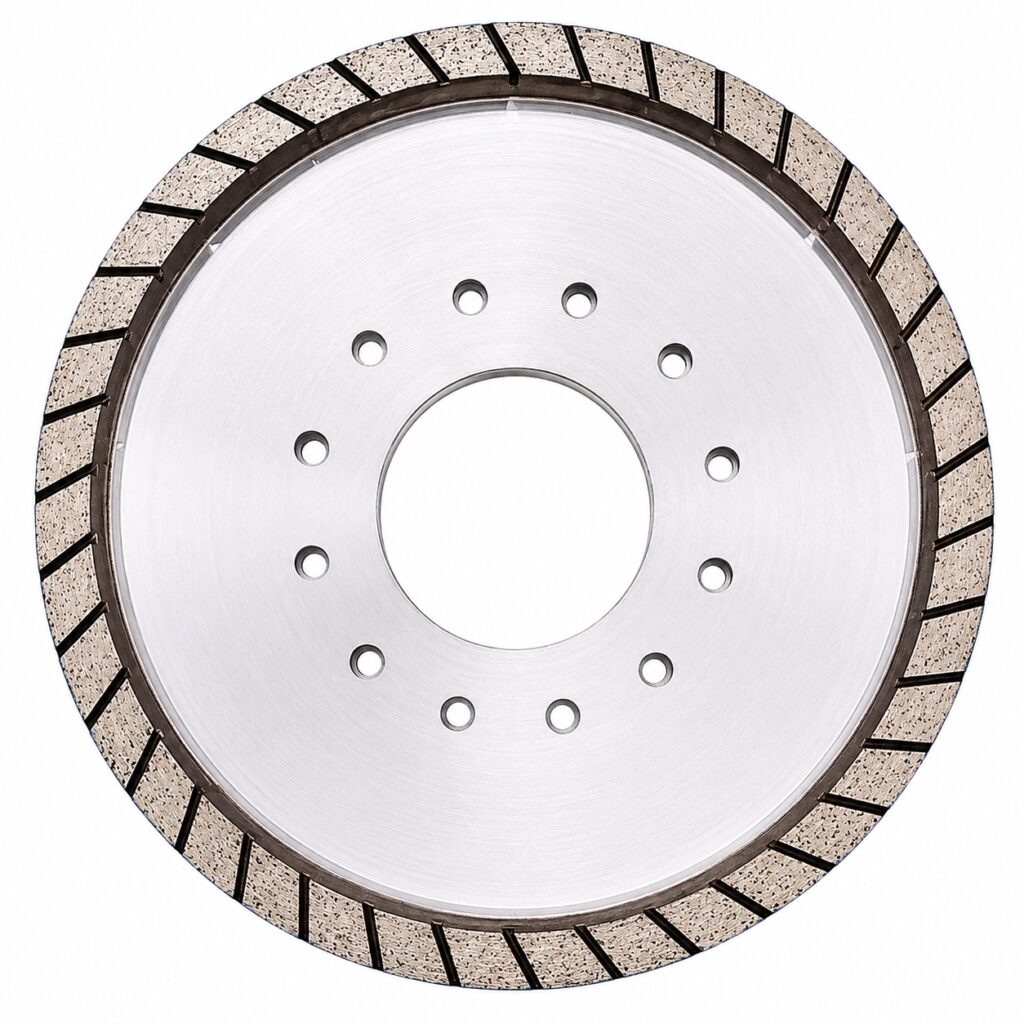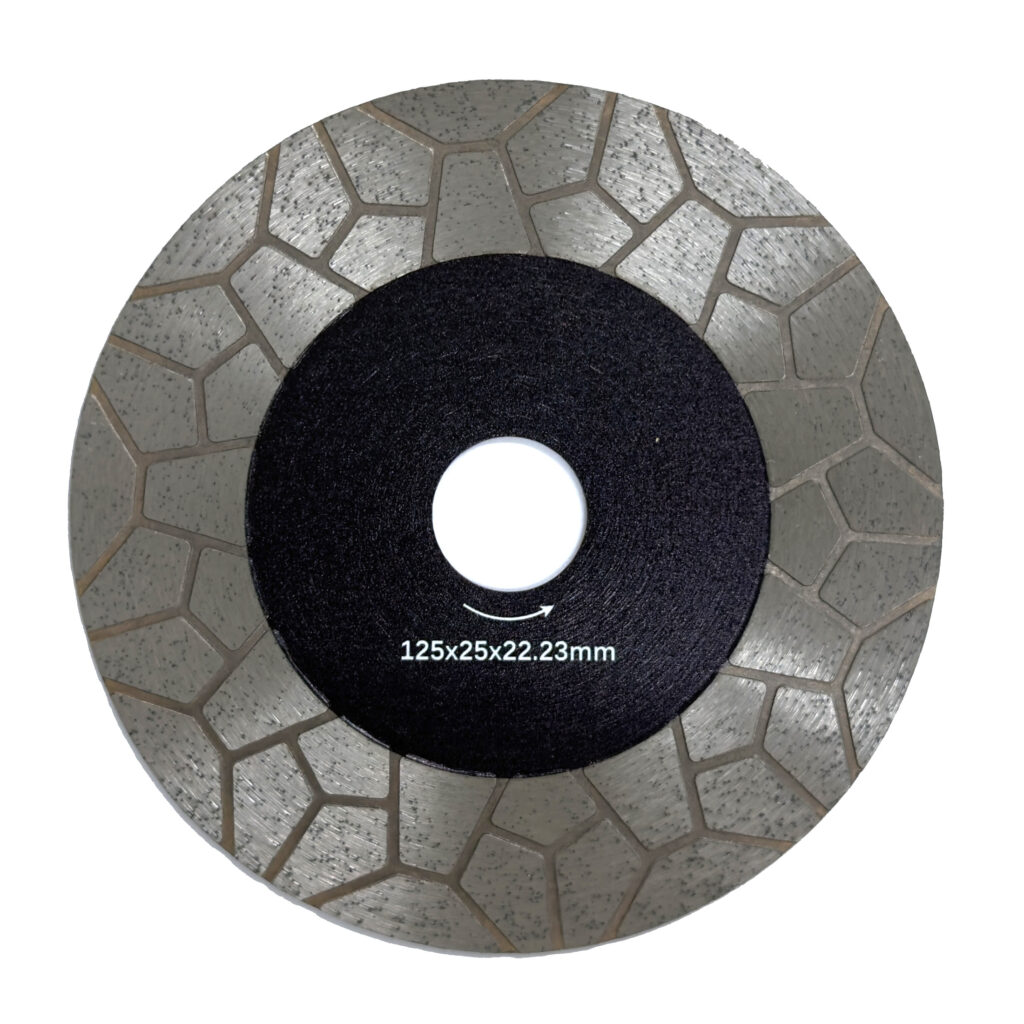
A revised squaring-wheel drawing means little on its own. What determines whether an order can safely release is whether every party is working from the same version, the same set of approved changes, and the same wheel identity — and whether every open question has an owner. Skipping that reconciliation does not make the uncertainty disappear; it just moves the uncertainty into production.
Establish One Controlled Drawing Baseline
Before any change can be evaluated, the buyer and supplier need to agree on what “current” means. This sounds trivial until a revised drawing arrives by email, a redline sketch circulates separately, and a purchase order references a version number that predates both. Configuration management, as summarized in ISO 10007’s guidance on configuration identification and status accounting, treats this as the first control point: a single, named baseline that everyone points to, distinct from any prior or parallel copy.
The baseline is not the newest file by date. It is the drawing that the project has formally designated current, identified by its actual drawing number, revision, issue status, issue date, and owner, together with the order or specification it is meant to govern. Where a project has multiple candidate versions circulating — an engineering redline, a supplier-marked copy, a purchasing reference — the baseline exercise is precisely the step that resolves which one governs and which ones are retained only for traceability.
This matters more as a project moves closer to order release. Early in a project, an unresolved baseline mainly wastes review time. Close to order release, an unresolved baseline creates a live risk that the wheel ordered, the wheel confirmed, and the wheel drawn are three different documents that happen to look similar. The condition that changes the stakes is proximity to commitment: the same ambiguity that is a minor inconvenience during design review becomes a blocking issue once a purchase order is about to be cut against it.
Superseded versions still have a role. They should be marked as non-current rather than discarded, because they support later questions about why a feature changed or what a previous supplier confirmation was based on. But marking them as historical is different from treating them as an alternative authority. A project team that allows a superseded drawing to remain ambiguous — neither withdrawn nor clearly subordinate to the baseline — reintroduces the exact confusion the baseline step exists to remove. The record below fixes the baseline as a single reference point before any revision content is judged.
| Control field | Record | Boundary |
|---|---|---|
| Drawing identity | Drawing number or project identifier | Use the project’s actual system |
| Current revision and issue status | Exact revision and status text | Do not infer release from file location |
| Issue date and document owner | Recorded project data | Ownership does not by itself grant order authority |
| Related order or specification | Exact reference and revision | Confirm alignment before release |
| Superseded versions | Identifiers marked non-current | Retain traceability but do not use as the baseline |
Record Every Approved Change and Its Status
Once a baseline exists, the next judgment is harder: not every mark on a drawing is a change, and not every change is approved. A comment, a proposed alternative, a reviewer’s question, and a formally approved revision can all appear as similar-looking redlines on the same sheet. Treating them as equivalent is the most common way a handoff fails quietly — someone assumes a marked-up feature is settled because it was discussed, not because it was approved.
ISO 10007’s treatment of change control and status accounting separates these categories deliberately. Each change needs its own record: what requirement or interface it affects, why it was proposed, who proposed it, who reviewed it, what its current approval status is, which other items it touches, and what remains unresolved if it is not yet closed. This is not paperwork for its own sake — it is the mechanism that lets a project distinguish “this is decided” from “this is still open,” which is exactly the distinction an order release depends on.
The condition that changes the judgment here is scope of effect. A change confined to a single dimension on a single drawing sheet is easier to track than a change that alters an interface shared with other items — a mounting feature, a machine-position note, a reference that also appears on a related specification. Where a change affects only its own drawing, closing it is a local decision. Where a change propagates to other records — a wheel’s intended machine position, a related order line, a downstream specification — closing it requires confirming that every affected record has been updated and that each has an identified owner, not just the drawing itself.
Pending status deserves particular care. A redline that has been reviewed but not formally approved is not authorization to proceed, however far along the discussion feels. The project record should make pending status visible rather than let elapsed time or informal agreement stand in for approval. Residual questions — anything raised but not yet resolved — need an assigned owner and a due decision point; a question with no owner tends to remain a question indefinitely, surfacing again only when it is inconvenient.
| Change field | What to record | Closure test |
|---|---|---|
| Affected drawing item | Exact feature, note, or requirement reference | The location is unambiguous |
| Change and reason | Concise description and stated rationale | Old and new states can be distinguished |
| Affected interfaces or order data | Named machine, wheel, process, or commercial reference | Each affected record has an owner |
| Review and approval status | Project-authorized reviewer and current status | Pending is not treated as approved |
| Residual question | Exception, owner, and due decision | No silent assumption remains |
Reconcile Drawing Data with the Wheel Identity
A controlled drawing describes intent. A wheel identity — the supplier’s exact designation or code — describes what will actually be manufactured and shipped. These two things need to be reconciled explicitly, because a drawing revision can be internally consistent and still not match what the supplier’s catalog or quotation system understands by that designation.
ISO 6104 provides the nomenclature and designation structure used for rotating diamond or cubic-boron-nitride grinding tools, which gives both sides a shared vocabulary for describing a wheel precisely. That structure supports traceability — it helps confirm that the drawing and the supplier reference are describing the same designated tool in the same terms. It does not, on its own, establish that a given wheel fits a given machine, suits a given material, or performs to any particular level; the standard’s scope is designation and nomenclature, not a proof of compatibility or performance.
This distinction changes what the buyer should ask for. Matching designation text is a necessary check, not a sufficient one. Beyond the designation itself, the project needs supplier confirmation on the items that the drawing alone cannot guarantee: the dimensional and mounting interface, the intended machine position, the bond or configuration detail relevant to the application, whether the wheel is intended for dry or wet operation, and the tile or line inputs that were actually used when the wheel was matched to the job. Diamond squaring wheels are supplied in configurations tied to specific duty and process conditions, so the drawing’s notes and the supplier’s confirmation need to agree on that duty, not merely on nominal dimensions.
The condition that changes the depth of this check is how much of the wheel’s application context the drawing actually specifies. Where a drawing fully documents mounting, position, and process intent, reconciliation is largely a verification exercise against the supplier’s designation. Where the drawing is silent or ambiguous on any of those points, reconciliation becomes a request for missing information, and that gap should be treated as an open item rather than resolved by assumption. Buyers should also confirm which tile and line characteristics the supplier used as the matching basis, since a wheel identity confirmed against one set of process inputs does not carry over automatically if those inputs change.
| Data block | Compare | Required outcome before release |
|---|---|---|
| Wheel designation or supplier code | Drawing, quotation/order data, and supplier acknowledgement | Exact identity aligned or exception recorded |
| Intended duty and machine position | Drawing notes and supplier confirmation | Project role explicitly confirmed |
| Dimensional and mounting interface | Controlled drawing and responsible-supplier data | Values agreed by the project; none are supplied here |
| Wheel configuration and process context | Supplier description and stated dry/wet application | Project-specific confirmation retained |
| Tile and line inputs used for matching | Buyer brief and supplier matching basis | Missing inputs remain visible |
Confirm Interfaces, Evidence, and Open Exceptions
A drawing requirement is only useful if something demonstrates that it has been met. UK government guidance on technical specifications draws a distinction relevant here: some requirements are functional or performance-based, describing what the result must achieve, while others are descriptive, specifying a particular feature or characteristic directly. Each type calls for a different kind of evidence, and conflating them is a frequent source of unrecognized exceptions.
A descriptive requirement — a stated dimension, a named mounting feature — is confirmed by direct comparison against supplier data or a physical check. A functional or performance requirement — an intended duty, a process outcome the wheel is meant to support — needs evidence that traces back to the actual machine interface and process inputs, not just to a supplier’s written assurance. Mapping each drawing requirement to the record that is supposed to confirm it is the practical task here: which machine interface confirms it, which tile or process input feeds it, which supplier document evidences it, and which downstream order field depends on it.
This mapping surfaces gaps that a simple read-through of the drawing will not. A requirement with no linked evidence is an exception, whether or not anyone has raised it as a problem. A requirement where the supplier’s data conflicts with the drawing is an exception. A requirement where the supplier has proposed an equivalent feature or material is an exception, even if the proposal seems reasonable, because equivalence has not been confirmed by the project. The guidance on technical specifications is explicit that stated requirements need to be linked to the evidence used to show they are met — silence is not that evidence.
This is where absence of comment is most likely to be mistaken for acceptance. If a supplier acknowledgement does not address a particular interface, that does not mean the interface is confirmed; it means the interface has not yet been addressed. The condition that changes how serious a given blank is depends on what it touches: a blank on a note with no downstream dependency is a minor open item, while a blank on an interface shared with the machine or with another order record needs resolution before that shared record can be treated as settled. Every blank, conflict, or proposed equivalent should be logged as an exception with an assigned owner, not folded silently into a general assumption that the package is complete.
Obtain Final Handoff and Order-Release Approval
Closing the handoff is a distinct act from resolving individual exceptions. Even when every earlier open item has been addressed, the project still needs a final, deliberate check that the drawing, the quotation or order data, and the supplier’s acknowledgement agree character-for-character on revision identity — not approximately, and not “close enough” on a revision letter or issue date. Configuration audit, as referenced in ISO 10007’s guidance, exists for exactly this kind of final verification: confirming that the controlled configuration matches what is actually being ordered, after all changes have been accounted for.
This final check is where mismatches that survived earlier review tend to surface — a quotation line referencing a wheel designation from an earlier revision, an acknowledgement that confirms the drawing number but not the revision letter, an order field carrying a superseded specification reference. None of these are necessarily large discrepancies, but each one means the record does not yet support release, regardless of how resolved the underlying engineering questions are.
Approval authority is project-specific and should not be assumed. The buyer and supplier need to name, in terms specific to the actual project, which roles are authorized to approve the reconciled drawing and which roles are authorized to release the order against it. Where a project separates technical approval from commercial release, both authorizations need to be present before the order proceeds; where the same role holds both, that should still be recorded explicitly rather than inferred. This distinction between technical sign-off and order-release approval is not something a generic checklist can assign — it depends on how the specific project has structured its own authority, and treating one as a substitute for the other is a common way closure is claimed prematurely.
Once both checks are satisfied — the character-for-character revision match and the named approvals — the closed status itself should be recorded as part of the project’s configuration status accounting, not left implicit in an email thread. For BASAIR’s own review, this closed handoff record is what allows the supplied drawing and wheel data to be checked against BASAIR’s squaring and chamfering machine line interface with confidence that the information being reviewed is the same information the buyer intends to order against. Recording closure explicitly is what lets the next project reuse this handoff as a reference rather than reopening the same reconciliation from scratch. This process does not itself define contractual authority, and it does not guarantee that the wheel will fit, perform, or be manufactured and delivered as drawn — those outcomes depend on the confirmed process conditions and the supply scope actually agreed for the project.
Frequently Asked Questions
Q: Is a redlined wheel drawing enough to release an order?
A: A redline shows a proposed change, not necessarily approval. Separate approved changes from comments, alternatives, and pending questions, and record the affected interfaces and order fields. Release should use the project’s confirmed revision and actual approval authority.
Q: How do we prevent the supplier from ordering against a superseded drawing?
A: Identify one current drawing number, exact revision, issue status, and related order or specification reference. Compare those identifiers character for character with the quotation or order data and supplier acknowledgement, and clearly mark earlier versions as non-current.
Q: What needs rechecking when a drawing revision changes a wheel feature?
A: Recheck the affected requirement and its consequences for wheel identity, intended duty, machine position, mounting data, configuration, and process context as applicable. Link each changed item to supplier evidence or confirmation and any affected order field rather than assuming unchanged records remain aligned.
Q: Does the absence of supplier comments mean all revised requirements are accepted?
A: No. Ask for explicit confirmation of the current drawing, wheel designation, and required interfaces. Assign every blank, conflict, or proposed equivalent to an exception owner, and close the handoff only when the project-authorized parties have resolved those items and confirmed the release status.