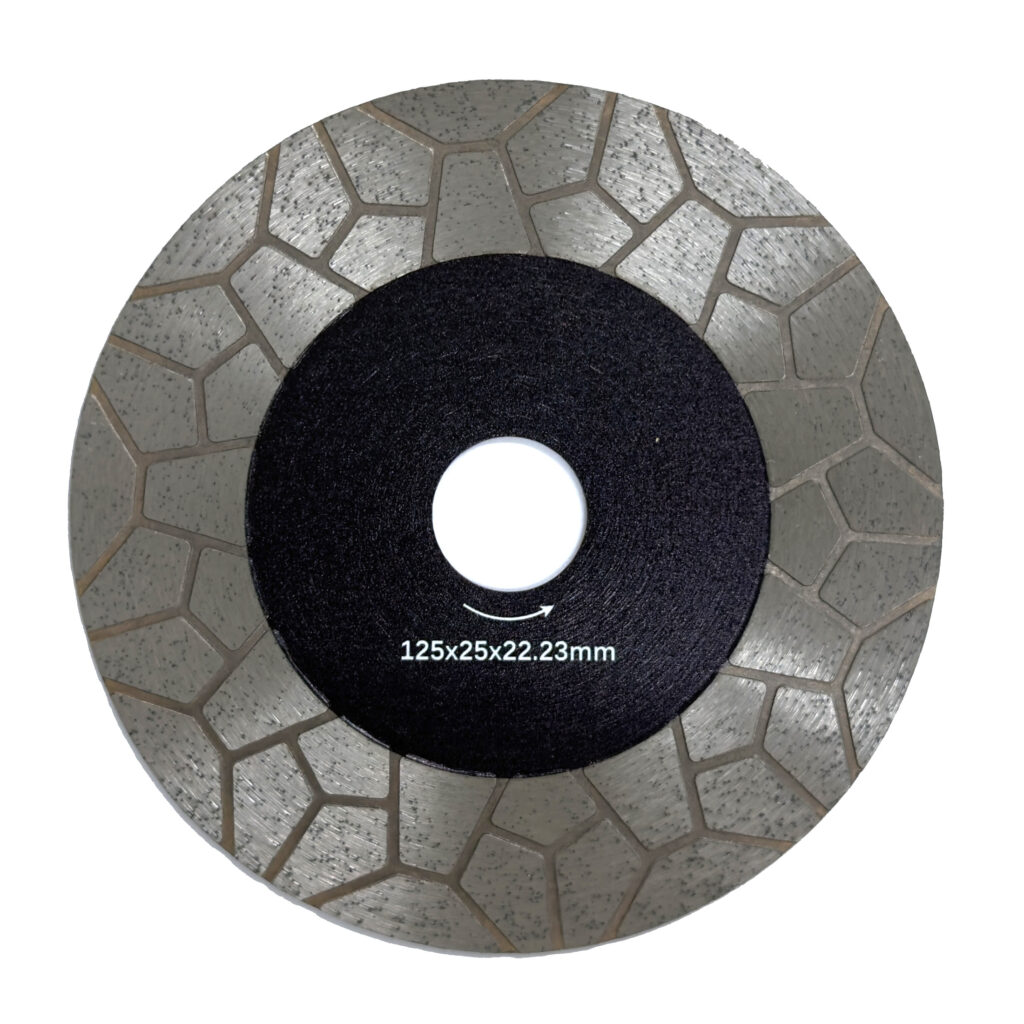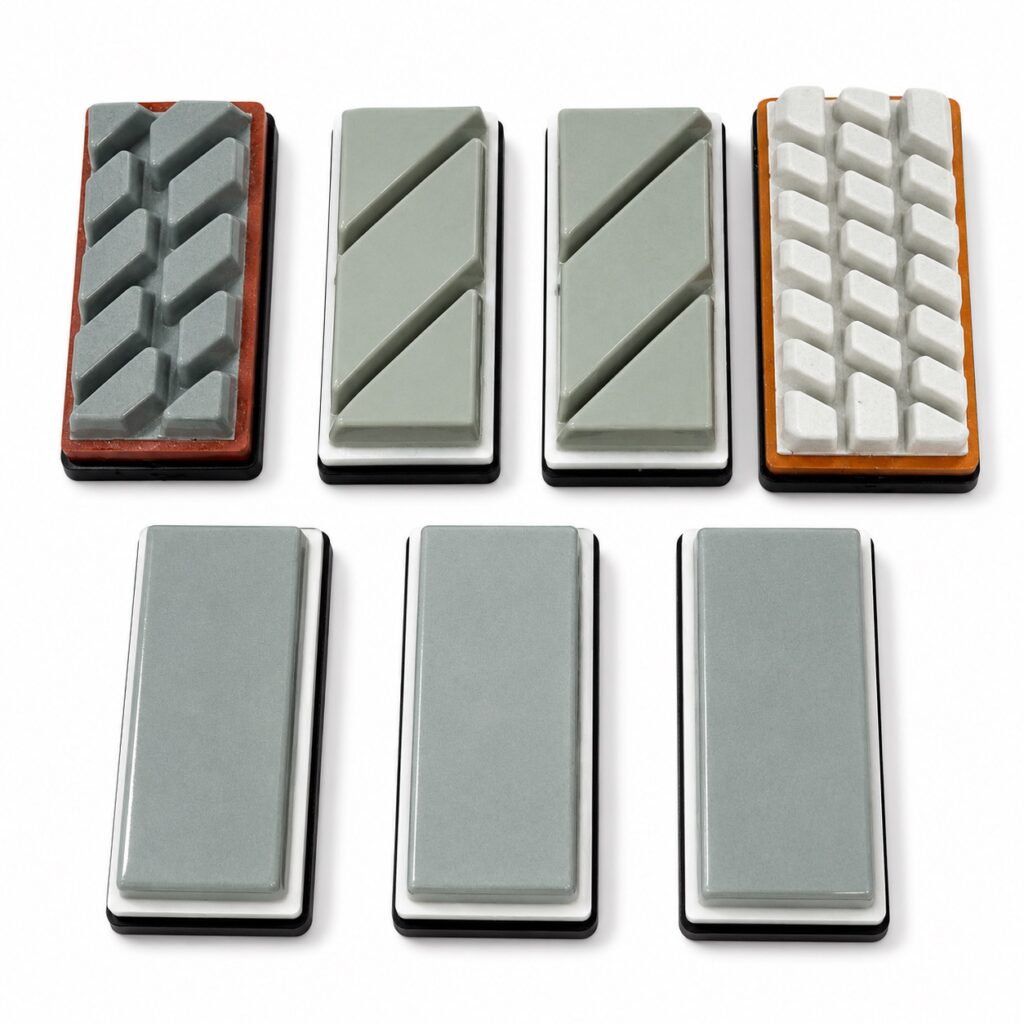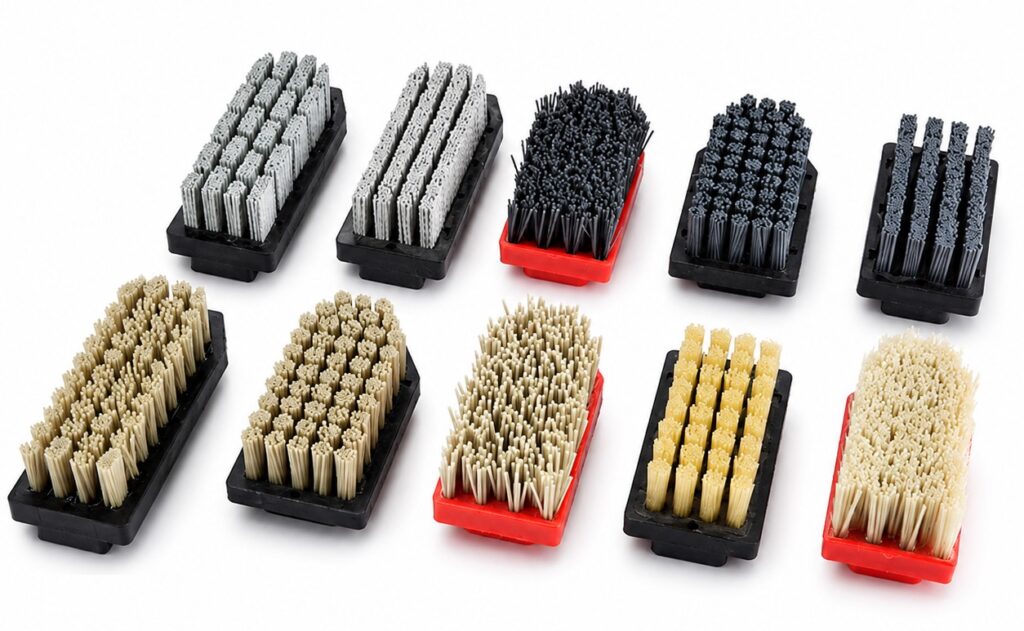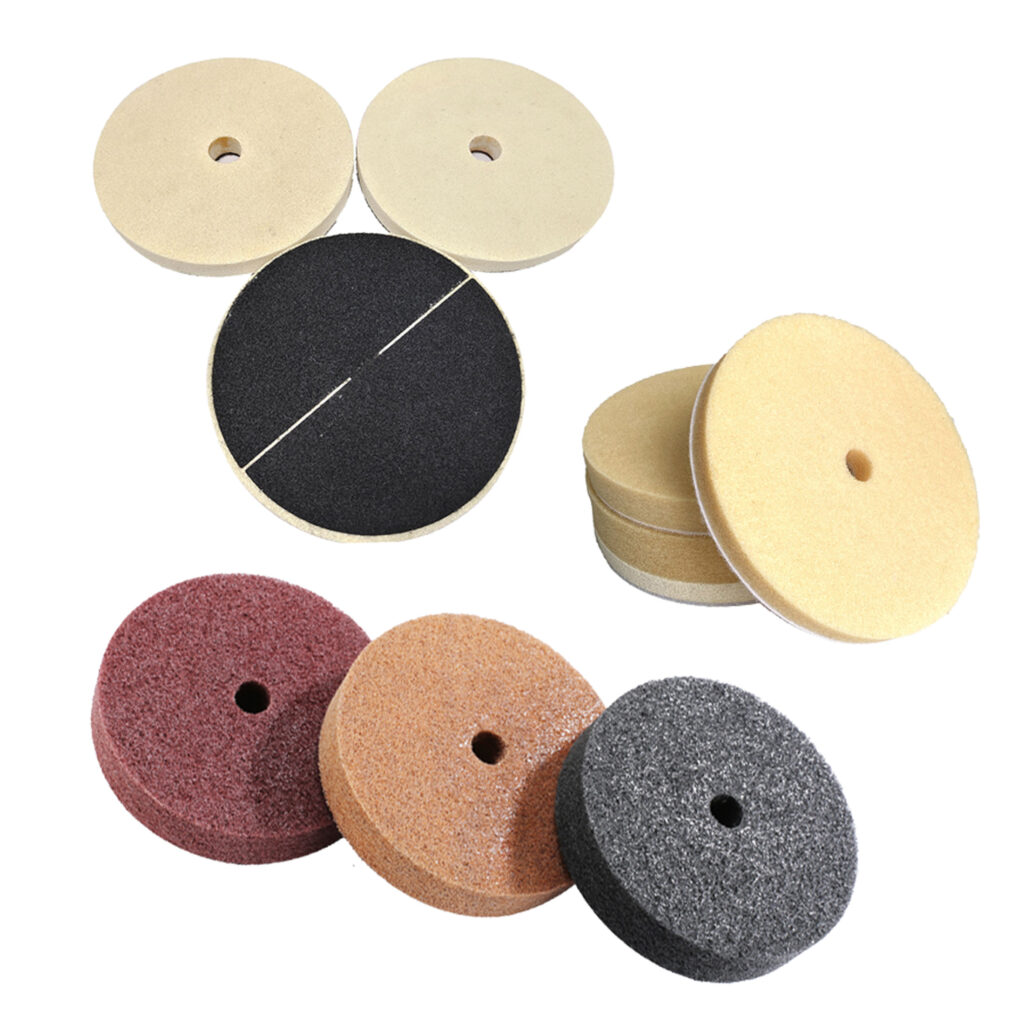
A tile factory runs a trial of a new lappato abrasive set. The results look promising, so the purchasing manager places a production order. The first delivery arrives, and within a week the polishing line shows finish drift, edge chipping returns, and the shift supervisor demands a return to the previous blocks. The problem is rarely the abrasive itself. More often, the trial changed several machine settings alongside the abrasive, used a different tile batch, and inspected the surface with no fixed measurement protocol. The improvement that appeared on the trial day vanishes under stable production conditions, leaving a repeat-order mismatch, wasted machine time, and a cross-departmental debate over what “acceptable” really means.
A reliable lappato abrasive qualification does not rest on a single snapshot of gloss or a quick cost comparison. It depends on a trial design that isolates the abrasive’s performance from process variables, establishes a comparable baseline, inspects finish with one consistent method, and gathers enough wear-stability evidence to align production, quality, and procurement around a common definition of useful life. The decision that separates confident batch approvals from costly requalification loops is whether the trial conditions, inspection discipline, and cross-functional acceptance criteria are locked before the first tile passes under the new blocks.
Controlled Variables in an Abrasive Trial
Every uncontrolled variable in a lappato abrasive trial buries the true performance signal under processing noise. When a tile factory tests a candidate set of blocks and simultaneously adjusts feed speed, head pressure, or switches to a different tile batch, any measured change in finish or wear rate becomes unassignable—was it the abrasive, the new pressure setting, or the tile surface variation? The answer matters because a qualification decision that cannot attribute the improvement to the abrasive will collapse when the variable is later changed back on the production line, triggering a failed repeat order and forcing a re-trial.
Locking the variables is not about following a universal checklist but about removing confounding risks so that the only difference between the reference and the candidate is the abrasive itself. The table below summarizes the key variables to control and the risk each one introduces when left free to change.
| Variable | What to lock | Risk if changed |
|---|---|---|
| Tile batch | Same tile batch, format, and surface specification | Tile surface differences mask abrasive-related finish changes |
| Machine position | Same polishing head position and configuration | Variable contact geometry or force alters wear pattern |
| Feed speed | Constant line feed rate | Contact time per tile changes, affecting both wear and finish |
| Pressure | Fixed pneumatic or mechanical pressure setting | Abrasive work rate shifts, confusing life comparison |
| Water flow | Steady cooling and flushing volume | Debris removal and thermal conditions vary, influencing wear stability |
| Sampling plan | Fixed tiles per interval and consistent position on the tile | Inconsistent data prevents reliable trend detection |
| Inspection method | One instrument, location grid, and operator | Finish readings are not comparable across measurement sessions |
The most common mistake pattern is adjusting several settings to “help” the candidate perform. A trial where feed speed is dropped, water flow is increased, and the sampling interval is relaxed may produce a favorable finish. But the result cannot be reproduced when the line returns to its normal operating window, because the improvement came from the changed conditions, not from the abrasive. A qualification built on such a trial is fragile: any attempt to restore the original process parameters will reveal that the abrasive never delivered the expected gain under standard conditions.
Changing multiple variables alongside a new abrasive hides which improvement belongs to the product and which to the process.
For operations where the lappato surface effect—semi-gloss with a visible microstructure—must remain stable across long runs, the pressure and water-flow variables are especially critical. Even small shifts in contact force or debris removal change the way the blocks wear and the resulting gloss uniformity. When these variables are not documented and held constant, wear-pattern comparison between the existing product and the candidate becomes guesswork, and any finish difference later seen in production cannot be traced back to a valid trial.
Baseline Performance from the Existing Product
A candidate abrasive trial has no useful reference without a baseline run using the current product under exactly the same locked conditions. Skipping this step means the evaluation team is comparing the candidate’s finish against a memory of what the existing blocks usually produce—a memory that is often wrong or imprecise. The consequence is a qualification decision based on a perceived improvement that may not exist, or on a difference that actually belongs to a tile batch change or a slowly degrading machine setting rather than to the abrasive.
Running a baseline does not require a separate trial window; it can be done immediately before the candidate run on the same shift, using the same tile batch, polishing head position, and operating window. The resulting finish data points—gloss, haze, flatness measurements at fixed tile positions—become the comparator. Without them, even a well-controlled candidate trial cannot answer the essential question: does this new abrasive perform better, worse, or equivalently under the same conditions? A purchasing decision made without a baseline is essentially a bet that the candidate is at least equal to the incumbent, but there is no evidence to support that bet.
Without a baseline run under identical locked conditions, a promising finish result cannot be confidently attributed to the candidate abrasive.
The baseline also serves a less obvious purpose: it captures the current state of the incumbent abrasive’s wear behavior over the number of tiles planned for the candidate trial. If the existing blocks already show a finish decline within that run length, the candidate must be evaluated against that declining baseline, not against an idealized performance level. When a factory skips the baseline, it often sets an implicit expectation that the candidate will outperform a product whose actual wear curve was never measured, creating a mismatch that surfaces only after the first full production batch.
Finish Comparison Under One Inspection Method
Finish comparison between abrasives breaks down the moment the inspection method changes between measurement sessions. A handheld gloss meter used at a slightly different angle, a different operator selecting tile measurement locations, or a shift from a 60° gloss measurement to a visual ranking by the quality inspector—all produce numbers or judgments that cannot be compared with the baseline data. The entire qualification exercise then rests on incompatible data sets, and the resulting decision to approve or reject the candidate is unsupported by evidence.
A single inspection method means one instrument, one measurement grid, one operator (or a documented protocol that reduces operator-to-operator variability), and one consistent timing for taking measurements after polishing. If the baseline finish was measured at three fixed points on the tile with a gloss meter calibrated that morning, the candidate’s finish must be measured the same way. Changing the location grid because a visual inspection suggests a different area is worse defeats the purpose of a controlled comparison. The goal is not to find the best-looking spot on the tile but to measure the same spots under the same conditions so that any difference belongs to the abrasive.
Finish data from two different inspection methods cannot be compared—and cannot support a batch approval.
In lappato applications, the finish is a combination of gloss level and the uniformity of the semi-polished texture. The inspection method must capture both the specular component and the visual consistency across the tile surface. A simple gloss reading at one point may miss a patchy lappato effect that becomes obvious under angled factory lighting. Therefore, the protocol should define not only the instrument type but also the number of measurement points and the acceptance criterion for point-to-point variation. If the baseline was characterized with a multi-point grid and a haze or distinctness-of-image parameter, the candidate trial must use that same setup, or the comparison is invalid for the purposes of a procurement decision.
Short Trial Versus Wear-Stability Evidence
Production teams often push for the shortest possible trial to minimize disruption, while quality and procurement want enough data to predict how the abrasive will behave over its full service life. A trial that runs only one hour or a few dozen tiles gives an early-life finish snapshot but offers almost no information about whether the finish will remain stable as the blocks wear. This creates a decision risk: a candidate that looks excellent in the first 200 m² may show a gradual gloss drop or uneven lappato texture after 1,000 m², yet that drift will only appear after scale-up, when the blocks are already in full production.
The table below lays out the trade-off between short and extended trials in terms of the evidence each provides.
| Aspect | Short trial | Extended trial |
|---|---|---|
| Machine time and sample use | Low | Higher |
| Initial finish measurement | Point-in-time snapshot | Trend across multiple wear intervals |
| Wear rate trend | Limited data points | Clear wear stabilisation or drift visible |
| Finish consistency evidence | Only early-life behaviour | Life-of-batch finish stability |
| Ability to predict full batch life | Weak | Strong |
| Purchasing confidence from results | Lower, risk of repeat-order mismatch | Higher, life and appearance understood under trial conditions |
The appropriate trial length depends on what question needs to be answered. If the facility only needs a quick screening to reject candidates that clearly underperform in initial finish, a short trial under locked conditions works. But if the decision is to replace the existing abrasive and commit to a production-scale order, an extended trial that captures the wear-stabilization phase becomes necessary. The wear-stabilization point is where the block’s surface has bedded in and the finish stabilizes around a steady-state value that will hold for most of its useful life. Without reaching that point, the trial data cannot differentiate between an abrasive that stabilizes well and one that drifts slowly toward unacceptable appearance.
A short trial screens candidates; an extended trial provides the evidence needed to predict full-batch life and finish consistency.
The resource cost of a longer trial—additional machine time, more sample tiles, more measurement labour—is real. However, it should be weighed against the cost of a failed scale-up: line downtime while the new abrasive is pulled, rework on under-processed tiles, and the erosion of trust between the supplier and the buyer’s technical team. Many factories that repeatedly switch abrasives after short trials end up cycling through candidates without ever stabilizing their lappato finish, precisely because the qualification evidence never captured wear behavior.
Cross-Functional Approval of Life and Appearance
Procurement stalls on abrasive qualification even when the technical data looks acceptable because production, quality, and purchasing define “useful life” and “acceptable appearance” differently. A candidate that delivers the required gloss and texture for 5,000 m² may be approved by quality, but production may see that the blocks require a pressure adjustment mid-life to maintain the finish, which they consider an unacceptable operational disturbance. Meanwhile, procurement may have calculated the cost per m² based on a 6,000 m² life assumption, and the shortfall creates a budget mismatch that delays the purchase order.
The table below illustrates these typical perspectives and the misalignment risks they generate.
| Department | Typical focus | Definition of useful life | Definition of acceptable appearance | Risk of misalignment |
|---|---|---|---|---|
| Production | Line stability and output | Abrasive change interval that avoids unscheduled stops | Appearance that does not trigger rework or line speed drops | May accept shortening replacement cycles that procurement and quality view as inconsistent |
| Quality | Final tile specification | Life that keeps finish within the agreed product standard | Gloss, flatness, and visual consistency within defined limits | May reject candidate if appearance borderlines appear before life target is reached |
| Procurement | Cost per m² and supply assurance | Total square meters processed per abrasive set | Appearance acceptable to production and quality, without field complaints | May approve based on cost data alone while production and quality still see performance risk |
The resolution is not to force all departments to use the same definition but to align on a common set of acceptance criteria before the trial begins. A practical approach is to define a minimum acceptable life in square meters processed, a maximum allowable gloss variation across that life, and a stable operating window that does not require manual pressure or speed adjustments beyond the agreed range. When the trial results are reviewed, each department evaluates the same data against these pre-agreed criteria, rather than bringing its own unstated standards to the table.
Procurement may approve a candidate on cost data alone while production and quality still see performance risk—alignment must happen before the trial, not after.
A common failure pattern is that production signs off on a trial that ran with a slower feed speed “just to be safe,” while procurement uses the standard-speed cost model for the purchase decision. When the blocks are later run at the normal line speed and the life and finish do not match the trial, the resulting blame game delays the next qualification cycle and leads to conservative reversion to the previous abrasive, even if the candidate was fundamentally better. Writing the trial protocol with cross-functional input—specifying exactly which operating window, measurement method, and acceptance thresholds apply—closes this gap before the evaluation begins.
Batch Release with Traceable Trial Results
A successful qualification trial does not end with a technical go/no-go. It ends with a set of documented conditions, finish data, and retained samples that enable the buyer to release a production batch with confidence that it will perform like the approved trial sample. Without this traceability, a batch that arrives three months later may behave differently, and there will be no objective way to determine whether the problem lies in manufacturing variation, a change in tile specification, or an undocumented trial condition that was never recorded.
The elements that support a traceable batch release are summarized below.
| Requirement | What it covers | Who maintains it | Risk if missing |
|---|---|---|---|
| Quality specifications | Hardness range, dimensional tolerances, visual defect limits agreed in the supply agreement | Both buyer and supplier under the contract | Incoming batches may behave differently even if trial results are good |
| Trial finish and wear results | Accepted finish and wear-stability data from the candidate batch under the agreed trial conditions | Technical team (production/quality) | No evidence that this batch performs like the approved trial sample |
| Batch production records | Batch records and test results for the supplied lot, available on request | Supplier, reviewed by buyer’s quality or procurement | Cannot verify that the shipped batch matches the manufacturing history that produced the trial performance |
| Retained samples | Physical blocks from the trial and from the production lot for dispute resolution | Both parties store retained samples | No objective reference if performance after release is questioned |
The quality specifications—hardness range, dimensional tolerances, and visual defect limits—must be defined in the supply agreement, not inferred from the trial. If the agreement does not exist, the buyer has no basis to reject an incoming batch that falls outside the narrow range that produced the good trial result, even if the performance later proves unacceptable. Retained samples from both the trial lot and each shipped production lot provide an objective physical reference for dispute resolution. When a production batch shows finish instability, the retained blocks can be inspected and tested against the agreed specifications to determine whether the abrasive itself has changed or whether a process variable on the line is responsible.
A batch release decision without retained samples and agreed specifications is an opinion, not a qualified release.
Batch production records requested from the supplier close the loop. If the trial was run with blocks from a particular manufacturing date and hardness range, and the supplied lot carries a different hardness range or a visual defect count that was not present in the trial samples, the buyer can hold the release and request a re-trial or replacement. This does not turn the purchasing process into a regulatory audit; it simply provides the evidence needed to protect production stability. Facilities that skip this step often find themselves repeating the qualification cycle every few orders, never building a stable, traceable supplier relationship.
When the lappato abrasive qualification is built on a controlled trial with a documented baseline, a fixed inspection method, wear-stability evidence, and cross-functionally agreed acceptance criteria, the batch release becomes a straightforward verification rather than a recurring leap of faith. The next step for a tile factory is not to run more trials but to confirm that the conditions of the approved trial are recorded, that the supply agreement captures the quality specifications that matter for finish stability, and that each incoming production lot is matched against the trial reference. Confidence in a lappato surface on a production line comes from a qualification system that leaves no gap between the trial’s evidence and the batch’s identity.
Frequently Asked Questions
Q: We can’t always secure a single homogeneous tile batch for an entire trial. How do we still isolate the abrasive’s performance?
A: If a single batch isn’t feasible, run the baseline and candidate blocks on a split tile lot within the same shift, then repeat a short confirmation run on a second batch to check for batch-to-batch interaction. You won’t eliminate the tile variable entirely, but you’ll limit its confounding effect and make any batch-sensitive drift visible before committing to a full order.
Q: We’ve never run a formal abrasive qualification before. What is the very first step to initiate the process?
A: The first concrete step is to convene a short cross-functional meeting with production, quality, and procurement to agree on the trial’s operating window, finish acceptance thresholds, and measurement protocol. Locking these cross-departmental criteria before contacting the supplier ensures the trial produces evidence all sides will trust.
Q: Does this trial design work for both elastic and rigid lappato abrasive blocks?
A: Yes, the core control principles apply equally to all lappato abrasive formats, because the goal of isolating the abrasive’s contribution from process noise remains the same. However, elastic blocks (such as the elastic lappato abrasives Basair manufactures) are more sensitive to pressure and water-flow fluctuations, so those two variables demand tighter documentation and narrower control limits in the trial protocol.
Q: How does a locked-variable trial with a baseline compare to simply running a few tiles and checking the finish by eye?
A: A controlled trial produces objective, repeatable data that directly supports a commercial decision, while a visual spot-check often masks the influence of speed, pressure, or tile changes, creating false confidence that vanishes after the abrasive reaches steady-state wear in production.
Q: At what point does the investment in an extended wear-stability trial become cost-justified compared to a quick screening?
A: The investment becomes justified as soon as the potential cost of a single failed production batch—line downtime, tile rework, and wasted stock—exceeds the trial expense. For any factory running a continuous lappato line, the avoided risk of an undetected finish drift or premature abrasive failure typically pays for the extended trial many times over.