Choosing a lappato abrasive by tooth pattern name alone tells a buyer little about how that profile will behave on an existing polishing line. The same nominal grit designation can produce different wetting, debris clearance, and surface uniformity depending on how the tooth layout interacts with the holder, the polishing head, and the tile already running through the line. Evaluating tooth shape is therefore a fit-and-evidence question, not a catalog comparison, and the trial conditions used to judge one profile against another determine whether the result carries any weight beyond that specific setup.
Start with the Surface and Machine Conditions the Tooth Layout Must Serve
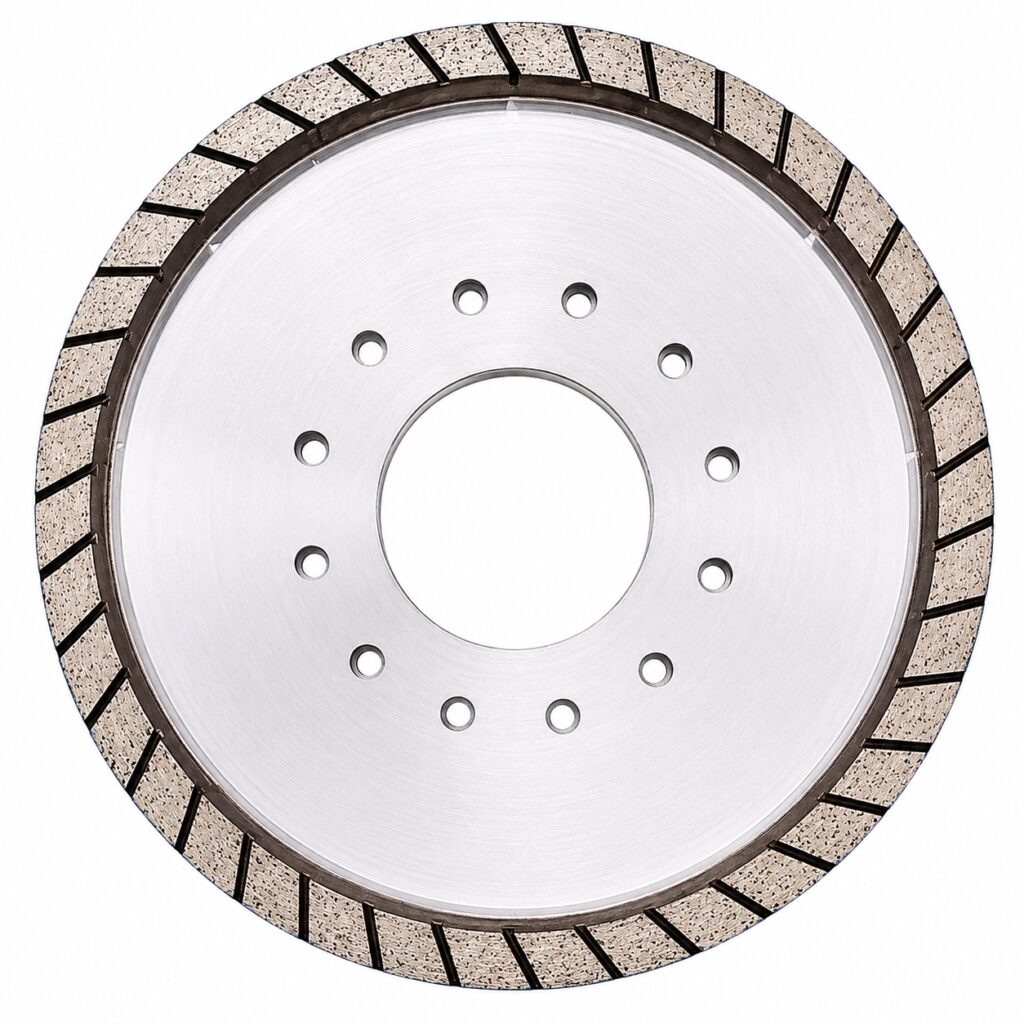
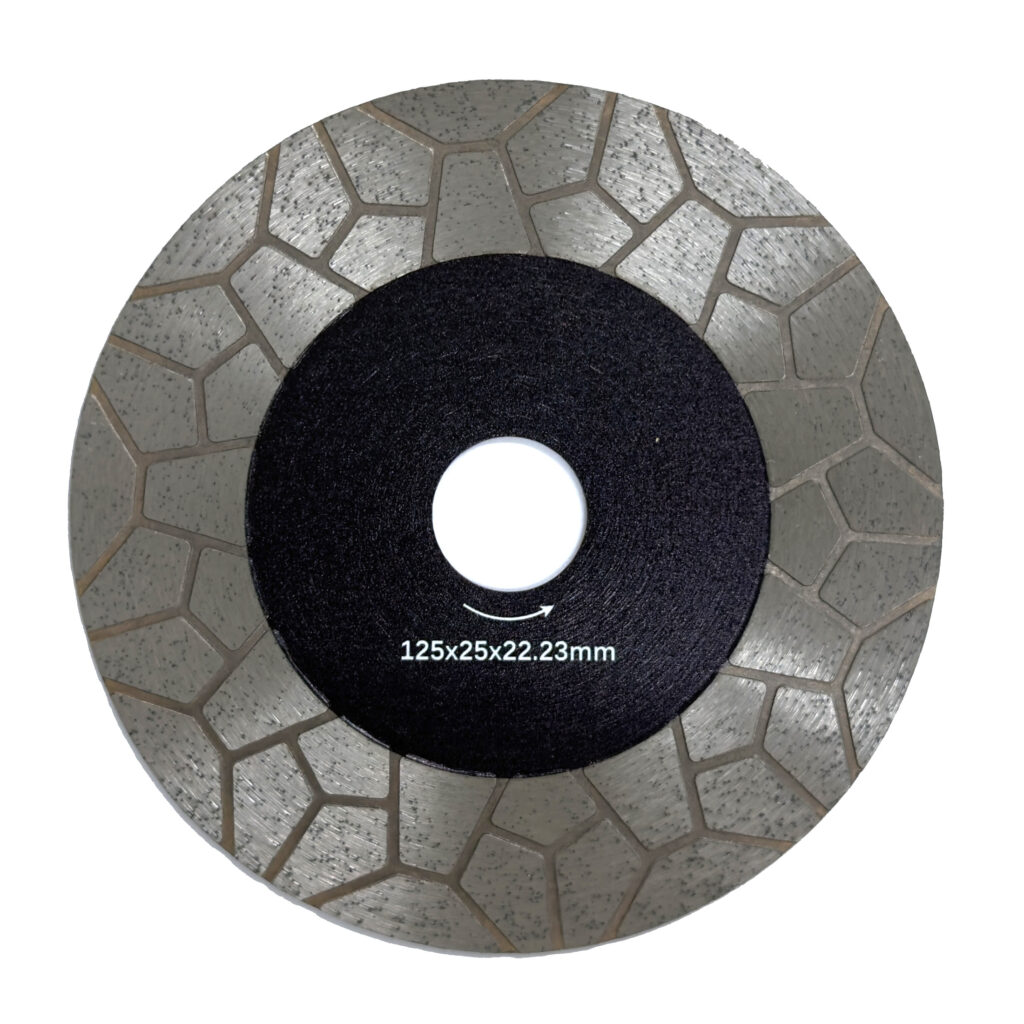
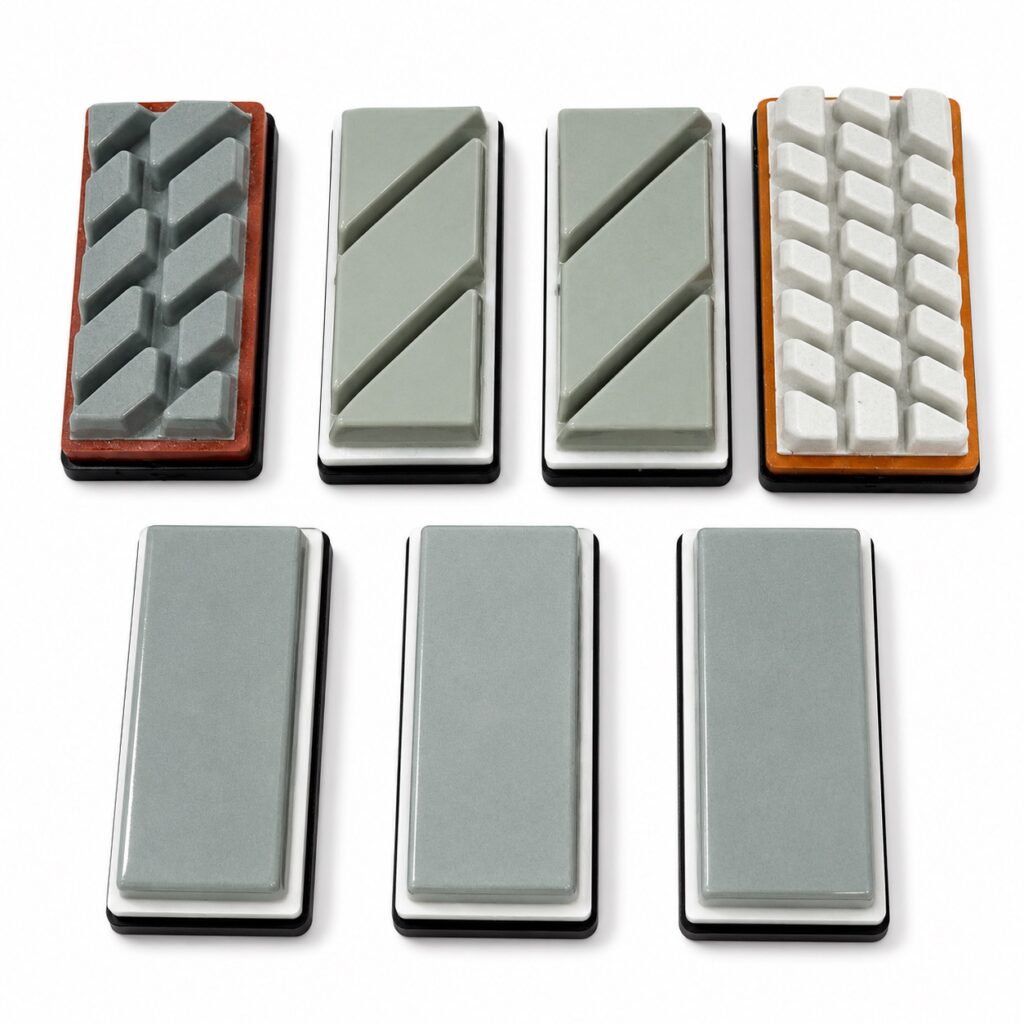
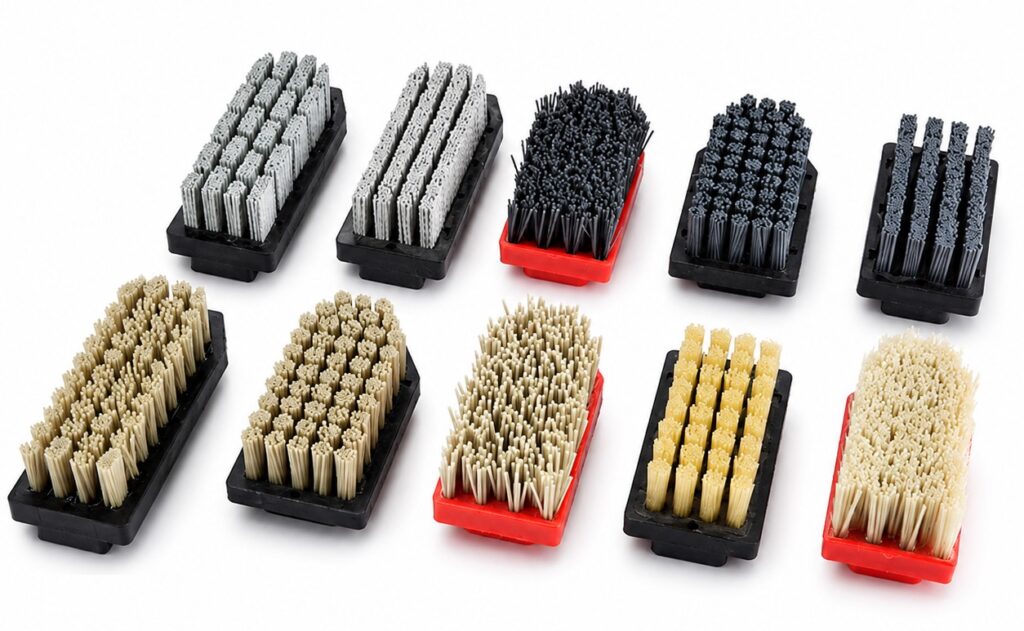
A tooth layout does not act on the tile surface in isolation. It acts through the interface formed by the block, the holder, and the polishing head, and that interface is what actually determines contact behavior. Where the relief surface between teeth is shallow, water and slurry move across the block differently than where the relief is deep, and this changes how debris clears from the contact zone even when two blocks share a nominal grit rating. This is why the tooth pattern needs to be treated as part of the machine-block interface rather than as a standalone abrasive attribute: the same grit specification printed on two supplier drawings does not guarantee the same contact behavior once each block is mounted in a given holder and head arrangement.
Before comparing candidate shapes, the buyer needs a clear picture of the conditions the tooth layout must work within. This includes the polishing head’s trajectory pattern, the arrangement of heads along the line, and the surface characteristics of the tile currently in production or planned for production. Where a line runs alternating head arrangements, the tooth layout on each block may need to perform differently depending on its position in that sequence, since each head can present a different combination of pressure, speed, and dwell time to the tile surface. Ceramic World Web’s coverage of alternating satellite and Fickert head arrangements for lappato polishing addresses this relationship between head trajectory and polishing outcome, which is why the machine-side conditions belong in the evaluation before any tooth profile is shortlisted.
The practical consequence is that a tooth shape cannot be judged as universally better or worse. It can only be judged against the specific combination of holder, head arrangement, and tile surface it will run against. A profile that clears debris well under one head trajectory may behave differently under another, and a buyer who evaluates tooth shape without first fixing these machine-side conditions has no stable basis for comparison. The starting task, then, is to document the holder type, the head arrangement, and the representative tile surface before any candidate block is requested for trial.
Map the Block Profile to Holder and Polishing-Head Fit
Once the machine-side conditions are documented, the next task is confirming that a candidate block’s physical geometry actually fits the equipment it will run in. This is a dimensional and mechanical question, separate from how the tooth pattern performs on the tile surface. A block can have a tooth layout that seems well suited to the application and still fail to seat correctly in the holder if the overall block dimensions were not checked against the holder and head arrangement in use.
The supplier drawing is the primary reference for this check. It should identify the exact tooth geometry being proposed and show the overall block dimensions clearly enough to confirm fit before any trial is scheduled. Asking the supplier to confirm both of these on the drawing avoids a situation where a profile is evaluated on tile surface performance only to be found unsuitable for the holder afterward. Dimensional confirmation and surface-response evaluation are different steps, and completing them in the wrong order wastes trial time on a block that cannot be mounted as intended.
| Fit item | Evidence to check | Decision boundary |
|---|---|---|
| Tooth layout | Exact tooth geometry identified on the supplier drawing | Confirms which profile is being assessed |
| Overall block dimensions | Dimensions shown for the proposed block | Supports holder-fit confirmation; dimensions alone do not show surface response |
| Holder and polishing-head arrangement | Proposed profile checked against the actual holder and head setup | The same nominal grit can contact a relief surface differently across arrangements |
Fit confirmation does not predict how the tooth layout will behave once mounted. A block can match the holder dimensions exactly and still contact the relief surface differently than an alternative candidate with the same nominal grit, because the tooth geometry itself governs how the abrasive surface engages the tile, independent of whether the block seats correctly. This is why dimensional fit and contact behavior need to be checked as two separate items rather than treated as one confirmation step. Where a buyer is evaluating multiple candidate shapes for the same line, requesting drawings for each candidate before committing to a physical trial reduces the number of blocks that need to be mounted and tested to reach a usable comparison.
Compare Wetting and Debris-Clearance Behaviour on Representative Tiles
Wetting and debris clearance are the two behaviors that most directly connect tooth geometry to finished-surface quality, and they need to be observed together because they influence each other during the polishing pass. The tooth layout determines how water and slurry spread across the contact area and how quickly removed material is carried away from that same area. Where wetting coverage is uneven, some regions of the contact zone receive less lubrication than others, and this can change how the abrasive interacts with the tile surface in those regions compared with areas that are adequately wetted. Where debris clearance lags behind material removal, particles can remain in the contact zone longer, which changes how the abrasive surface engages the tile on subsequent passes.
These two behaviors do not transfer predictably from one material to another. A tooth layout that clears debris effectively on one glaze hardness or surface texture may behave differently on a tile with a different surface characteristic, because the volume and consistency of material being removed changes with the tile itself. This is a reason to evaluate wetting and debris clearance on tiles that represent the actual production material, rather than relying on a supplier’s general description of a tooth pattern’s clearance behavior. A profile description alone does not indicate how consistently it wets and clears debris under the buyer’s own tile and line conditions.
Because these behaviors interact, the comparison needs to be made on the same tile, under the same trial conditions, for each candidate shape. Observing wetting on one tile and debris clearance on a different tile does not produce a comparable result, since either variable alone can mask or exaggerate the influence of the other. The practical task is to run each candidate under conditions close enough to production use that the wetting and clearance pattern observed reflects how the profile would behave on the line, not just under isolated test conditions. This observation stage is what generates the evidence a buyer needs before moving to a controlled trial across multiple variables.
Control Grit Stage, Tile Input and Line Settings During the Trial
A tooth-shape comparison only produces a usable result if the variables surrounding the tooth layout are held constant across candidates. If block dimensions, grit stage, tile input, or line settings shift between one candidate and the next, any difference observed in the finished surface could be caused by that shift rather than by the tooth geometry itself. This is why comparing candidate shapes needs to happen while holding block dimensions, grit stage, and line settings constant, with the same representative tiles used across every candidate in the comparison set.
Grit stage control matters because a tooth layout can behave differently depending on where in the polishing sequence it is positioned. A profile evaluated at an early grit stage is working under different material-removal demands than the same profile evaluated at a later, finer stage, so comparing candidates only within the same grit stage isolates the tooth geometry as the variable under test. Tile input control matters for the same reason described earlier: surface characteristics vary between tiles, so using tiles from the same representative set for every candidate removes that variable from the comparison. Line settings control matters because pressure, speed, and other machine parameters influence contact behavior independently of the tooth layout, and changing them between candidates would confound the result.
| Trial variable | Controlled comparison | Reason for consistency |
|---|---|---|
| Block dimensions | Match overall block dimensions across candidate tooth shapes | Keeps block size from changing with the tooth shape |
| Grit stage | Run each candidate at the same grit stage | Keeps the abrasive stage aligned across candidates |
| Tile input | Use representative tiles from the same comparison set | Gives each candidate the same surface input |
| Line settings | Keep the selected line settings unchanged between candidates | Keeps machine conditions aligned across candidates |
Where a buyer changes more than one variable between trial runs, the resulting comparison no longer isolates tooth shape as the cause of any observed difference, and the trial data becomes difficult to act on with confidence. Confirming which variables were held constant, and which tile lot and line settings were used, is information the project team needs before treating trial results as decision-ready evidence. Where the project information supplied to Basair includes these controlled trial parameters alongside the tooth-layout candidates under review, that information can enter the equipment and abrasive configuration review for the project rather than requiring a separate re-specification step later.
Record Surface-Quality Evidence Before Approving a Tooth Layout
The final judgment on a tooth layout rests on what the trial evidence shows under the controlled conditions already established, not on the profile name or its general reputation. Four categories of evidence carry that judgment: the contact pattern left on the relief surface, the fluid movement observed across the tile-contact area, the debris movement during the comparison, and the uniformity of the finished tile surface. Each of these needs to be recorded from the actual trial run, under the same holder and head arrangement and the same controlled variables described earlier, rather than inferred from a supplier’s description of the tooth profile.
| Evidence area | Record from the trial | How to use it |
|---|---|---|
| Contact pattern | Marks showing where the block contacted the relief surface | Compare candidate layouts within the tested holder and head arrangement |
| Fluid movement | Coverage and escape pattern across the tile-contact area | Treat as one comparison signal under the trial settings |
| Debris movement | Clearance from the contact area during the comparison | Check whether layouts differ under the same controlled variables |
| Finished surface | Uniformity across the evaluated tile surface | Use for approval of the trialed layout only; no universal acceptance limit is established |
The contact pattern shows where the block actually engaged the relief surface, which is the most direct evidence of how the tooth geometry behaved within the specific holder and head arrangement tested. Fluid movement and debris movement together indicate whether the wetting and clearance behavior observed earlier held consistently across the controlled trial, or whether it varied in ways that affected the finished surface. Finished-surface uniformity is the outcome the buyer ultimately cares about, but it needs to be read alongside the other three evidence categories rather than in isolation, since a uniform-looking surface produced under one set of trial conditions does not establish how the same tooth layout would perform under a different tile, grit stage, or head arrangement.
This is also where the boundary of any approval needs to be stated clearly. Approving a tooth layout on the basis of this evidence applies to the tested holder and head arrangement, the tested grit stage, and the tested tile input. ISO 10545-2 provides a standardized method for determining ceramic-tile surface quality, but it defines a test method rather than a process setting or an acceptance limit for a specific tooth layout, so it does not substitute for the trial-based evidence record described here. Where a buyer later changes the head arrangement, moves to a different tile surface, or shifts grit stage, the approved layout’s performance needs to be re-confirmed rather than assumed to carry over. This is the same reasoning that applies when Basair’s polishing equipment and lappato abrasives are configured together for a project: the trial evidence gathered under one set of line conditions supports approval within that scope, and any change to the equipment interface or material calls for the comparison to be repeated under the new conditions before the layout is carried forward.
Frequently Asked Questions
Q: How should I narrow tooth-shape candidates before a line trial?
A: First exclude any profile that cannot be confirmed against the actual holder, polishing-head arrangement, and required block dimensions. For the remaining candidates, use the supplier drawing to identify the exact tooth layout; a profile name or matching nominal grit is not enough to establish fit or surface response.
Q: Can a tooth layout approved on one tile surface be carried over to another?
A: Treat the approval as limited to the representative tile set, holder and head arrangement, grit stage, block dimensions, and line settings used in the trial. If the tile relief or any of those conditions changes, confirm the fit again and run a controlled comparison before carrying the decision forward.
Q: What can make a tooth-shape comparison inconclusive?
A: A comparison is inconclusive when candidates are tested with different block dimensions, grit stages, tile inputs, or line settings, because the observed change cannot be assigned to tooth shape alone. Repeat the comparison with those variables held constant and record the same evidence for every candidate.
Q: What should be prepared for a supplier to assess a proposed tooth layout?
A: Provide the actual holder and polishing-head arrangement, required block dimensions, representative tile surface or relief, grit stage, and the line conditions planned for the trial. Ask for a drawing that identifies the exact tooth geometry and overall dimensions so fit can be checked before the trial.
Q: How should conflicting trial observations be handled before approval?
A: Do not approve from a single favorable observation. Review contact marks, fluid movement, debris clearance, and finished-surface uniformity together under the same controlled conditions, then apply the project’s own acceptance criteria to the complete record; these observations alone do not establish a universal pass limit.