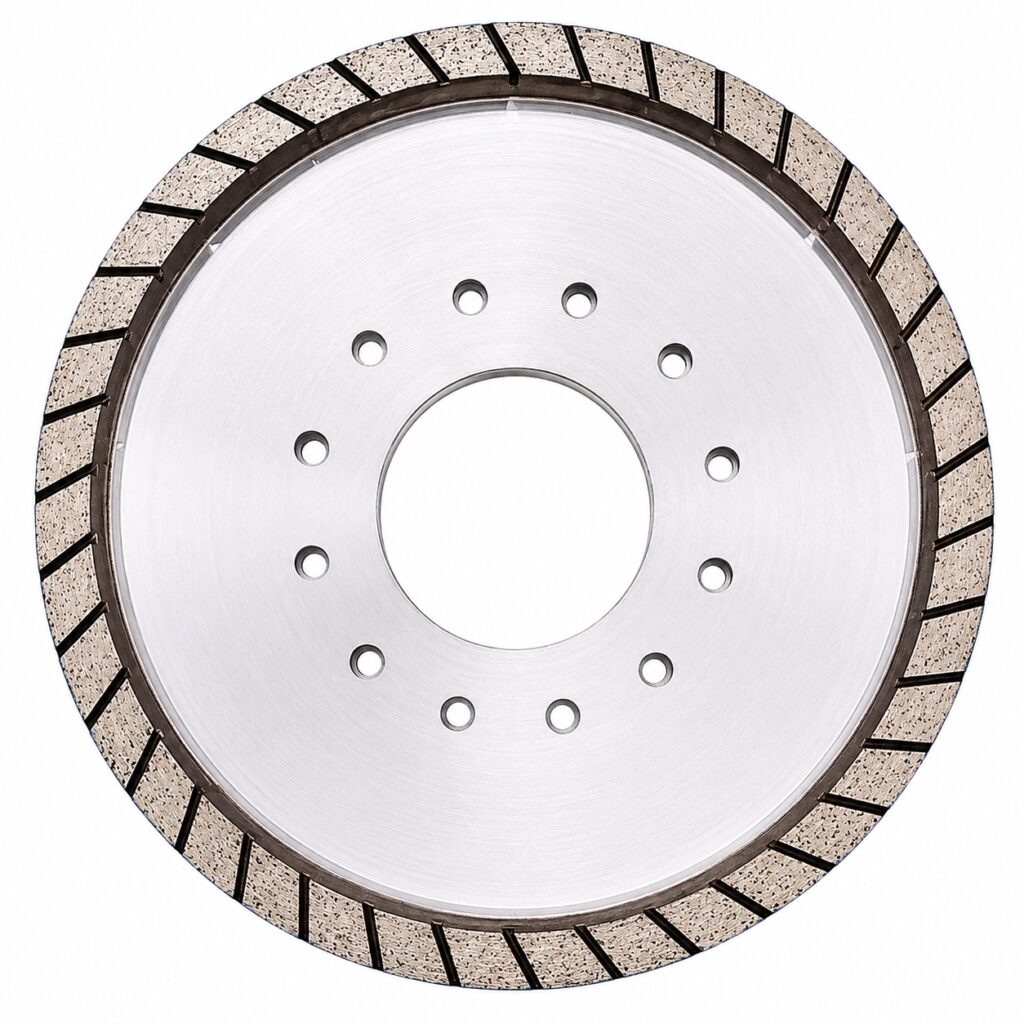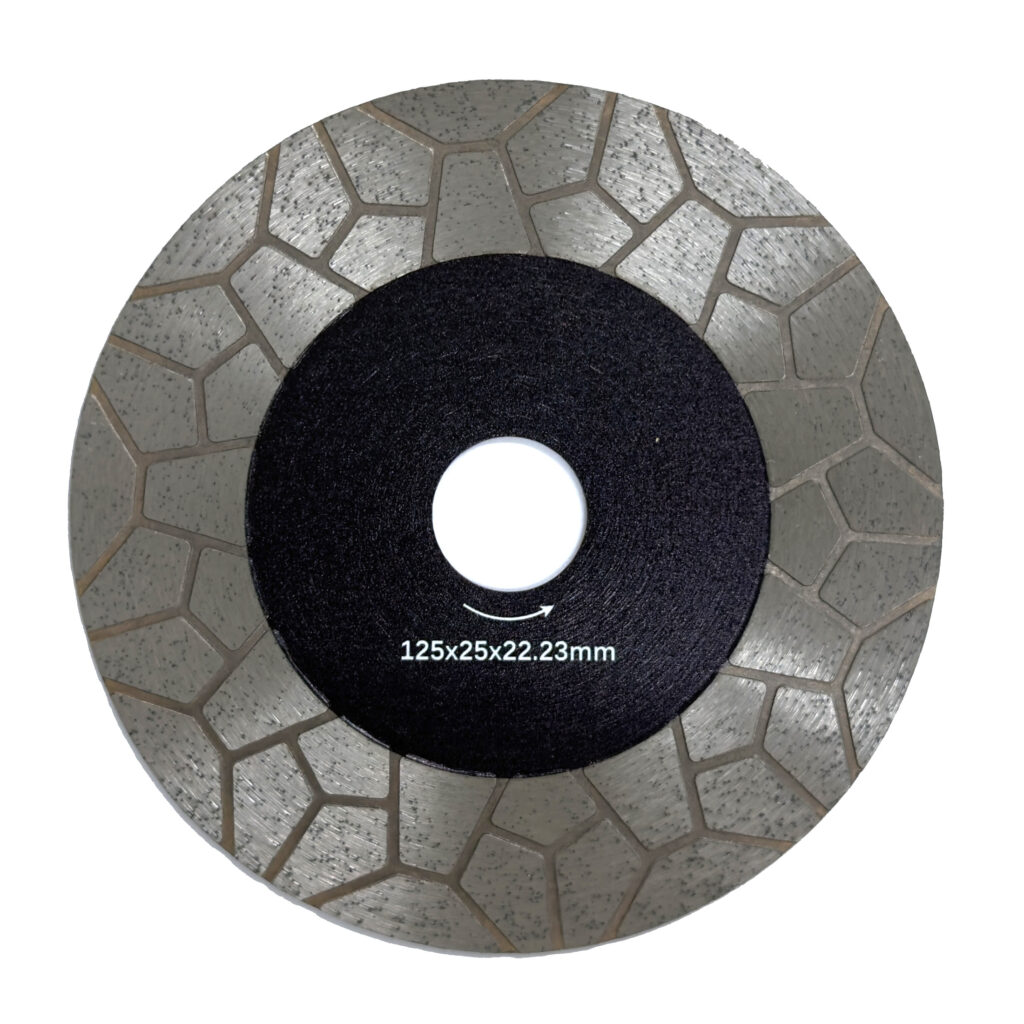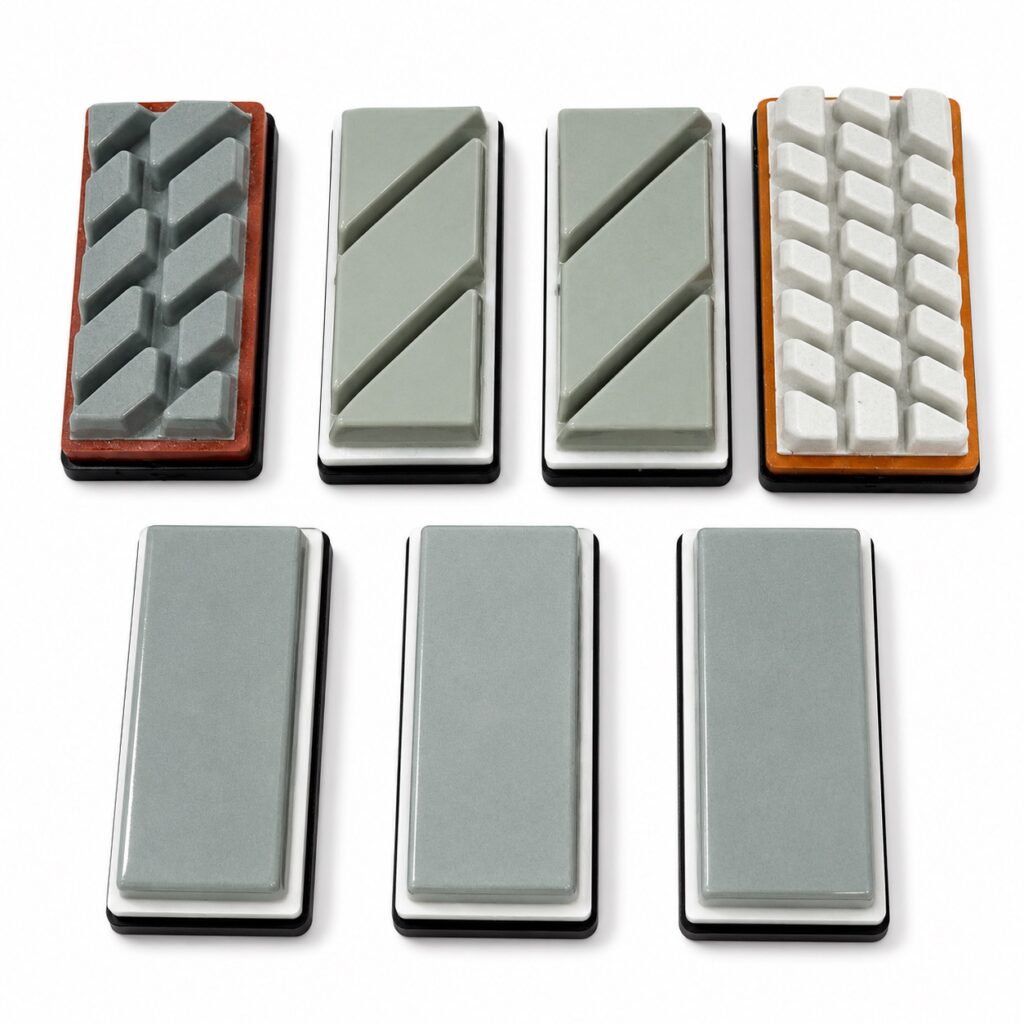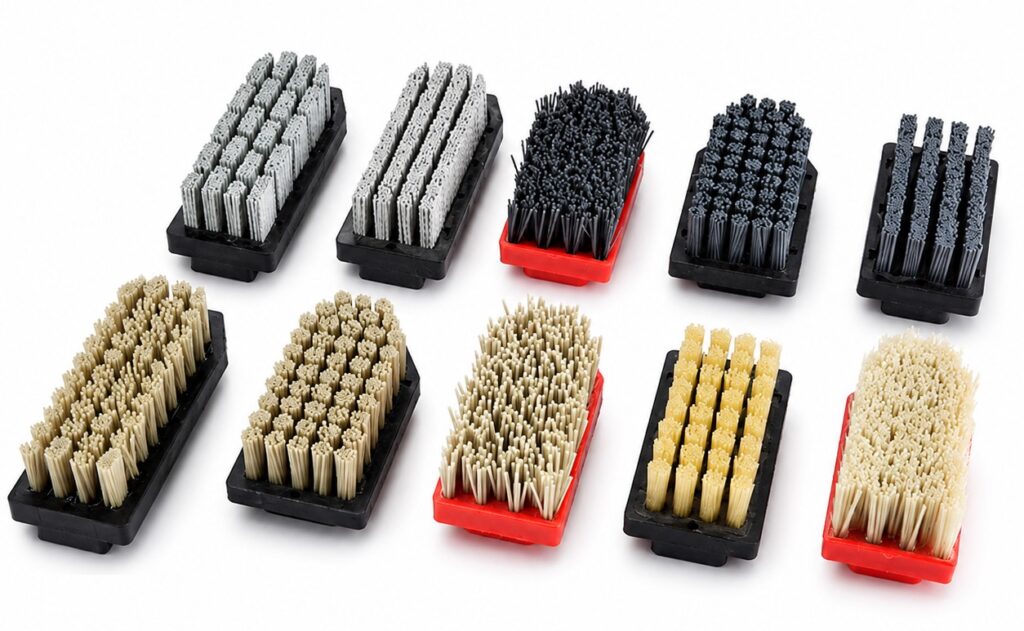
A lappato line that produces consistent semi-polished surfaces on one glaze body can generate repeated scratch marks, uneven coverage, or premature block wear the moment the tile specification changes—even when the grit number stays the same. The failure usually appears after production has ramped, not during initial setup, because the mismatch between elastic block behavior and glaze hardness or texture depth only becomes visible under sustained contact and full-speed throughput. By that point, the cost is rework, scrap tile, and a qualification cycle that should have happened before the block was approved. The judgment the process engineer or purchasing team needs to make is not which grit to buy, but whether the full set of tile and line inputs has been gathered before any block is specified.
Glaze and Texture Inputs for Abrasive Selection
Starting selection from a grit label is the most common shortcut that stalls a lappato line. The grit number tells you almost nothing about whether the block will conform to the tile’s texture, survive its glaze hardness, or deliver the coverage the specification requires. The inputs that actually govern the selection decision are the tile’s abrasion resistance class, its texture geometry, the intended lappato coverage zone, and the target gloss level.
The abrasion resistance class under ISO 10545-7 is the place to start for glaze hardness. Request it from the tile manufacturer directly—do not estimate it from visual appearance or tile category. A harder glaze class demands an abrasive bond and structure with enough durability to sustain useful cutting rather than glazing over rapidly. A softer glaze needs a finer, less aggressive structure to avoid over-cutting the glaze layer before the desired semi-polished appearance develops. Misjudging this input means the block either exhausts itself before the surface is refined or cuts through the intended lappato zone faster than the line speed compensates for.
Texture is the second input that changes the decision materially. Deep relief—high peaks with pronounced recesses—demands elastic conformity, because flat or semi-rigid contact will polish peaks while barely touching valleys, producing uneven coverage that looks like a defect under inspection lighting. Shallow, uniform texture is more forgiving of moderate rigidity. The intended coverage target then determines how tolerant the setup can be of contact variation: a line targeting full-surface semi-polish requires blocks that wear evenly and maintain conformity across the abrasive face throughout the tool’s life, not just at break-in.
| Input Factor | What to Determine | Why It Matters for Elastic Block Selection |
|---|---|---|
| Glaze hardness (abrasion resistance class) | Obtain ISO 10545-7 class from tile manufacturer | Determines the abrasive grit and bond aggressiveness required; harder glazes need more durable abrasives to avoid rapid wear |
| Texture depth and pattern | Examine tile sample for relief height and uniformity | Deep textures demand elastic conformity to polish recesses without erasing peaks; shallow textures may allow flatter contact |
| Intended lappato coverage | Define whether semi-polish targets peaks only, entire surface, or specific zones | Full-surface coverage requires uniform block wear and conformability; spot lappato may tolerate less flexibility |
| Glaze finish target | Confirm desired semi-polished (lappato) gloss level | Guides abrasive structure to balance material removal and gloss generation, avoiding over-polishing or matte result |
Missing or misinterpreting any of these inputs before specifying a block turns the subsequent approval process into guesswork. If the tile manufacturer’s abrasion class data is unavailable, physical samples should be tested against candidate blocks before production placement—not assumed from the tile’s format or nominal category.
Holder Fit and Elastic Contact Behavior
The elastic behavior of a lappato block means nothing if it cannot maintain stable, centered contact in its holder. A block that fits loosely will vibrate under load, producing periodic surface marks that are indistinguishable at speed from a glaze defect until the tile is inspected under proper lighting. A block that binds will wear asymmetrically, creating a contact pattern that shifts across the tile face and produces coverage inconsistency regardless of how well the abrasive was specified for the glaze.
Poor holder fit creates finish defects that look like wrong-grit problems, delaying the correct diagnosis.
Holder geometry should be confirmed against the block’s dimensional specification before anything else. This means drawings, not dimensional estimates from a physical sample. The interface between block and holder determines how load distributes across the elastic face during contact. When the fit is correct, the elastic element can do its job—following surface undulations, accommodating tile warpage within the line’s flatness tolerance, and maintaining consistent pressure distribution across the abrasive face.
Tiles on a running production line are not perfectly flat. Rectified tiles carry flatness tolerances that, in practice, can accumulate to meaningful variation across a line of tiles moving at production speed. Elastic block selection should account for the expected flatness range of the specific tile format being processed, not assume ideal geometry. A softer elastic response tracks surface deviation more readily but may sacrifice some refinement efficiency. A stiffer response maintains better abrasive-face geometry but risks losing contact in low areas, which shows up as uneven gloss distribution—particularly problematic on wide-format tiles where deviation over the tile length is larger.
The consequence of mismatching elastic stiffness to surface variation is not always obvious during single-tile qualification testing. It typically emerges when the full range of tile flatness variation runs through the line, and some tiles come out with visible haze or incomplete polish in areas that were fine on the sample tile. Verifying contact pattern uniformity on tiles representing the actual flatness range—including the worst-case tiles in the production lot—is the check that prevents this failure mode from appearing after approval.
Removal Aggressiveness Versus Surface Exposure
The trade-off in this section is direct: more aggressive block structure removes material faster and can address surface defects from earlier process stages, but it also reaches the glaze-body interface sooner. That consequence is not symmetric across tile types.
On through-body porcelain—where the material’s color and structure are consistent from surface to body—controlled overcut is recoverable as long as it does not compromise the lappato coverage zone. The visual impact of exposing underlying body material is limited because the body composition is similar to the surface. On glazed ceramic with a distinct body color, any exposure of the body creates a visible defect that cannot be corrected downstream without reworking the tile. This difference should be treated as a hard design input, not a secondary consideration.
| Factor | If… | Abrasive Selection Consideration |
|---|---|---|
| Tile body type | Through-body colour (porcelain) | Exposure risk is lower visually; can tolerate slightly more removal if surface defects require it |
| Tile body type | Distinct body colour (ceramic) | Exposing body creates a visible defect; maintain lower aggressiveness and finer abrasives to preserve the glaze layer |
| Texture relief height | High peaks and deep valleys | Peaks may have thinner glaze; choose a softer elastic block that distributes pressure and follows contours |
| Texture relief height | Low or uniform relief | Contact is more predictable; moderate aggressiveness may be acceptable without immediate exposure concern |
Textured tiles introduce an additional complication regardless of tile type. Peak areas in high-relief textures carry a thinner effective glaze layer than flat zones. A block that contacts peaks with uniform pressure will remove the glaze at peaks faster than at recesses, and the glaze at peaks may be thinner to begin with. On textured glazed ceramic, this can produce exposure at peaks while the valleys remain under-processed—a defect pattern that fails visual inspection and is difficult to correct without reprocessing the whole tile. A softer elastic block that distributes contact pressure over the contour rather than concentrating it on peaks reduces this risk, but the aggressiveness trade-off must be evaluated against whether the block can still generate adequate refinement in the valleys.
On glazed ceramic, the cost of body exposure is a scrapped tile; calibrate aggressiveness against the glaze layer at the thinnest point, not the average.
Higher aggressiveness should be treated as a risk-informed judgment, not a default when the tile body is through-color. If the existing lappato block is already producing adequate finish without exposure issues, increasing aggressiveness to speed throughput or address upstream defects requires a re-qualification on the affected tile type before implementation.
Machine Position in the Full Grit Sequence
A lappato block’s role is determined not just by its grit specification but by where it sits in the grit progression. A block placed too early in the sequence encounters a surface that is still relatively rough, requiring more removal capacity than a semi-polishing block is designed to provide. A block placed too late may be working on a surface already refined past the point where its grit contributes, adding tool wear and contact time without improving the finish.
Installing a qualified block in the wrong sequence position can produce finish defects while the block itself performs exactly as specified.
Most lappato lines run a progression that moves from coarser stock removal at earlier positions to finer refinement and gloss development in later positions. The semi-polished lappato effect typically depends on the final stages of this sequence generating selective contact—polishing high points and exposed surface area while leaving recessed texture matte. If a block specified for a refinement position is installed in a removal position, it will wear faster than its bond is designed for and may not leave the surface in the right condition for subsequent positions to refine. The reverse—placing a fine refinement block too early—produces a surface that upstream material removal has not prepared, and the block either fails to cut efficiently or produces a finish inconsistency that the later positions cannot correct.
When specifying a replacement block, the sequence position must be identified by holder number and stage role, not by grit label alone. The same grit designation from different suppliers may have different bond hardness, elastic response, and removal characteristics, and the correct choice depends on what the specific machine position is expected to accomplish. This information should be gathered as part of the qualification package, not inferred after the block is installed.
Evidence Needed to Replace an Existing Block
Replacing a running lappato block without gathering structured evidence beforehand routinely produces one of two outcomes: the replacement block fits and performs similarly to the original without confirmation of whether it actually improves the situation, or it introduces a fit or finish problem that requires another replacement cycle to diagnose. Both outcomes extend downtime and delay stable production.
The evidence needed to avoid this loop is not complex, but it must be complete. Drawings or dimensional specifications of the current block and holder interface are the starting point—without them, dimensional fit cannot be confirmed before the block is installed. Physical samples of the tile being processed must represent the actual range of glaze hardness, texture, and flatness in production, not ideal or first-run samples. And current tool performance data—wear rate, finish outcome, and any known defect pattern—establishes the baseline that a replacement must match or improve against.
| Evidence Item | Why It’s Needed | Risk if Omitted |
|---|---|---|
| Drawings/specifications of current block and holder | Ensures new block matches interface and dimensions | Poor fit, vibration, accelerated wear |
| Production tile samples (representative variety) | Evaluates true glaze hardness, texture, and flatness | Block performance may not reflect actual line conditions |
| Current tool performance data (wear rate, finish result) | Baselines existing setup to benchmark improvement | Unable to confirm suitability or quantify gains |
| Exact machine position (holder number, sequence stage) | Determines pressure, speed, and role in grit progression | Risk of installing in wrong stage, causing finish defects |
| Representative tiles for qualification testing | Confirms result on real production rather than ideal samples | Approved block may fail under line variation |
The most commonly omitted item is the exact machine position. Buyers frequently specify by grit and block dimensions without confirming which stage the block occupies and what removal or refinement role that stage plays. This leads to installation in the wrong position, which produces finish defects that look like a block specification problem rather than a positioning error, and the diagnosis takes additional production cycles to isolate.
The evidence-gathering process is a practical review step rooted in operational necessity. It does not require formal certification, but omitting any of its elements turns block replacement into a trial-and-error sequence that wastes tool inventory and production time. Every missing input item corresponds to a failure mode that appears later in the qualification or shortly after commissioning.
Block Approval Through Fit, Finish, and Wear
Approving a lappato block after confirming it fits in the holder and produces an acceptable result on one or two sample tiles is not sufficient. Single-tile testing on ideal samples routinely passes blocks that fail under production-range conditions because the full variation in tile flatness, glaze hardness, and surface texture is not represented in a minimal sample set.
A structured approval sequence should verify mechanical fit first, then contact pattern on representative tiles, then finish quality, then wear trend over a meaningful number of cycles, and finally repeatability across tiles that include the harder, flatter, and more textured specimens in the production range. Fit and contact pattern confirm that the block is mechanically compatible with the holder and the tile surface. Finish quality should be evaluated against a defensible inspection standard—the ISO 10545-2 surface quality criterion, which requires at least 95% of tiles to be free of visible defects when examined at one meter under 300 lux illumination, provides a useful reference point as a finish acceptance benchmark for lappato output, even though it was not written specifically for lappato applications.
| Approval Criterion | What to Verify | Acceptance Basis |
|---|---|---|
| Mechanical fit in holder | Secure, centred mounting with no excessive play | Block installs without binding and aligns with tile path |
| Contact pattern on tile | Uniform engagement across the abrasive face | Even wear-in pattern confirms good conformity to tile surface |
| Semi-polished finish quality | Absence of scratches, haze, or over-polishing | Meets lappato (semi-polished) appearance; ≥95% of tiles free of visible defects per ISO 10545-2 inspection (1 m, 300 lux) |
| Wear trend over initial cycles | Gradual, even material loss without flaking or irregular loss | Unstable wear indicates bond mismatch; trend must be stable within evaluated cycles |
| Repeatability across multiple tiles | Consistent finish and wear on several representative tiles | Variation suggests sensitivity to tile flatness or hardness; approval requires repeatable output |
Wear trend is the criterion most often evaluated superficially. Checking a block after five tiles tells you whether it survived initial contact, not whether the wear mode is stable. Unstable wear—flaking, irregular loss across the face, or rapid step wear on one side—indicates a bond mismatch with the glaze hardness or a contact geometry problem rooted in holder fit. A stable, gradual wear profile over a larger tile count is the only way to confirm that the block will maintain its finish contribution across a reasonable service interval.
A block that produces acceptable finish on ten tiles but shows irregular wear on the face should not be approved—consistent finish will degrade before the predicted replacement interval.
Repeatability across the full representative tile set is the final gate. If finish quality or wear pattern varies significantly between tiles of the same nominal specification, the block is sensitive to the variation that production will always contain. Approval under those conditions creates a false baseline that collapses as soon as line conditions drift, tile flatness varies, or glaze batch properties change.
Elastic lappato abrasive selection ultimately depends on treating tile and line inputs as the starting constraint, not the block’s grit label. Glaze hardness class, texture geometry, intended coverage, holder interface, machine position, and the tile body type each change which block characteristic matters most—and skipping any one of them shifts the risk from qualification into production.
Before any replacement or new-line block is specified, confirm that glaze hardness data is available from the tile manufacturer, that the machine position and its role in the grit sequence are identified, and that the approval process includes representative tile samples covering the actual range the line will run—not ideal specimens. A block that passes fit, contact, finish, and wear-trend checks on that representative set is defensibly approved. A block approved on fewer criteria carries unresolved risk that will surface under production variation, with the cost falling on rework, scrap, or a repeat qualification cycle.
Frequently Asked Questions
Q: What if the tile manufacturer cannot provide the abrasion resistance class under ISO 10545-7?
A: Treat the absence of data as a hard constraint, not a license to guess. Submit physical tile samples for comparative testing against candidate blocks on a running line position before committing to a production order. Testing on an offline coupon is insufficient because the contact dynamics and heat buildup under sustained load differ materially from static trials.
Q: After gathering all the recommended evidence, what is the immediate next step before ordering a replacement block?
A: Send the current block drawing, holder interface dimensions, tile sample set representing actual production range, and the exact machine position number to the abrasive supplier with a written qualification brief. Without this structured package, the supplier cannot match block geometry, bond formulation, and elastic response to the specific holder and line role, and the replacement cycle starts with avoidable risk.
Q: At what flatness deviation does a standard elastic lappato block stop being effective, and what changes?
A: When tile flatness consistently exceeds the rectified tolerance band of ±0.4% / max ±1.8 mm per ISO 10545-2, a single-elasticity block may lose contact in low areas, producing uneven gloss. At that threshold, either a softer elastic formulation is required to follow the contour, or the line must add a calibration step upstream to reduce the deviation before the lappato stage.
Q: How do I decide between a more aggressive block and a softer conforming block on a textured glazed tile?
A: Evaluate whether the glaze layer at the highest texture peaks is thick enough to survive the faster removal rate of an aggressive block. If peak glaze thickness is unknown or marginal, the safer path is a softer elastic structure that distributes pressure over the contour, even if cycle time or refinement speed is marginally slower, because exposing body at peaks produces scrap that cannot be corrected.
Q: Is it worth running the full representative tile set through approval if the line is already stable with the current block?
A: Yes, because the current block’s stability was validated against a specific tile population and process window. A replacement block, even with identical grit labelling, can show different wear or finish behaviour on the harder, flatter, or more textured tiles in that same population. Approving on ideal samples only creates a blind spot that emerges as defects when the full range of tiles hits the line.