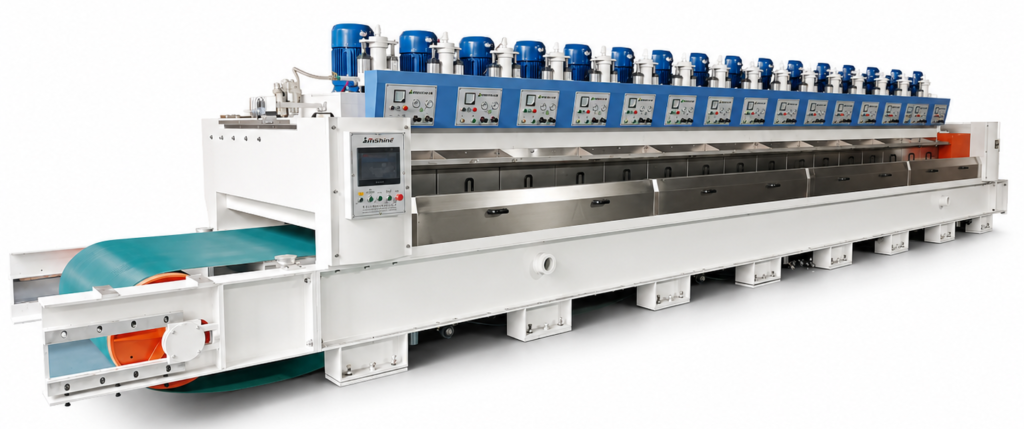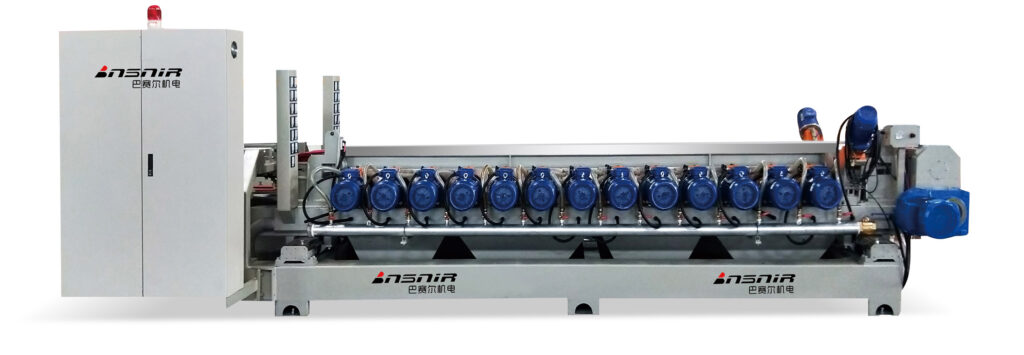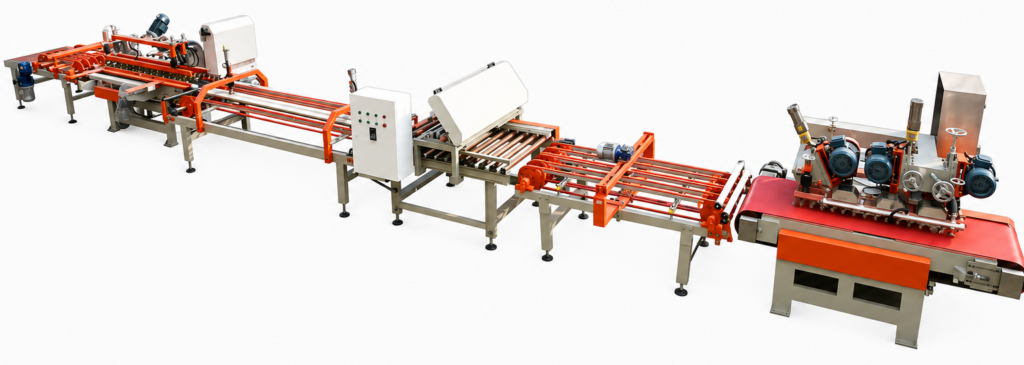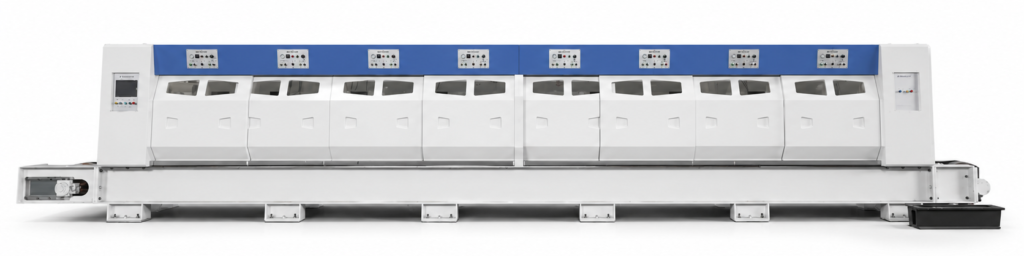
A tile factory preparing a squaring-line enquiry rarely fails at the equipment-selection stage; it fails at the data-request stage, when spares and wheels are described just well enough to look comparable but not well enough to be checked against each other. Before a quotation is sent, the buyer has to decide what information a supplier must provide, in what form, and how a missing answer will be treated. That decision shapes every comparison that follows it.
Start with Intended Use and Project Context
A squaring or chamfering machine, and the wheels that run on it, are configured against a stated application rather than sold as a fixed catalogue item. Before any spare-part or wheel data is requested, the supplier needs the same project description every other bidder receives: the tile material, dimensions, thickness, and surface geometry entering the line, the finish target and process route the tile is meant to reach, the production stage the machine sits in, and whether the relevant operation is understood as a dry or wet process. HSE’s guidance on buying new machinery frames this as giving the supplier context on where and how equipment will be used, the task, the users, and the risks involved, and it specifically recommends discussing complex or custom-built requirements directly with the supplier rather than assuming a standard configuration applies.
This context does the work of narrowing supplier judgment, not replacing it. Where the tile input, finish target, and process route are fully stated, the supplier can respond against a defined application; where any of these is left implicit, the supplier is effectively guessing at a boundary condition, and any spare or wheel recommendation that follows inherits that gap. A change in one input can change the interpretation of everything downstream of it: a shift in tile thickness or surface geometry can move the relevant machine position or duty description, and a change from a dry to a wet route can change which wheel configuration or interface data is even applicable. None of this means a stated finish target or process route guarantees a matching machine or wheel — it only means the supplier now has enough to respond to a specific case instead of a generic one.
Speed and required output belong in this same context block, but they function as inputs for the supplier to confirm against, not as specifications the buyer is asserting as fixed. A production-stage description that is accurate for one line configuration may not hold if an upstream or downstream interface changes, so the buyer should expect the supplier to confirm the applicable configuration rather than accept the stated figures as already validated. The same applies to documentation expectations: stating the required language, format, and review route at this stage avoids a later mismatch between what the buyer assumed would be delivered and what the supplier intended to send.
| Context block | Buyer-provided information | Confirmation boundary |
|---|---|---|
| Tile input | Material, dimensions, thickness, surface geometry | Supplier confirms relevance and any missing data |
| Finish and process | Finish target, process route, production stage | No result is promised by stating the target |
| Line context | Speed and required output as project inputs | Supplier must confirm the applicable configuration |
| Squaring context | Intended dry/wet route and known interfaces | No universal wheel or machine match is inferred |
| Documentation context | Required language, format, and buyer review route | Final deliverables remain contractual |
Request a Traceable Spare-Part Data Set
Once project context is established, the spare-part list itself needs to be requested as a traceable data set rather than accepted as a name-and-price line. A part description alone does not establish which assembly it belongs to, which drawing revision it matches, or under what condition it should be replaced. UK Cabinet Office guidance on technical specifications shows that a specification can combine functional or performance requirements with descriptive requirements and may call for supporting evidence; HSE’s guidance separately points to the value of intended-use and maintenance information being available before purchase. Applied to a spare-parts enquiry, this means the buyer requests, for each recommended item, the supplier identifier, a plain-language description of its function, the intended assembly or location it serves, the applicable drawing or document revision, the basis for the recommended quantity, any supplier-defined replacement trigger or maintenance context, and a reorder reference.
The reasoning changes depending on how the part connects to the machine. Where a part is described only by a generic name with no assembly reference, the buyer has no way to confirm it belongs to the offered configuration rather than a similar one from an earlier or later machine revision — and a drawing or document revision reference is what closes that gap. Where a supplier states a quantity basis, that basis needs to be read as a project-specific rationale, not a universal norm; a different duty cycle, tile material, or production stage could change the same part’s replacement context without changing its identifier.
Replacement triggers and maintenance context deserve the same treatment. If a supplier defines a condition-based trigger, the buyer can plan around a condition; if a supplier gives only an interval, the buyer needs to know what operating assumption that interval was built on before applying it to a different line. Storage and handling information, where the supplier defines any, and the reorder reference path both feed into how the buyer manages the part after delivery, but none of these fields, taken alone, confirms that the part is correct for the project — that confirmation still depends on the context established before the request was sent. A request framed this way also gives BASAIR’s own configuration and quotation review a structured basis to work from, since the same fields that make a spare traceable for the buyer are what a supplier needs to match a part against a specific machine line rather than a general catalogue entry.
| Requested field | Supplier response should identify | Buyer decision use |
|---|---|---|
| Part identity | Supplier code and plain-language description | Reorder and document traceability |
| Equipment relationship | Intended assembly, location, or machine reference | Check relevance to the offered configuration |
| Controlled reference | Applicable drawing, list, or manual revision | Prevent obsolete data from being treated as current |
| Quantity basis | Supplier’s stated rationale and project conditions | Evaluate the recommendation without assuming universality |
| Replacement or maintenance context | Supplier-defined trigger, interval basis, or condition if applicable | Plan support while preserving project uncertainty |
| Storage, handling, and reorder information | Supplier instructions and contact/reference path | Prepare lifecycle use without inventing procedures |
Request Squaring-Wheel Identity and Matching Data
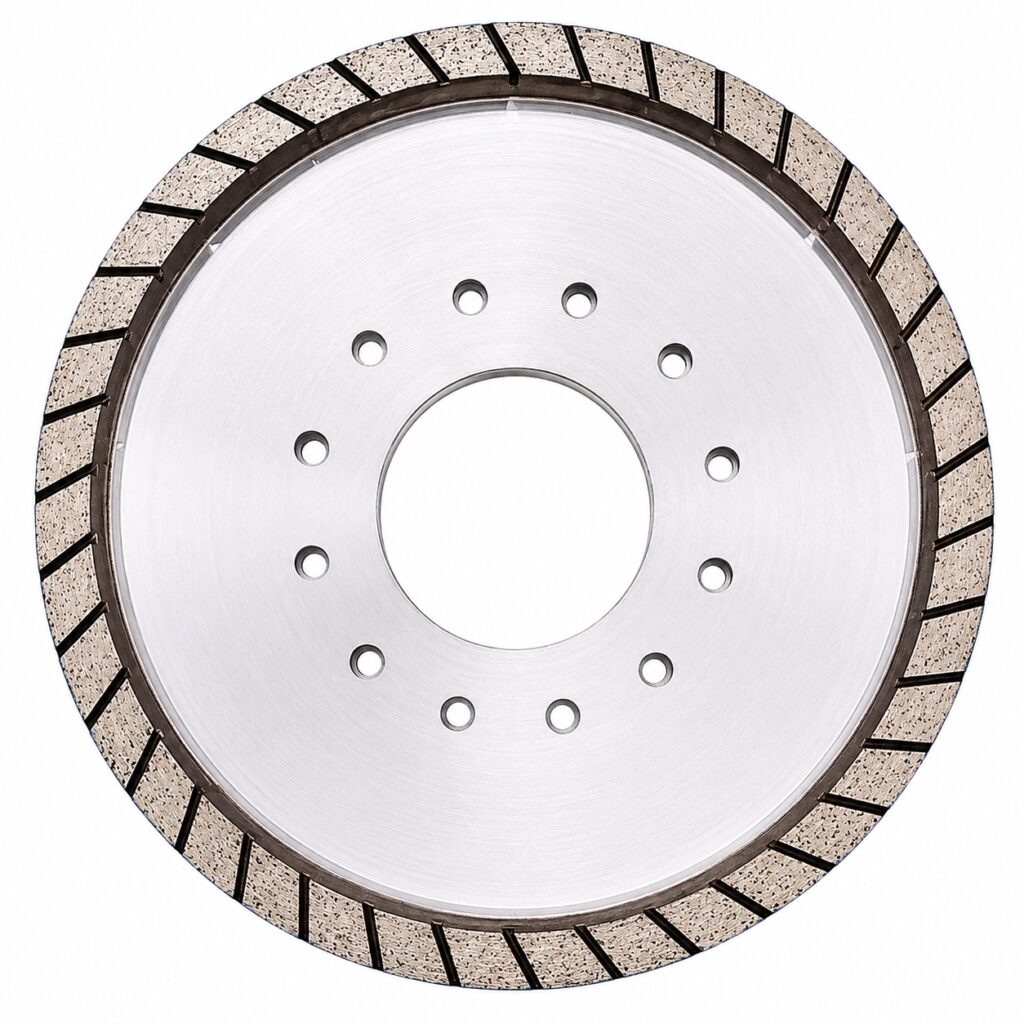
A squaring wheel carries its own identity data separately from its fitness for a given tile and machine. ISO 6104 sets out designation and nomenclature for rotating diamond or cubic-boron-nitride grinding tools, which gives the buyer a traceable way to confirm that two quotations referring to what looks like the same wheel are, in fact, referring to the same designation. That traceability is limited to identity: the standard does not establish that a given wheel is compatible with a particular tile material, machine position, or process route, and it says nothing about dimensional fit, speed, bond behavior, or expected tool life in a specific application.
Because of that limit, the buyer’s request needs to separate what a designation confirms from what a supplier must additionally state. The exact wheel designation or supplier code, and any marking record behind it, establishes that the item can be tracked and reordered consistently. Separately, the supplier needs to state the intended duty and machine position the wheel is offered for, since the same nominal wheel type can be positioned differently across squaring lines with different consequences for how it performs. A drawing reference, together with dimensional and mounting interface data, is what allows the buyer to check physical fit against the existing or proposed machine rather than assuming a shared designation implies a shared interface.
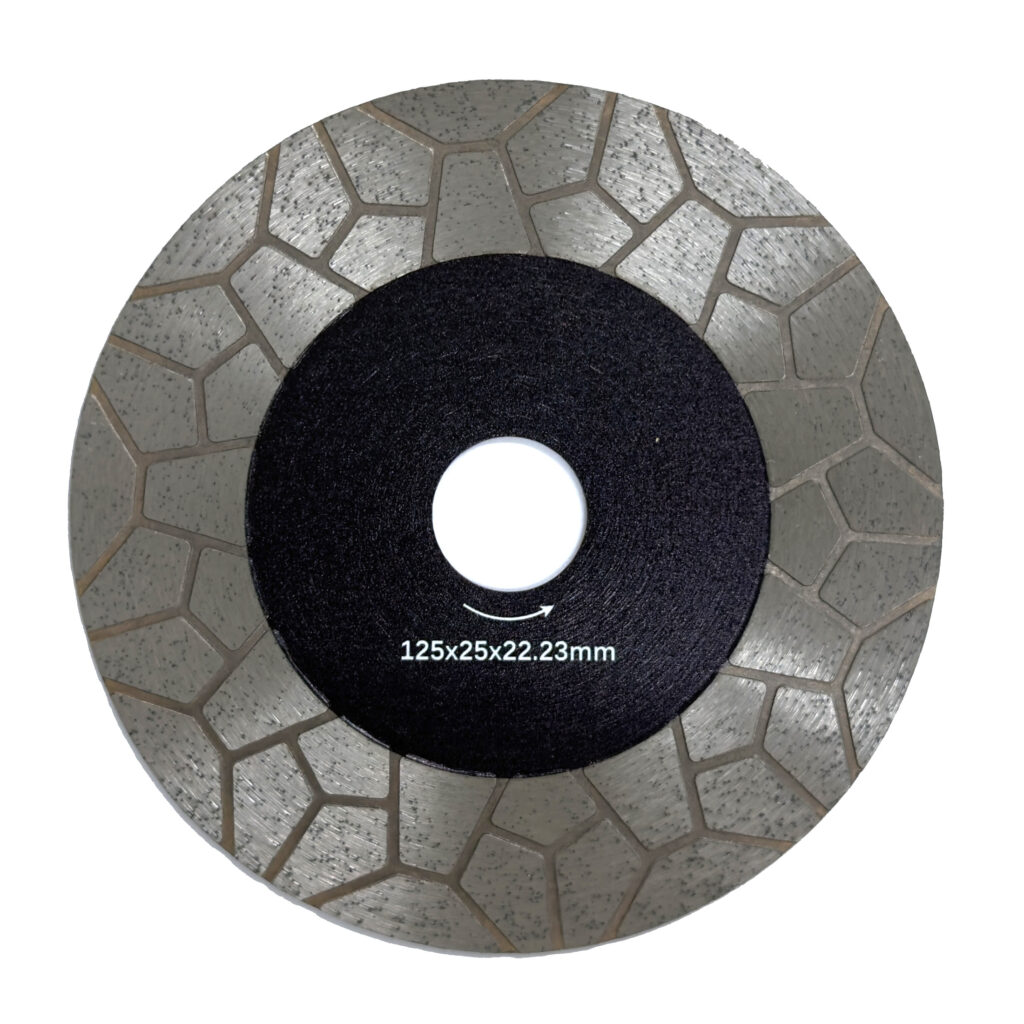
Bond or configuration description matters most where the process route changes: a wheel matched to a dry process is not automatically matched to a wet one, and a change in that context can change which configuration the supplier should be offering. The same logic applies to direction markings or other supplier-defined identifiers on the wheel — where a project depends on rotation direction or a specific mounting orientation, this needs to be part of the requested data rather than assumed from the designation. What ties all of this together is the supplier’s stated basis for matching the wheel to the tile and process described in the project context: a supplier that cannot state which tile inputs and line conditions informed its recommendation has effectively offered a designation without a matching rationale, and that gap should stay visible rather than be treated as settled. Buyers working from BASAIR’s diamond squaring wheel range would apply this same identity-and-matching request regardless of which wheel family is under review, since the designation confirms the item, not the fit.
| Data block | What to request | Boundary |
|---|---|---|
| Traceable identity | Exact designation, supplier code, and marking record | Identity does not prove suitability |
| Intended duty | Machine position, operation, and application description | Supplier confirmation is required |
| Drawing and interface | Applicable drawing revision plus mounting and dimensional interface data | No value or fit is inferred here |
| Wheel configuration | Supplier’s bond or configuration description where applicable | No universal sequence or life claim |
| Process context | Supplier-confirmed dry/wet context and other relevant conditions | Project-specific only |
| Matching basis | Tile and line inputs used by the supplier to make the recommendation | The buyer must keep missing inputs visible |
Request Documentation for Maintenance and Reordering
Spare-part and wheel data only remain usable if the documentation behind them is delivered in a form the buyer’s team can actually work with over time. HSE’s guidance on buying machinery advises checking that instructions are supplied and notes the value of maintenance and workshop information being available to the buyer; its legal particulars are written for a UK context and should not be read as applying elsewhere, but the underlying practice — confirming what documentation will be delivered before commitment — applies regardless of jurisdiction.
Rather than assuming a fixed document package, the buyer should ask which manuals, illustrated parts lists, drawings, and revision records will actually be delivered with the equipment and wheels, and which ordering contacts or references will support future reorders. Language and format matter as much as content: a manual delivered in a format or language the maintenance team cannot use is functionally incomplete, even if its technical content is accurate. Asking how later revisions will be communicated closes a different gap — a drawing or parts list that is correct at delivery can become outdated as the machine or wheel range is updated, and the buyer needs a stated mechanism for finding out when that happens rather than discovering it only when a reordered part no longer matches the installed configuration.
Where a supplier readily provides illustrated parts lists and revision records, the buyer’s maintenance team can plan reordering and interval decisions against a stable reference. Where a supplier offers only a general manual with no revision tracking, the same planning has to proceed with an acknowledged gap, and that gap should be recorded rather than assumed away. Neither situation should be read as reflecting BASAIR’s own document package or that of any other named supplier — what documentation is delivered, in what format, and how revisions are handled remains a matter for the specific supplier response and the agreed contract, not something this kind of general guidance can determine in advance.
Compare Supplier Responses Without Treating Blanks as Equivalence
With intended-use context set, spare-part fields defined, wheel identity and matching data requested, and documentation expectations stated, the final task is comparing what suppliers actually send back against that same schedule — and doing so without letting a missing answer pass as an implicit match. The UK Cabinet Office’s technical-specification guidance distinguishes between requirements, standards, and evidence, and stresses that evidence needs to be verified when it is requested rather than accepted at face value. Applied to a multi-supplier comparison, this means every response should be checked against the same fields, not against whatever each supplier chose to emphasize.
A structured status for each field — confirmed, conditional, alternative proposed, or not provided — keeps the comparison honest. A confirmed answer still needs its cited document or evidence checked, since a confirmation without a traceable reference is not meaningfully different from an unverified claim. A conditional answer needs the stated condition and its owner identified, so that a quotation is not compared as if the condition were already satisfied. Where a supplier proposes an alternative item, interface, or document instead of matching the requested one, that substitution needs project-level review before it is treated as equivalent — a different mounting interface or a different wheel configuration can carry consequences for the rest of the line that are not visible from the alternative’s description alone.
The status that most needs attention is the blank one. A field with no usable answer or evidence is not the same as a field where the requirement does not apply, and treating the two as interchangeable is where comparisons quietly stop being comparable. Where one supplier leaves a field open and another fills it with a specific, traceable answer, that difference is itself decision-relevant information, independent of price. Procurement law, certification requirements, and conformity obligations depend on the buyer’s own jurisdiction and contract terms and sit outside what a supplier data comparison can settle; what the comparison can settle is which fields were answered, which were left open, and which conditions still need resolution before a project decision is made.
| Status | Meaning for comparison | Buyer next action |
|---|---|---|
| Confirmed | Supplier has answered the field for the offered project configuration | Verify the cited document or evidence |
| Conditional | Answer depends on a stated project input or later confirmation | Assign the condition and owner |
| Alternative proposed | Supplier proposes a different item, interface, or document | Review equivalence and project effect |
| Not provided | No usable answer or evidence is supplied | Keep the gap open; do not assume a match |
Frequently Asked Questions
Q: Can suppliers recommend a useful spare kit from the machine name alone?
A: They need the offered configuration and intended-use context to make a project-specific recommendation. Provide tile and finish inputs, production stage, process route, speed and output basis, and wet or dry context, then ask how those conditions support the proposed spare quantities and replacement context.
Q: What makes a spare-parts recommendation useful after the initial purchase?
A: Each recommended item should have a traceable supplier code, plain-language function, assembly or location, current document revision, and reorder reference. Ask for the quantity rationale and supplier-defined replacement, storage, or handling information where applicable so the list can support later planning and reordering.
Q: What should we request before comparing squaring-wheel offers with similar descriptions?
A: Request the exact designation or supplier code, intended station and duty, drawing revision, mounting and dimensional data, configuration description, and confirmed process context. Also ask which tile and line inputs support the recommendation; similar descriptions do not by themselves establish an equivalent match.
Q: How can we check whether the document package will support our factory team?
A: Ask which manuals, illustrated parts lists, drawings, maintenance information, and revision records will be delivered in the agreed language and format. Confirm the ordering references and route for later revisions rather than assuming the quotation includes a standard package.
Q: How should we compare a quotation that leaves spare or wheel data blank?
A: Keep each blank as an open information gap. Use the same schedule for all suppliers and distinguish confirmed responses, conditional answers, proposed alternatives, and information not provided. Verify cited evidence and review substitutions for their project effect before treating offers as equivalent.