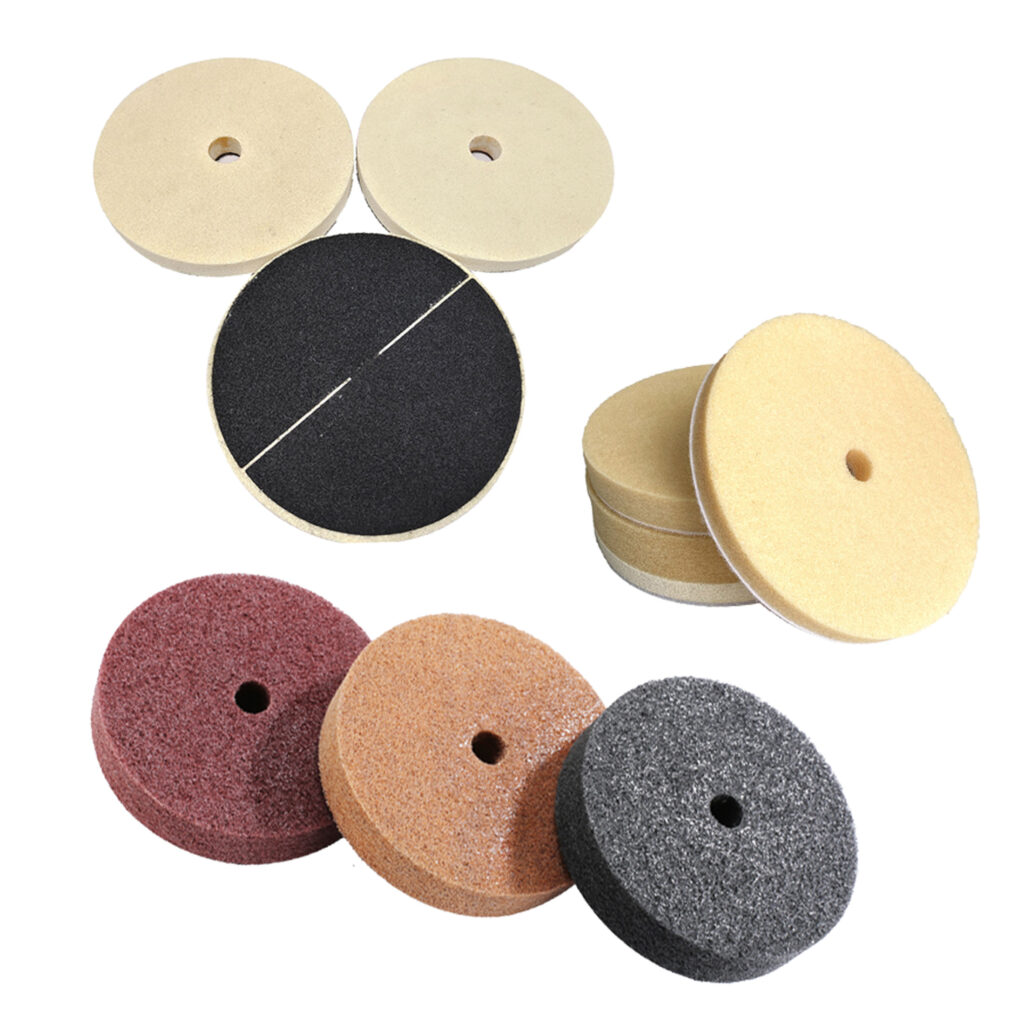
A purchase specification that uses “polishing” when the line really needs a lappato finish can cascade into a full set of wrong abrasive heads, a quotation that misses the required slip resistance, and a commissioning delay while the factory re-sources the correct tooling. In one common pattern, a buyer requests a “high-gloss polished tile” but later rejects the delivered surface because it lacks the intentional micro-texture needed for floor safety, a mismatch that no final waxing pass can fix. The risk turns concrete the moment a machine stage must meet an inspection criterion that the process, as named in the RFQ, was never designed to produce. Resolving that risk starts with locking each process name to a defined tool format, a surface result, and the duties the tile body and glaze demand, before the first quotation is issued. What follows maps where the boundaries between polishing, lapping, lappato, and super-polishing break down, and what to specify so that equipment selection stays aligned with the surface the factory actually expects to ship.
Process Names That Must Stay Distinct
One of the most expensive naming habits in ceramic finishing is the interchangeable use of “lapping,” “polishing,” and “lappato.” Commercial literature sometimes reinforces the confusion by describing a “lapping (or polishing) treatment” as if the two were equivalent. When an RFQ carries that language into procurement, the supplier may propose a multi‑head polishing line fitted with sequential grit sets when the application demands a single‑stage diamond tool for a matte, slip‑resistant surface, or vice versa. The cost is not simply a revised quotation; it is a line that arrives configured for the wrong removal duty and cannot meet the project’s inspection parameters without re‑tooling and re‑commissioning.
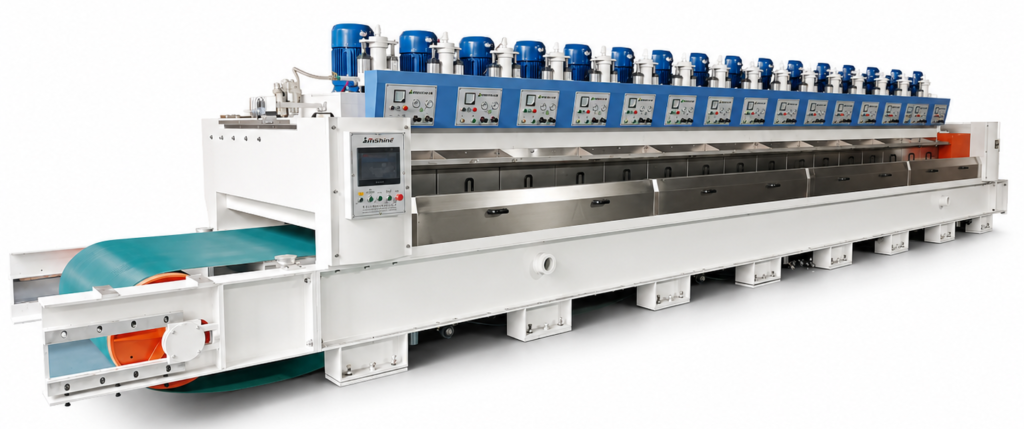
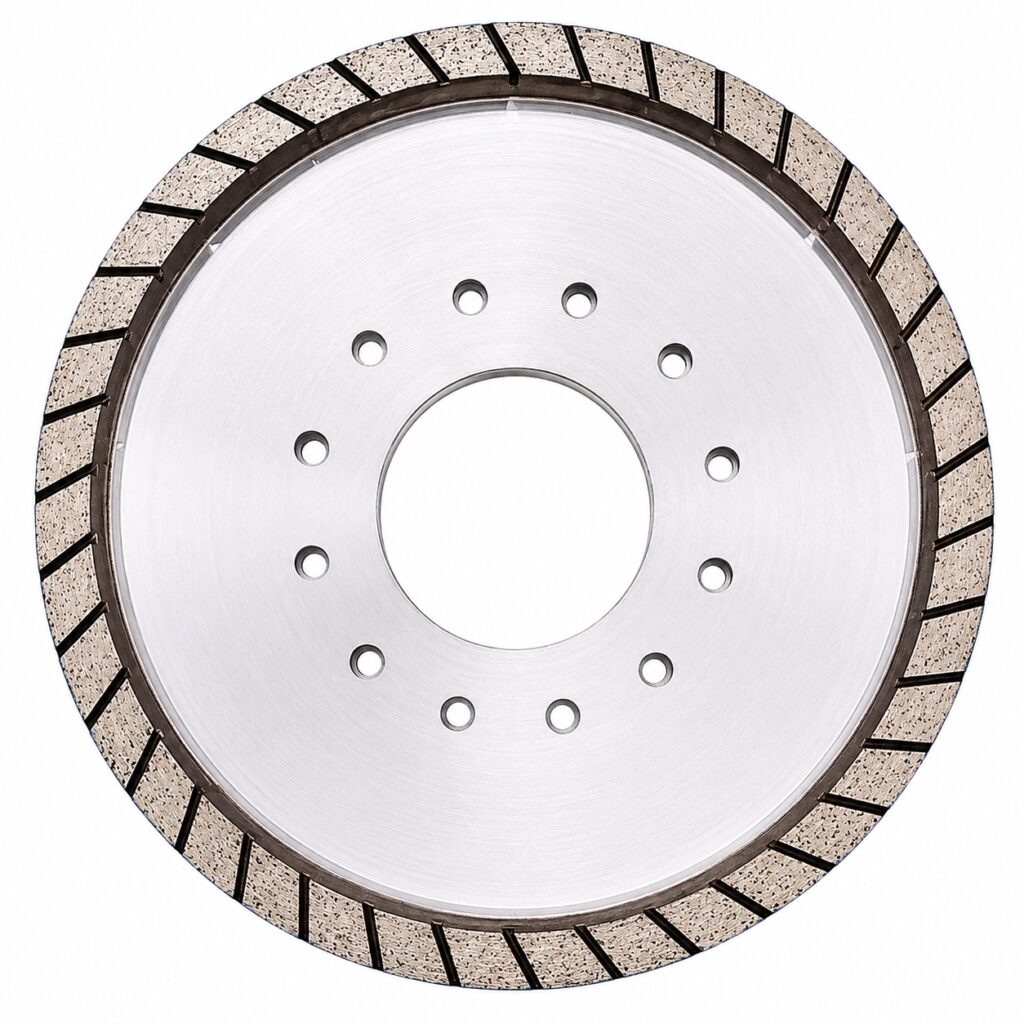
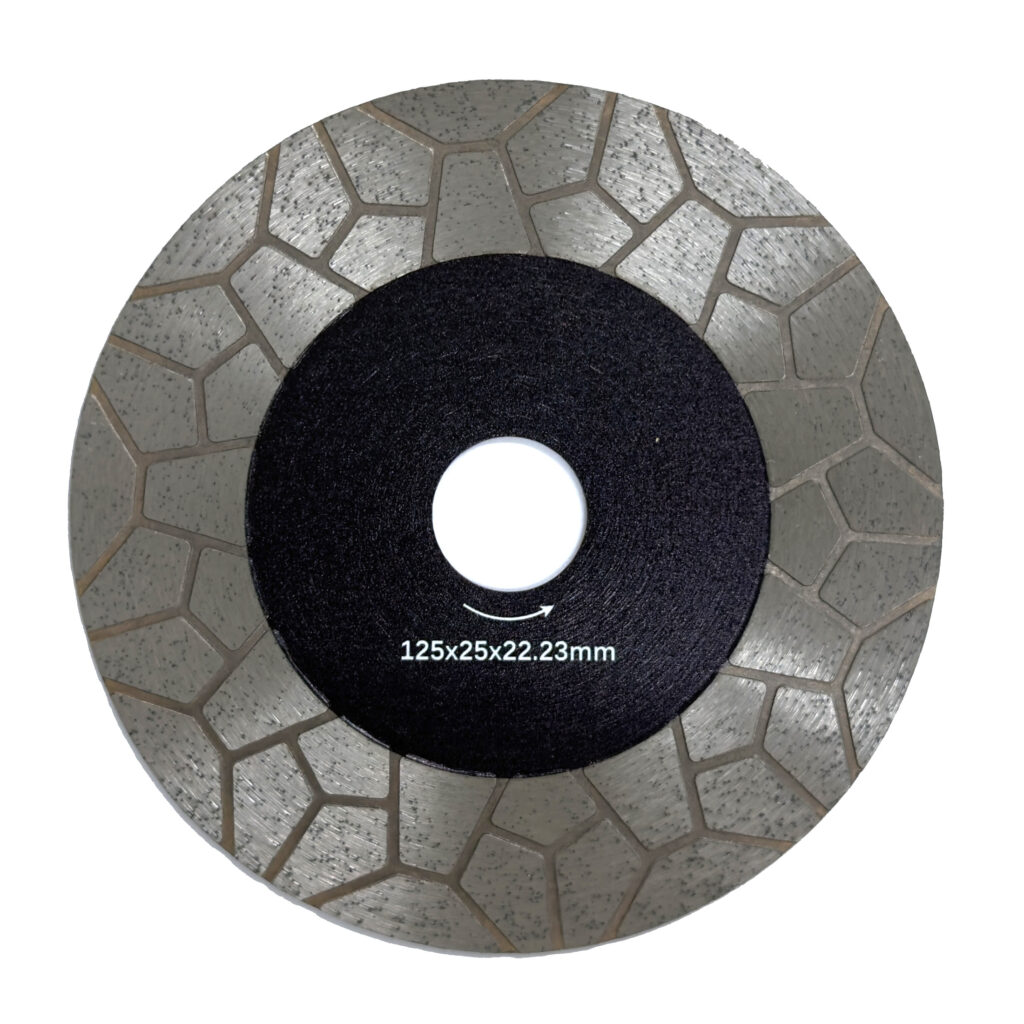
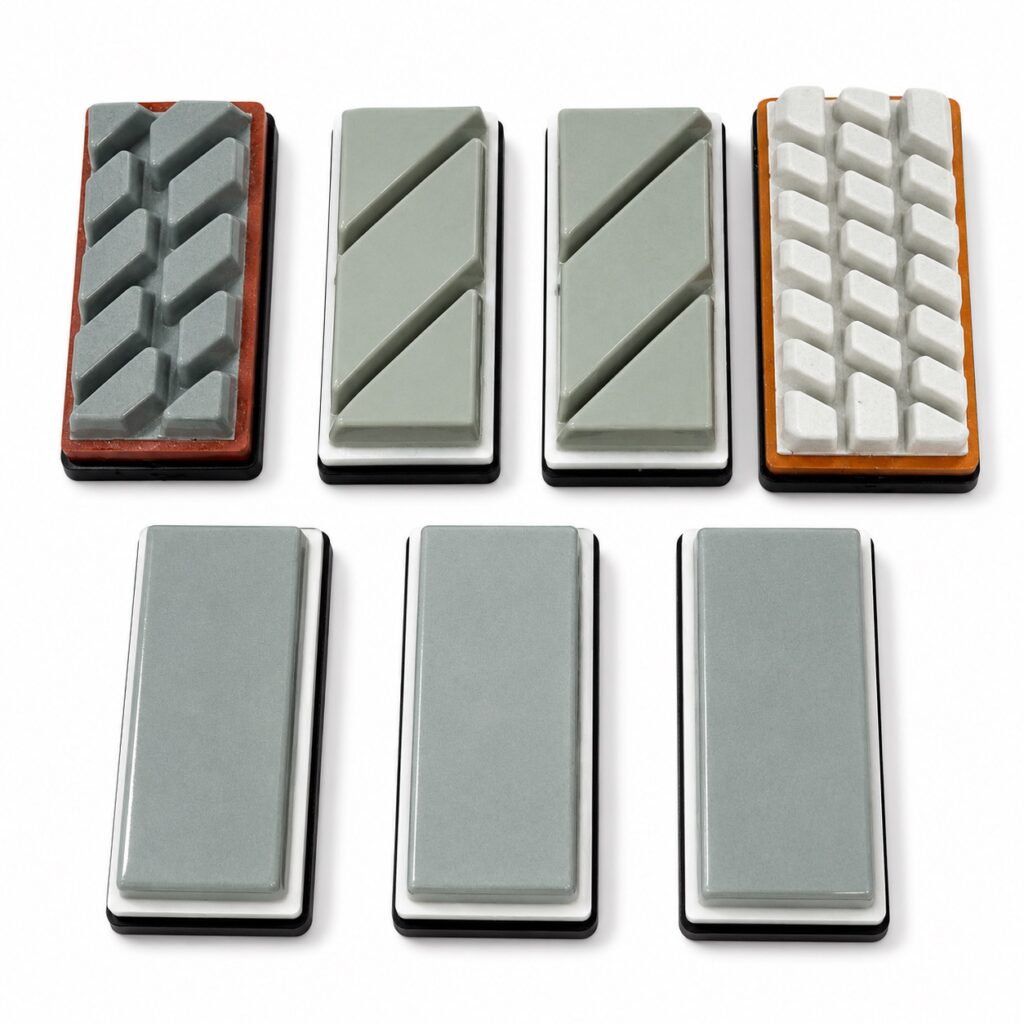
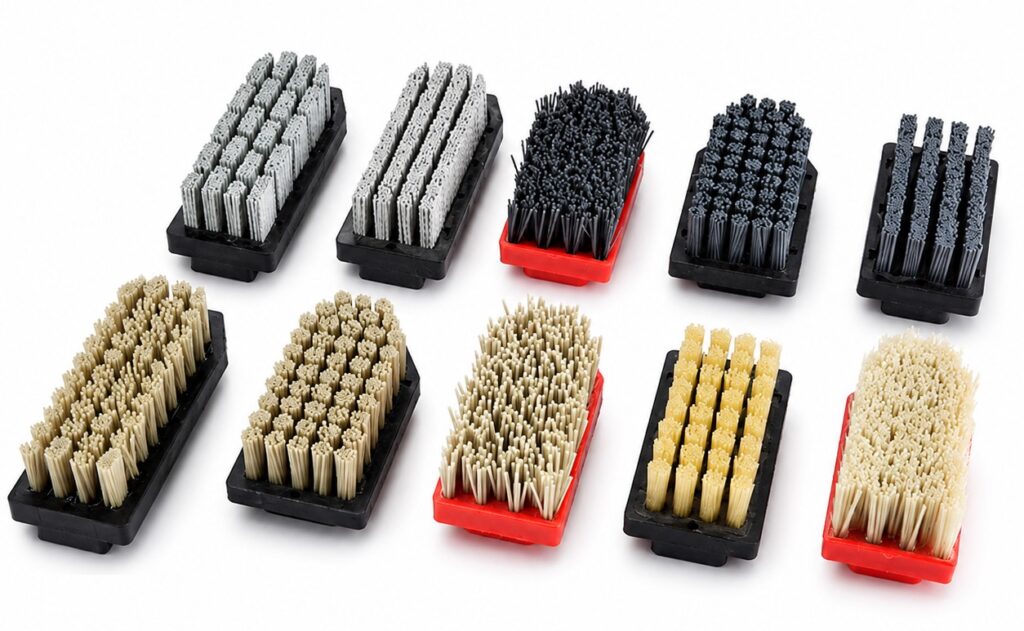
The underlying issue is that the process name must correspond to a specific tooling support, a set of stages, and the tile body type it is intended to treat. Lapping on glazed tile uses resin tools on an elastic support; calibrating and smoothing for technical porcelain relies on rigid metal‑bond abrasives that remove stock and correct dimensional variation, not generate gloss. A lappato finish is created by a single‑stage diamond abrasive that intentionally leaves a controlled micro‑texture, a completely different engineering outcome from the mirror finish of a traditional polishing sequence comprising 8–12 sequential grit stages. Where a machine platform permits tool‑change between these duties – as with a satellite head design from a manufacturer like BMR – the line itself does not collapse the distinctions; it exposes the fact that the process is defined by the tool and the surface result, not by the machine’s nameplate.
| Process Name (as commonly used) | Tooling / Support | Process Stages | Primary Application / Result |
|---|---|---|---|
| Lapping (often called “lapping (or polishing) treatment”) | Resin tools on elastic support | Multi-step surface refinement | Glazed tile surface smoothing and enhancement |
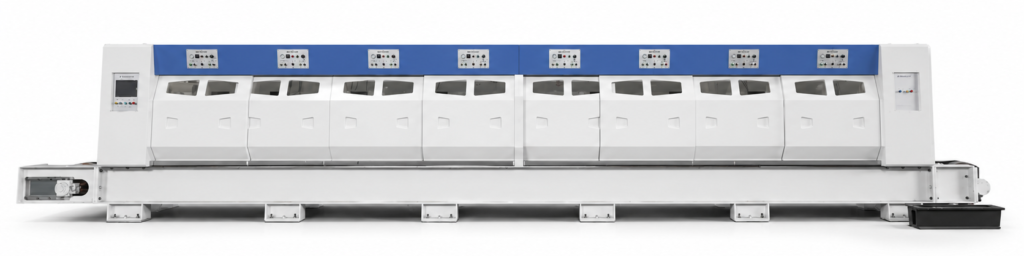
| Lappato | Specially designed diamond abrasive tools | Single-stage process | Controlled micro-texture; matte finish with slip resistance |
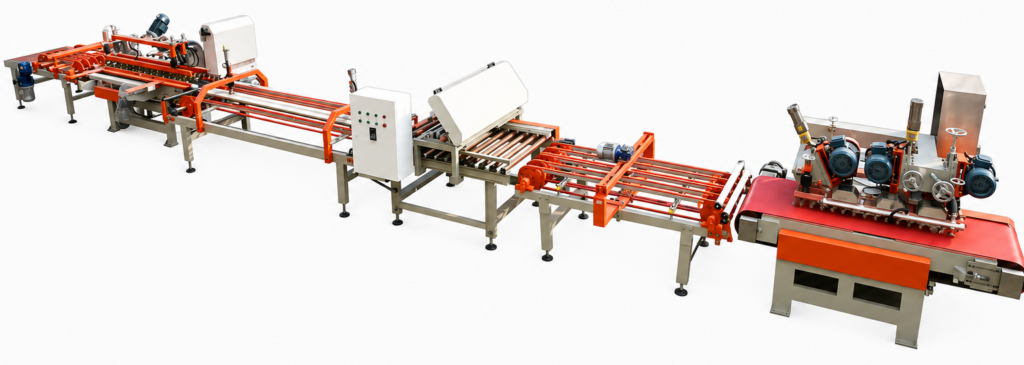
| Calibrating / Smoothing | Rigid metal binder abrasives | Roughing and smoothing | Technical porcelain surface preparation and dimensional correction |
| Traditional Polishing | Sequential abrasive grits (60–3000) | 8–12 stage multi-head line | Mirror-like high-gloss surface (gloss >80 units) |
The practical implication is that a factory review before specification should attach each requested finish to a specific tool‑and‑support pair, not to a loose process label. When a team treats “lapping,” “polishing,” and “lappato” as synonyms, they are effectively writing a blank cheque for the tooling format, and that blank is often filled incorrectly by the first standard configuration a supplier proposes. The satellite head example is useful not because it is the only way to handle multiple processes, but because it illustrates that moving from one surface result to another requires deliberate tool selection, not a change of vocabulary.
Polishing Duties for Technical Porcelain
Technical porcelain introduces a duty split that a generic “polishing” specification rarely captures. On these bodies, the first requirement is not reflectance but dimensional correction: removing thickness variation, closing the calibre, and producing a surface that is flat and ready to receive the next treatment. That work is performed by rigid metal‑bond abrasives running on a calibrating stage, a process that extracts material aggressively and leaves a surface that is smooth but not glossy. Confusing this duty with cosmetic polishing sends a calibrating head into an RFQ that expected a lapping set‑up, or places a multi‑head polishing line where only a smoothing pass is needed before glazing.
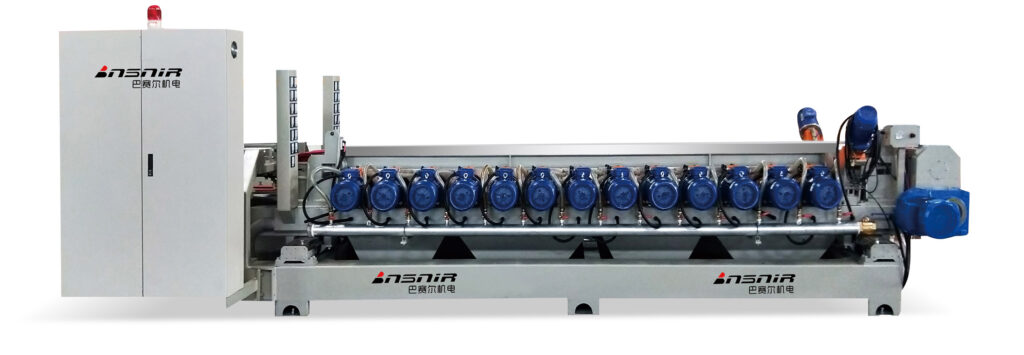
A concrete example comes from BMR’s Premier satellite head, which can handle calibrating, smoothing, and lapping on the same machine by changing the tool. The manufacturer description states that “by replacing only the tool, [it] transforms from a simple lapping machine into a calibrating/sanding/lapping machine.” That capability makes the duty separation even sharper: calibrating and smoothing are not lower‑intensity versions of polishing; they are a distinct process requiring a rigid metal binder, and they must be specified as a separate stage in the line configuration. If the requirement is only dimensional preparation, requesting a “polishing machine” invites a quotation for a full cosmetic line that adds cost, footprint, and maintenance burden the factory does not need.
The inspection check that guards against this is straightforward: before signing a specification, confirm whether the surface acceptance criteria for technical porcelain are dimensional (thickness tolerance, flatness, surface readiness) or optical (gloss units, visual uniformity). If the answer is dimensional, the machine stage that delivers those criteria is a calibrating/smoothing stage, not a polishing line, and the RFQ must say so explicitly.
Lapping and Lappato on Glazed Surfaces
On glazed tile, the distinction between lapping and lappato is a combination of tooling, process stage count, and the surface texture the factory intends to leave behind. Lapping uses resin tools mounted on an elastic support to level and refine the glaze surface across multiple steps, improving smoothness and visual consistency without necessarily chasing high gloss. Lappato, by contrast, deploys a single‑stage diamond abrasive that creates a consistent matte finish with intentional micro‑roughness; gloss typically falls in the 20–60 range, and the surface delivers markedly better slip resistance than a fully polished mirror.
The term “full‑lappato polishing” appears in some equipment documentation – specifically BMR’s description of a satellite head that performs calibrating, honing, and lapping through tool changes – but it is a manufacturer‑specific description of a tool‑switch sequence, not a standard industry classification. The risk of borrowing that language without qualification is that a buyer may believe a single machine name covers all three operations when, in fact, the surface outcome still depends on which tool is loaded and whether the final pass is configured for lapping or lappato. Alender’s guidance that lappato abrasives are applied after firing and glazing to correct imperfections and produce a “consistent matte finish” reinforces the point: lappato is a finishing decision, not a generic phase that any tool on any machine can produce.
| Process Type | Equipment / Tool Configuration | Surface Result | Key Function on Glazed Tiles |
|---|---|---|---|
| Lapping | Head with resin tools on elastic support | Refined smooth surface | Post-glaze surface levelling and finish enhancement |
| Full-lappato polishing | Satellite head; calibrating, honing, and lapping by tool change | Progressive refinement from calibrating to lapped finish | End-to-end treatment on a single machine platform |
| Lappato (final stage) | Single-stage diamond abrasive tools after firing and glazing | Consistent matte finish with controlled micro-roughness | Imperfection correction, slip resistance, and aesthetic matte appearance |
For procurement, the practical safeguard is to require a surface description that pairs gloss range with texture intent. A specification that demands a “lappato finish” without a gloss window and without mention of micro‑texture may still yield a surface that is too glossy or too rough, and a line that cannot be validated against slip‑resistance criteria the project later needs. Basair’s elastic lappato abrasives are engineered to deliver that controlled matte surface on existing polishing lines, but the tool choice only works when the process definition locks in the matte, micro‑textured result before the abrasives are selected.
Super-Polishing After the Removal Stage
Super‑polishing does not appear in any standardised process taxonomy, but in factory practice the term typically describes the final high‑gloss stage that follows dimensional smoothing or lapping. It is functionally the traditional polishing sequence: sequential abrasive grits from coarse to ultra‑fine, often 8–12 stages, driving surface roughness down to Ra ≤0.05 µm and gloss above 80 units. When a buyer asks for “super‑polishing,” what they are usually asking is whether the line can reach the upper end of the gloss range with a defect‑free mirror surface, not whether a separate, named process exists.
The danger is that the term remains undefined in the specification, leaving the supplier to interpret it as a light finishing pass on a lappato machine, or as the full multi‑head line needed to reach 90+ gloss. If the preceding stage is a calibrating pass on technical porcelain, super‑polishing cannot be separated from the polishing train because the low roughness target cannot be reached without a controlled progression of grits. Specifying “super‑polishing” rather than a gloss‑and‑roughness target invites a mismatch between the machine length, the head count, and the surface quality the inspection department will later measure. A better approach is to treat super‑polishing as an expression of the required end‑state – gloss ≥85, surface free of visible polishing marks, Ra ≤0.05 µm – and then let the supplier propose the head configuration that can deliver it, whether on a dedicated polishing line like Basair’s ceramic tile polishing machine or on a platform that reaches the same parameters through a verified sequence.
Scope Errors Caused by Gloss-Only Language
Supplying only a gloss number – say, gloss 50 or gloss 90 – is one of the fastest ways to mis‑scope a finishing line. Traditional polishing lines routinely hit 85–95 gloss units, but they also produce a mirror‑smooth surface with low slip resistance that may be unsuitable for flooring applications. Lappato delivers 20–60 gloss units through intentional micro‑texture, maintaining slip resistance and simplifying maintenance. A gloss‑only specification cannot distinguish these two engineered outcomes; it allows the supplier to default to whichever process fits their standard equipment, not which process matches the tile’s end‑use safety requirements.
| Process | Typical Gloss Range (units) | Surface Characteristic | What a Gloss-Only Spec Risks |
|---|---|---|---|
| Traditional Polishing | 85–95 | Mirror-like, highly reflective, low roughness (Ra ≤0.05 µm) | Supplier may propose a full polishing line when only a matte finish is needed |
| Lappato | 20–60 | Matte, intentional micro-texture, slip-resistant | Supplier may deliver a high-gloss surface that lacks required slip resistance and maintenance properties |
The practical failure unfolds when the installed line passes a gloss inspection but fails a slip‑resistance test, or vice versa, leaving the factory with a surface that cannot be sold into the intended market. The decision friction is not cosmetic; it is a compliance and certification problem that emerges only after the tiles are packed. To avoid this, the surface specification must carry at least two linked parameters: a gloss range and a texture or slip‑resistance requirement. Only then can the process – traditional polishing or lappato – be selected correctly, and the machine quotation matched to the engineering demands of the surface, not just its shine.
Specification Terms Linked to Equipment and Inspection
When a specification uses a process term without tying it to the equipment configuration and the inspection method that will verify the result, the risk is that the line is built to satisfy a label, not a measurement. The table below outlines the minimum linkages that keep a specification executable: “lapping” must be connected to resin tools on elastic support and a visual consistency check on glazed surfaces; “lappato” must call out a single‑stage diamond tool and a gloss‑and‑texture inspection; “calibrating/smoothing” must reference rigid metal‑bond tools and a dimensional or surface‑readiness measurement; “traditional polishing” must demand a multi‑head sequence and a low‑roughness, high‑gloss verification.
| Specification Term | Equipment Implication | Inspection Parameter to Align |
|---|---|---|
| Lapping | Head with resin tools on elastic support (glazed tile use) | Surface smoothness and visual appearance consistency on glazed surface |
| Lappato | Single-stage diamond abrasive tooling; or satellite head configured for lappato | Intentional micro-texture, matte finish, gloss 20–60, and slip resistance |
| Calibrating / Smoothing | Rigid metal binder tool on a calibrating machine | Dimensional uniformity and surface readiness for subsequent stages |
| Traditional Polishing | Multi-head polishing line with 8–12 sequential grit sets (60–3000) | Gloss 85–95 units, surface roughness ≤ Ra 0.05 µm |
The BMR satellite head’s tool‑change capability directly supports the principle that a single machine can execute several of these processes, but only if the right tool is mounted and the appropriate inspection parameter is applied. That flexibility does not lower the specification burden; it raises it, because the same machine can produce a calibrating pass, a lapped surface, or a lappato finish, and the only way to contractually guarantee which one is delivered is to name the tool format and the inspection method together. When a project treats the machine type as the process definition – “we have a lapping machine” – and the acceptance check is gloss alone, the surface outcome is ungoverned. The line may be capable, but the specification is not.
The most costly friction starts early, when interchangeable use of polishing, lapping, and lappato in an RFQ puts the wrong abrasive heads into procurement. But the friction that persists longest is the one where a finished line cannot be validated against the surface the factory actually needs to sell. Separating process names by tool, support, stage count, and the inspection parameter that will sign off the tile is not a semantic exercise; it is the difference between a line that passes commissioning on the first attempt and one that requires re‑tooling, re‑negotiation, and a delayed ramp‑up. Before the next line order is placed, pin each required finish to a tool format, a target gloss window, a texture description if slip resistance matters, and the machine stage that will deliver it. When the specification is that granular, the quotation comes back aligned, and the inspection record matches the intent.
Frequently Asked Questions
Q: Our factory only works with unglazed technical porcelain. Do the lapping and lappato distinctions in this article still apply to our line specification?
A: They apply, but in the opposite sense: using those terms will point a supplier toward tooling designed for glazed surfaces, not the rigid metal‑bond calibrating and smoothing heads your unglazed porcelain requires. You protect the RFQ by naming the process as “calibrating” or “smoothing” and explicitly linking it to dimensional acceptance criteria, not gloss or matte texture. When “lapping” or “lappato” appears in a request for an unglazed body, it almost always triggers a re‑quote for the correct tool format.
Q: What is the first concrete step we should take after reading this to align our next RFQ language with the process boundaries described?
A: Map every current product finish name to a single tool‑type and inspection pair. For each glazed SKU, decide whether the target surface is a lapped multi‑step refinement, a single‑stage lappato matte, or a full traditional polish, and tag it with the corresponding tool support (resin on elastic, single‑stage diamond, or sequential grits) and the acceptance parameters (visual consistency, gloss‑and‑texture, or gloss‑and‑roughness). When that mapping exists, the RFQ can quote exact machine stages instead of ambiguous process labels.
Q: Can super‑polishing be applied after a lappato finish to increase gloss while preserving some of the micro‑texture?
A: No. Super‑polishing is the full multi‑head polishing sequence that drives roughness down to Ra ≤0.05 µm and gloss above 85; it removes the intentional micro‑texture that gives lappato its slip resistance. Applying it after a lappato pass crosses the boundary from a controlled matte surface to a near‑mirror finish, so the resulting tile no longer meets the slip‑resistance requirement that justified lappato in the first place. The two are mutually exclusive end‑states.
Q: For high‑volume flooring lines, how do I weigh the cost profile of a traditional multi‑grit polishing line against a single‑stage lappato line when both could serve the market?
A: The decision turns on the slip‑resistance mandate in your target sales regions. A lappato line costs less in tooling and machine length and produces a surface that passes wet‑area safety tests out of the box, while a traditional polishing line demands more investment but yields mirror gloss for decorative applications. If compliance standards require documented slip resistance, lappato is usually the only viable route; if the application is wall tile or dry‑area decor where gloss drives purchase decisions, the investment in full polishing can be justified. Most factories facing both demands run separate dedicated lines rather than trying to cover both with one process.
Q: When does it make financial sense to invest in a satellite‑head machine that can switch between calibrating, lapping, and lappato on the same frame?
A: It makes sense when your production mix includes moderate‑volume batches that alternate between dimensional calibration and two or more distinct surface finishes within a shift or week. The flexibility eliminates the need for three dedicated lines, but the trade‑off is that you must carry the specification discipline to change tools and re‑validate each surface every time you switch processes. If you run a single finish at high continuous volume, single‑task machines are simpler to commission, maintain, and quote against, and their higher throughput usually recovers the lower per‑unit capital cost.