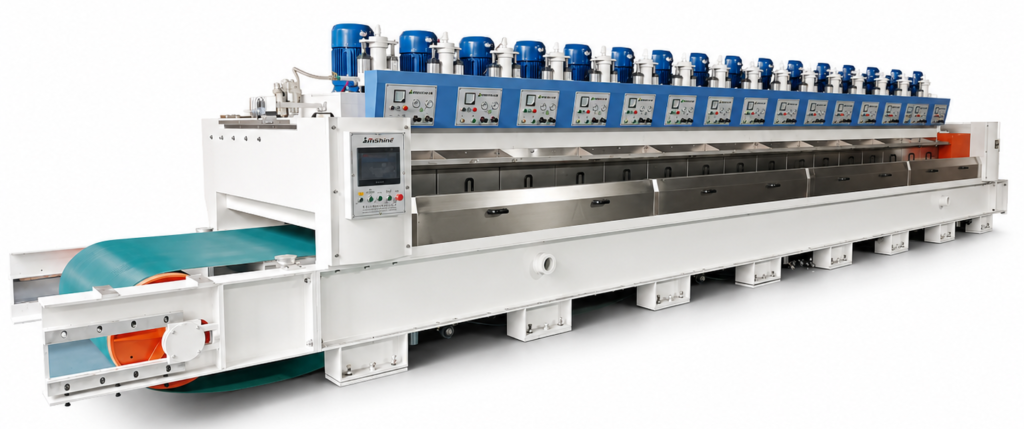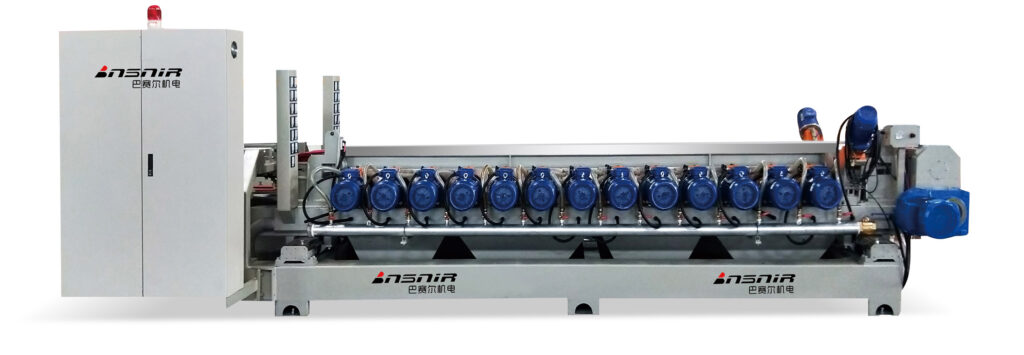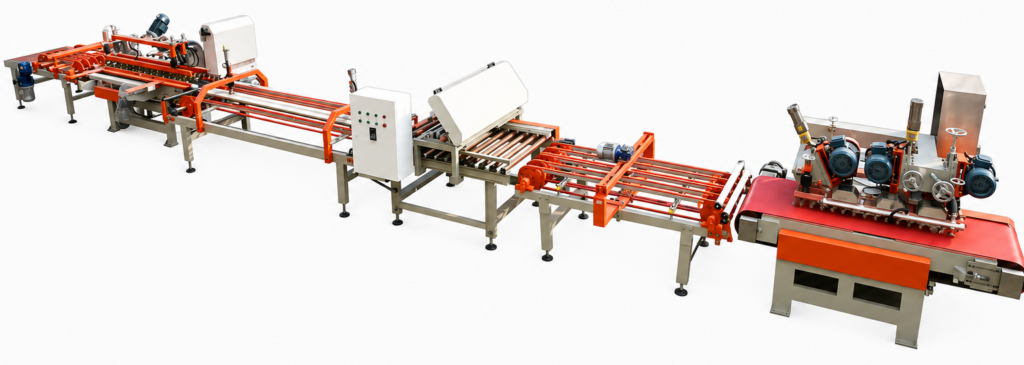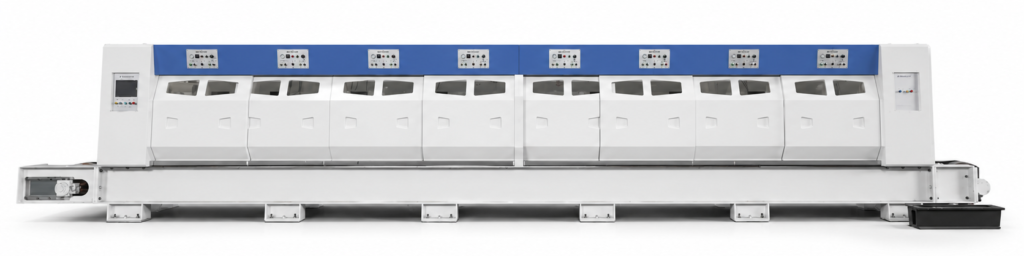
A squaring line arriving at the dock with a full spares crate does not tell the receiving team whether every item inside matches what was approved during order review. The packing list, the physical labels, and the drawings a project engineer signed off months earlier can each say something slightly different, and the buyer who assumes they agree without checking is the one who discovers a mismatch during installation rather than before the truck leaves the factory. The decision at hand is not whether spares exist, but whether their identities are provably linked to the approved configuration before release sign-off.
Establish the Approved Identification Baseline
Before any physical item is checked against anything, the buyer’s team needs to agree on which documents are controlling. This sounds procedural, but it is the step that prevents every later comparison from resting on a guess. ISO 10007’s published-project summary treats configuration identification, change control, status accounting, and configuration audit as connected activities rather than isolated checks, which means that identifying the correct baseline is not a formality that precedes verification — it is the first act of verification itself.
In practice, the baseline for a squaring line typically draws from several sources: a purchase specification describing what was ordered, an approved drawing revision showing how components fit into the line, a supplier part list enumerating spares and identifiers, and any project-specific configuration record capturing negotiated changes. None of these documents is automatically senior to the others. Where the purchase specification and the supplier part list disagree on a quantity or identifier, the buyer needs a rule — agreed in advance — for which document governs, or the reconciliation exercise later in the process has no stable reference point.
This matters because a project’s configuration can shift between quotation and shipment. A wheel duty position might change, a component might be revised, or a substitution might be agreed informally through email rather than through the formal document set. If the baseline used at the factory is an outdated purchase specification while the supplier has been working from a revised drawing, every spare could match the supplier’s shipping list yet fail to match the buyer’s understanding of the order. The condition that changes the judgment here is simple: whichever document was last formally revised and accepted by both sides is the one that should anchor comparison, and if the buyer cannot say with certainty which document that is, establishing that certainty is the actual first task — not comparing parts yet.
The buyer’s project team should also decide, before any physical check begins, who has authority to declare a document “approved” for this purpose. Without that designation, a conflict between two documents has no resolution path, and the reconciliation record built in later stages will simply inherit the ambiguity rather than resolve it.
Link Each Spare to Its Assembly and Document Revision
Once a controlling baseline exists, each spare part needs to be traceable to a specific place in the line and a specific document revision — not simply present in a box with a label that looks plausible. ISO 10007 supports configuration identification and status accounting across a product’s lifecycle, and applied at the spare-part level, that means each item should carry enough information to answer three questions: what assembly or location it belongs to, what document revision governs its specification, and whether any supersession or substitution has been approved for it.
This is a verification step, not a performance step. A part can be identified correctly — right supplier code, right assembly reference, right revision — and still turn out not to fit or function as expected once installed; that is a separate question addressed through commissioning and site checks, not through documentary reconciliation. Conflating the two creates false confidence: a buyer who confirms identity and treats that as confirmation of fit has skipped an entire category of risk.
The condition that most often changes this judgment is supersession. Where a component has been revised since the original order was placed, the supplier may ship an updated part under a note of equivalence rather than the originally specified item. Whether that substitution is acceptable is not something the receiving team can decide informally; it depends on whether the change was approved through the project’s own change-control path. An unapproved substitution, even one that appears functionally identical, should be treated as an open exception rather than resolved by assumption.
| Verification field | Evidence to compare | If unresolved |
|---|---|---|
| Supplier part identifier | Approved part list and physical label | Record an identity exception |
| Intended assembly or location | Project drawing or supplier document | Ask the supplier to confirm the relationship |
| Applicable document revision | Controlled baseline and item documentation | Hold the affected item from documentary sign-off |
| Ordered and packed identity | Purchase record, packing record, and physical label | Reconcile the discrepancy before release |
| Supersession or substitution status | Approved change record | Require explicit project approval rather than assuming equivalence |
Missing fields deserve the same treatment as conflicting ones. A spare with no assembly reference at all is not “probably fine” simply because its part number matches the supplier list — it is an unresolved identity until someone confirms where it belongs and why. Holding an item back from documentary sign-off because a single field is missing may seem excessive, but the alternative is discovering the gap during installation, when tracing the missing information back to its source is a different kind of task entirely.
Reconcile Squaring-Wheel Identity and Interface Information
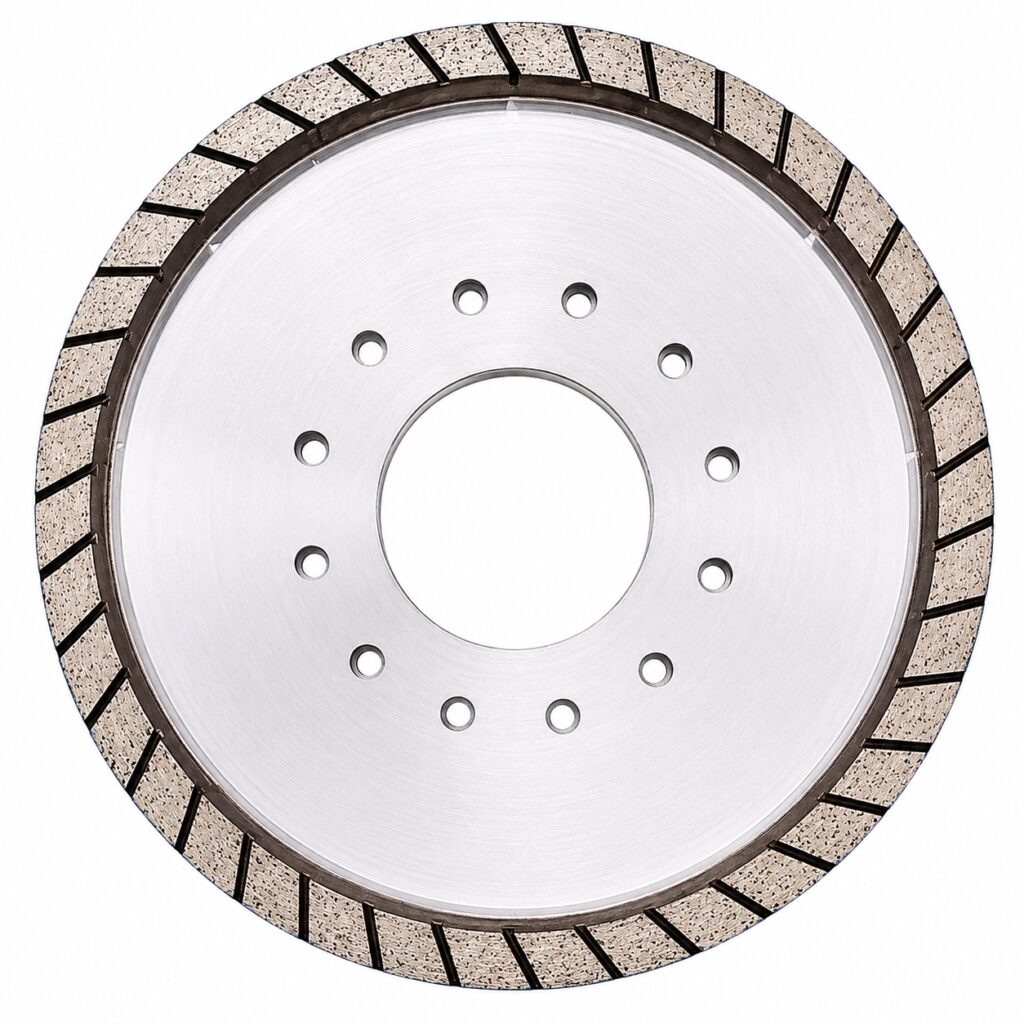
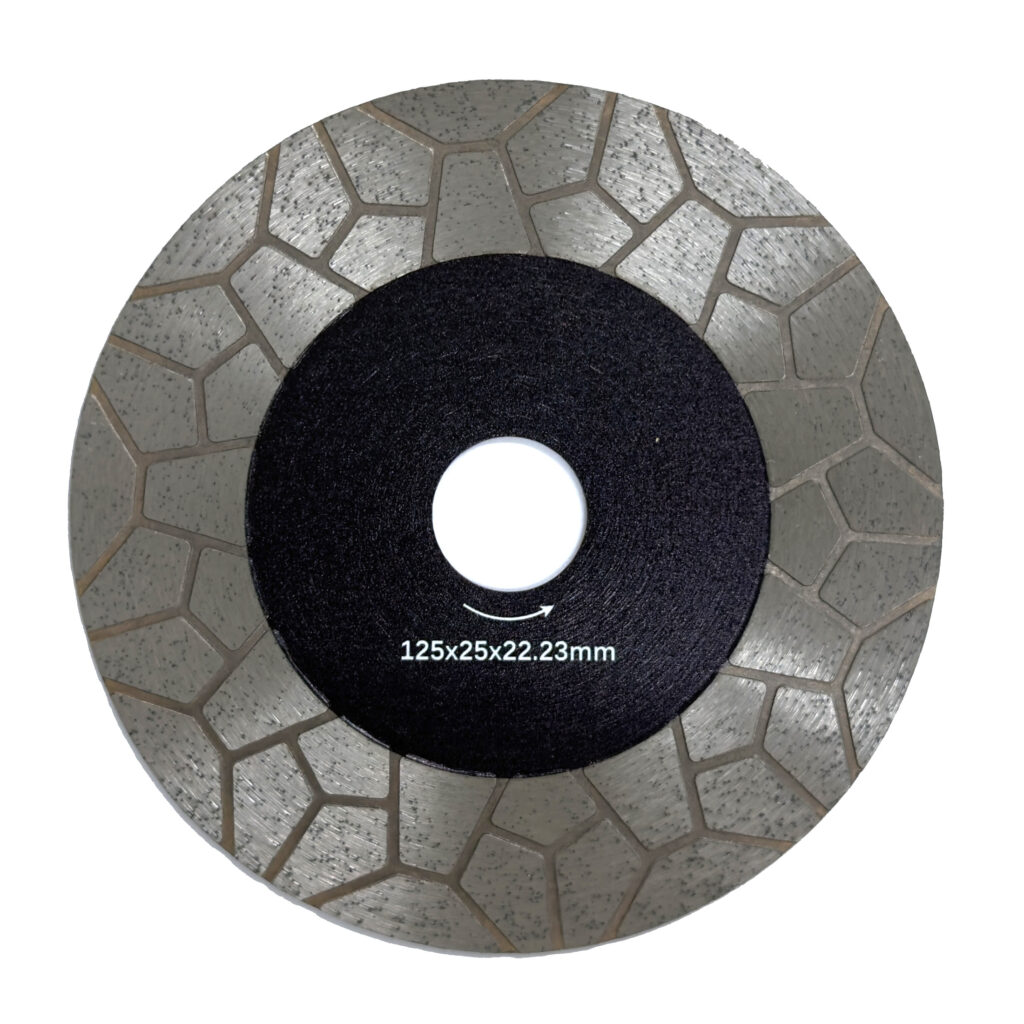
Squaring wheels deserve separate treatment from other spares because their designation carries specific technical meaning, and because their interface with the machine and the material is where identity confirmation most easily gets confused with suitability confirmation. ISO 6104 establishes designation and nomenclature conventions for rotating diamond or cubic-boron-nitride grinding tools, which gives the buyer a basis for comparing a wheel’s designation character for character against the project’s drawing or order data. That comparison is legitimate and useful. What it cannot do is confirm that the wheel is correct for a ceramic or porcelain tile application, that it will run at the intended speed, that its dimensions suit the machine position it is destined for, or that its bond is appropriate for the material and processing route in question. A designation is a naming convention, not a performance guarantee, and ISO 6104 does not extend into tile-specific compatibility.
This distinction matters because a wheel label and a project drawing can match perfectly on the designation string while leaving open every question about how the wheel is meant to be mounted, which machine position it serves, and whether it was configured for a dry or wet process. Where the project involves multiple wheel positions along the line, each with different duty requirements, a text match on designation confirms only that the correct item was shipped — not that it is destined for the correct position. Confirming position and duty requires either a wheel map from the project documentation or direct confirmation from the supplier responsible for that configuration.
| Information block | Compare against | Decision boundary |
|---|---|---|
| Wheel designation or supplier code | Order data, wheel label, and supplier document | A text match is identity evidence, not performance proof |
| Drawing or specification revision | Approved controlled reference | Any revision mismatch remains an exception |
| Intended machine position or duty | Project wheel map or supplier confirmation | Do not infer position from appearance |
| Mounting and process interface | Project drawing and responsible-supplier confirmation | No universal fit or dry/wet suitability is implied |
| Unresolved data | Exception record with owner | Do not release the item as verified |
The mounting and process interface deserves particular attention because appearance can mislead. Two wheels can look similar, carry similar designations, and still differ in a mounting detail or process-context requirement that only becomes apparent when someone with responsibility for that interface reviews it directly. For BASAIR’s diamond squaring wheels, or any project-matched wheel supply, this means the buyer’s reconciliation should route interface questions to whichever party carries responsibility for that specification — the machine supplier, the wheel supplier, or both — rather than resolving them by visual comparison. Any unresolved interface question stays open rather than being closed by assumption; a wheel that cannot be confirmed against its intended position or mounting requirement is not yet a verified item, regardless of how closely its designation matches the paperwork.
Compare Packed Items, Documents, and Open Exceptions
The two identity records built in the previous sections — one for general spares, one for wheels — need to be reconciled against what is physically present before the line leaves the factory. IEC 62381 frames factory testing and documentation around an agreed scope, defined responsibilities, and project-specific plans, and that framing is useful here even though the standard addresses process automation systems rather than squaring lines directly: the underlying principle, that verification activities need an agreed scope and named responsibilities rather than an informal walk-through, applies to any factory-release check.
In practice, this stage works best as a single reconciliation record rather than several separate lists. The record should compare four things for every item: what the approved baseline specifies, what the physical label or packing identity shows, what the supplier’s shipping or technical document states, and what the receiving team actually observed. Where all four align, the item can be marked resolved. Where any one of them diverges — even in a way that seems minor, such as a revision suffix that does not match — the item becomes an exception rather than a judgment call made on the spot.
The temptation at this stage is to treat visual similarity as sufficient evidence of a match. A part that looks like the one in the drawing, packed where the packing list says it should be, feels confirmed — but “looks like” is not the same evidence as a matched identifier and revision. Attaching actual evidence to each resolved item, whether that is a photograph, a document excerpt, or a supplier confirmation, gives the record a basis that a later dispute or a site-level discrepancy can be checked against. An exception without an assigned owner tends to stay unresolved simply because no one is accountable for closing it; naming an owner for each exception is what turns the record from a list of problems into a path toward release.
It is worth being explicit about what this reconciliation does not accomplish. Confirming that a packed item matches its documented identity at the factory does not substitute for receiving inspection at the buyer’s site, and it does not confirm that the item survived transport intact or that its condition on arrival matches its condition when packed. Where a project’s contract or internal procedure requires separate site-level confirmation, factory reconciliation and site receiving inspection remain two distinct steps, each addressing a different risk, and neither should be treated as covering the other.
Define Release and Sign-Off Responsibilities
A reconciliation record with unresolved exceptions is not useful unless someone has the authority to say what happens next. IEC 62381 supports explicit agreement among the parties involved — owner, buyer, and vendor — on activities and responsibilities before a system or line is released, and ISO 10007 includes configuration audit as one of the connected activities that closes out a configuration record. Together, these support the idea that release should depend on named responsibility, not informal consensus in the moment.
Four questions define this stage. Who prepares the reconciliation record — assembling the baseline, the physical findings, and the supplier documentation into one place? Who resolves questions that arise when a supplier’s data conflicts with the buyer’s expectation, since some exceptions require a technical answer rather than a documentary one? Who has the authority to accept that the documentary side of the record is closed, distinct from anyone who might later confirm the equipment’s physical performance? And which categories of exception are serious enough to block release outright, versus which can be logged and carried forward with a documented follow-up commitment?
These questions do not have a universal answer; they depend on how the buyer’s organization structures approvals and what the supply contract specifies. A project with a dedicated quality function may route sign-off through that function entirely, while a smaller buyer may concentrate the same responsibilities in a single project engineer working directly with the supplier. Where the machine and the abrasive tools come from different points of responsibility within the supply chain — as they can when squaring and chamfering equipment and squaring wheels are configured together for a project — the sign-off structure should make clear which party resolves an exception tied to the machine and which resolves one tied to the wheel, since routing the wrong question to the wrong party delays resolution without adding clarity.
None of this establishes that ISO 10007 or IEC 62381 certifies the line, dictates the buyer’s contract terms, or defines universal acceptance values for a squaring line release. What they support is the underlying structure — that identification, comparison, and release decisions benefit from being assigned to named responsibilities rather than left to whoever happens to be present when the shipment is ready. The buyer’s own contract and internal procedure remain the actual source of release criteria; the standards referenced here support the logic of how those criteria should be organized, not their content.
Frequently Asked Questions
Q: Which reference should we use if the spare-parts list and machine drawing disagree?
A: First establish the approved project references and their revisions rather than assuming one document automatically takes precedence. Record the conflict against the purchase specification, part list, drawing, and agreed configuration, then obtain supplier resolution before signing off the affected item.
Q: Can a spare with a similar appearance or a replacement part number be treated as equivalent?
A: Appearance alone is not a verified match, and a superseded or substituted identifier needs explicit project approval. Link the item to its intended assembly, supplier identifier, document revision, and quantity record, then reconcile its packing identity with the approved change record.
Q: Does a matching squaring-wheel designation confirm that the packed wheel is suitable?
A: It provides identity evidence, but suitability also requires project confirmation of the intended station or duty and relevant mounting and process interfaces. Compare the order, label, and supplier document precisely; do not infer fit or wet and dry suitability from the designation or appearance.
Q: What should be agreed before releasing the line with its spares?
A: Agree who prepares the reconciliation, resolves supplier questions, accepts documentary closure, and decides which exceptions block release. Compare packed labels and records with the approved baseline and keep unresolved items assigned to an owner. Factory verification remains separate from receiving inspection and site confirmation.