A squaring-line trial can produce a favorable result from a sample set that never represented the factory’s actual tile population. That outcome is less useful than a result that exposes the variation capable of changing the decision, whether the trial is screening a proposed line-and-wheel configuration, comparing project options, or confirming readiness for a later acceptance activity. The buyer and supplier therefore need to agree the decision, the tile groups, the sample identities, the baseline record, and the rules for interpreting evidence before tiles are sent or the line is run.
Define the Trial Decision Before Selecting Tiles
Before any tile is selected, state what the trial is meant to decide and what observable response would count as relevant evidence. ISO 10545-1 treats batching, sampling, inspection, and acceptance/rejection as connected responsibilities, which makes those considerations part of the sample-set discussion rather than separate administrative steps. IEC 62381 frames test scope and responsibilities as matters for buyer/vendor agreement, so the trial scope, activities, and review responsibilities should be written for the project instead of assumed from a universal plan.
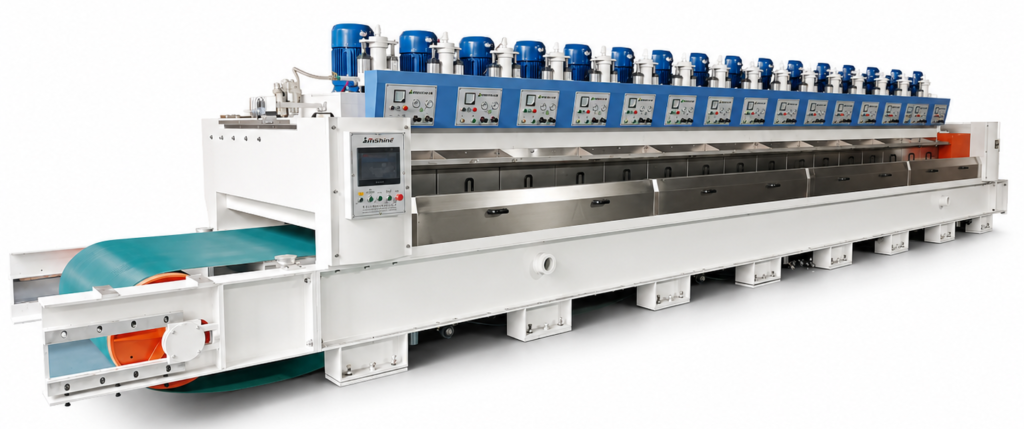
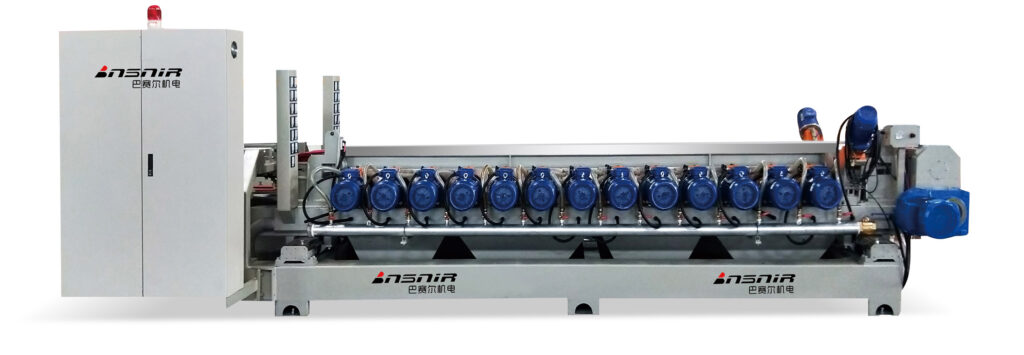
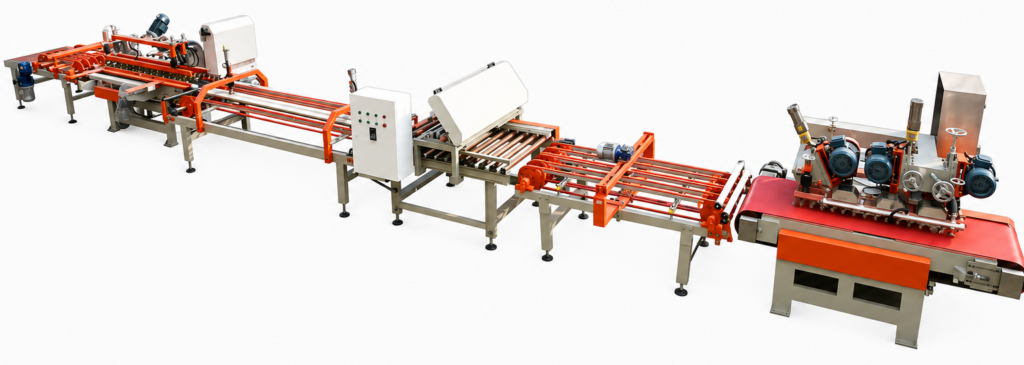
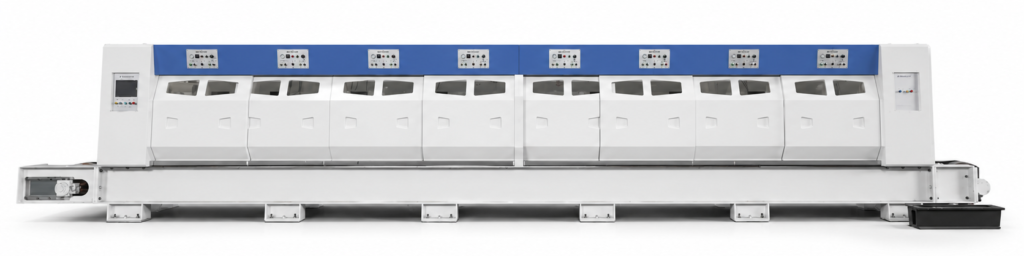
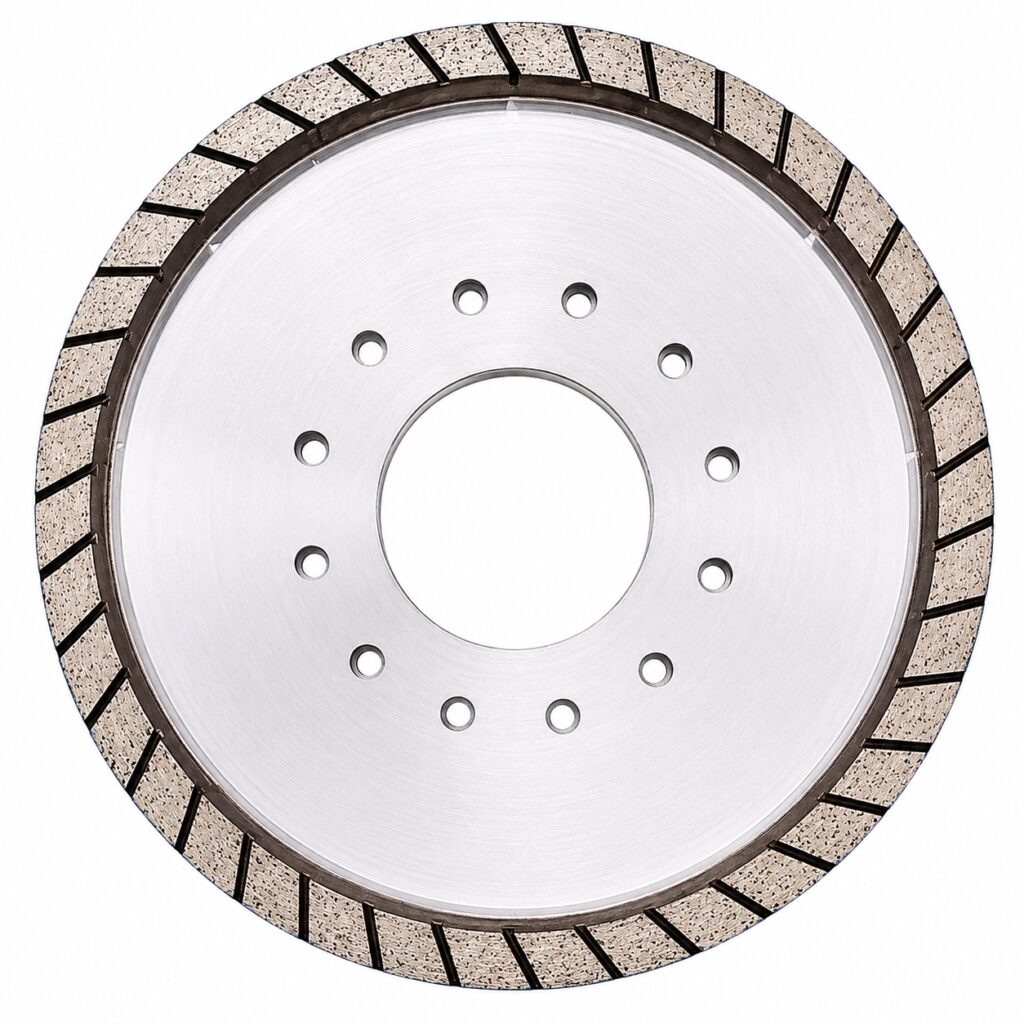
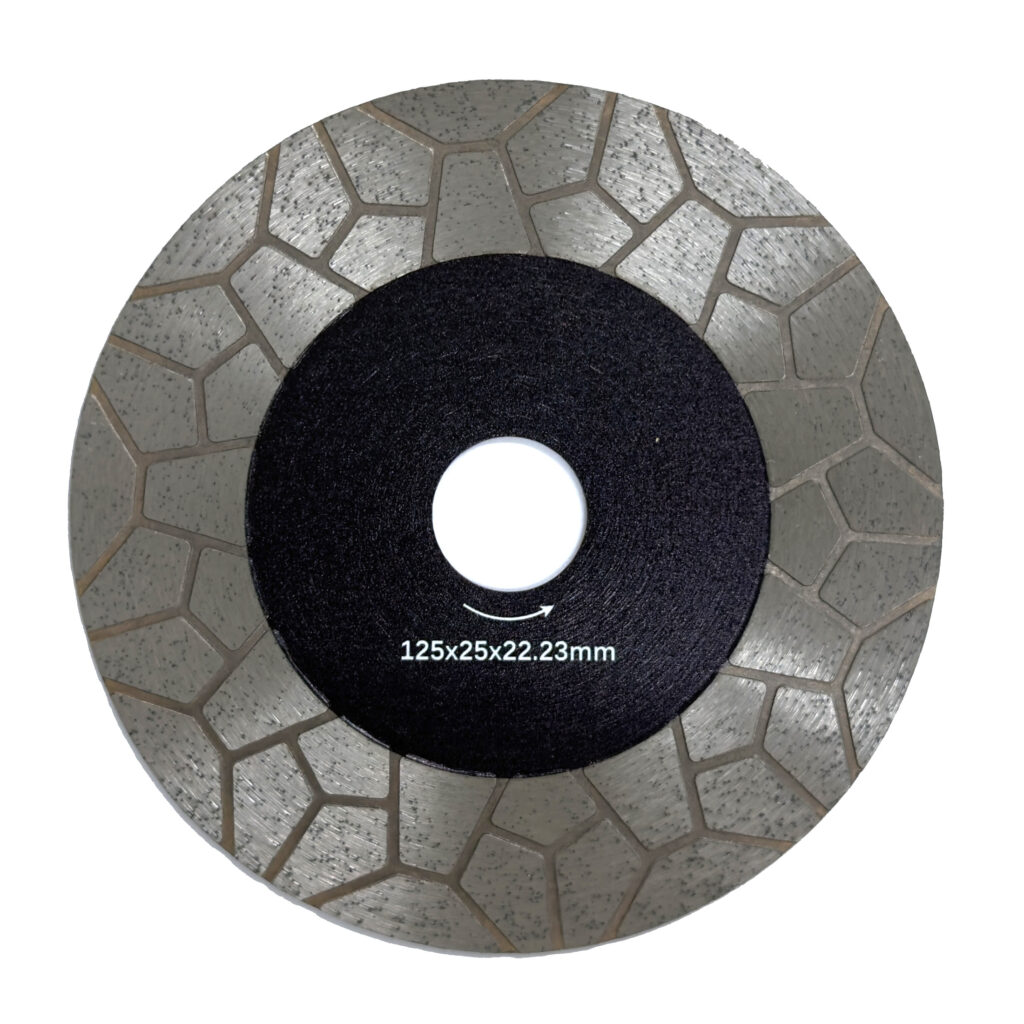
The decision may be screening a proposed line-and-wheel configuration, comparing project options, or confirming readiness for a later acceptance activity. BASAIR does not publish a universal trial plan, sample count, or acceptance threshold, so these items remain project-confirmation points between buyer and supplier. If the discussion concerns the line-and-wheel configuration itself, the relevant BASAIR equipment family to review for a project-specific trial discussion is the squaring and chamfering machine line, together with the matching diamond squaring wheels family.
Map the Tile Population and Its Decision-Relevant Variation
Map only variation that could change the trial decision. ISO 10545-1 supports thinking in terms of batches and sampling, while ISO 10545-2 identifies dimensional and surface characteristics including length, width, thickness, side straightness, rectangularity, surface flatness, and surface quality. Use project inputs such as tile material, dimensions, thickness, surface geometry, finish target, process route, dry or wet context, speed, required output, and production stage to define the groups to expose. Do not assume every listed characteristic must be varied, and do not treat any listed range as acceptable without project confirmation.
| Planning dimension | What to record | Decision use | Boundary |
|---|---|---|---|
| Tile material | Supplier or factory material identification | Separate materially different inputs | No material-performance inference |
| Dimensions and thickness | Nominal label plus agreed baseline observations | Identify size or thickness groups relevant to the trial | No tolerance or acceptable range is implied |
| Surface and edge condition | Agreed description and any baseline observation | Avoid mixing visibly different incoming conditions | No defect classification is created |
| Finish target and process route | Project-stated target and dry/wet context where relevant | Connect samples to the intended production route | Supplier engineering confirmation is still required |
| Production batch or source group | Traceable batch or source identifier | Preserve the origin of each sample | Group boundaries and quantity remain project-specific |
Select and Label Samples Without Hiding Variation
Select from the identified groups rather than from one convenient stack. The sampling standard connects batching, sampling, inspection, and acceptance, so a sample that loses its source-batch identity weakens the link between the trial result and the population it is meant to represent. Give each tile a unique sample label and retain the source-batch identity, so post-run observations can be traced back to the tile group.
Quantity, group boundaries, and any reserve samples remain project-confirmation items. The available standard abstracts do not prescribe a squaring-line-trial sample size, so the representative tile sample set for a squaring line trial depends on the agreed decision, the mapped variation, and the supplier’s project requirements.
Record Baseline Tile Characteristics Before the Run
Before the line changes the edge, record which characteristics were measured, by which agreed method, and what was observed on the incoming tile. ISO 10545-2 defines methods for dimensional characteristics and surface quality, but it does not set BASAIR machine tolerances, sample size, or a project pass/fail value. Distinguish a measured observation from a supplier statement or nominal label; unresolved limitations should stay visible in the record. Do not invent measurement devices, tolerances, or pass/fail values.
| Record field | Entry type | Use in the trial record |
|---|---|---|
| Sample label and source group | Traceability entry | Connect the tile to its planned variation group |
| Length, width, and thickness | Agreed baseline observation | Describe the incoming dimensional state |
| Side straightness, rectangularity, and surface flatness | Agreed baseline observation where relevant | Identify pre-existing geometry that may affect interpretation |
| Surface quality or edge condition | Agreed observation | Distinguish incoming condition from post-run evidence |
| Method, observer, and unresolved limitation | Evidence context | Prevent a nominal label or incomplete observation from being treated as a verified result |
Agree How Trial Evidence Will Be Interpreted and Escalated
Pre-agree how the evidence will be read before the first run record is written. IEC 62381 supports project-specific test plans and explicit agreement among owner, buyer, and vendor on test scope, activities, and responsibilities. For the trial, that means agreeing which sample identity connects to which run record, who reviews anomalies, what triggers a repeat or an engineering question, and which unresolved conditions prevent a purchase or acceptance conclusion.
This is decision governance only; it is not a claim that IEC 62381 applies to or certifies a BASAIR line. Keep the escalation path tied to the stated trial decision and the observed sample group, not to a generic pass/fail label.
Frequently Asked Questions
Q: Can we send a convenient stack of tiles to see whether the proposed line works?
A: A convenient stack is useful only if it represents the decision you need to make. First state whether you are screening a configuration, comparing options, or preparing for later acceptance, then identify the material, size, thickness, surface, and process variation that could change that decision.
Q: How many tiles should our sample set contain?
A: The quantity must be agreed for your project; the supplied evidence does not establish a universal squaring-line trial count. Send a map of the relevant tile groups and their source batches, and agree group boundaries, quantities, and any reserve samples with the supplier before dispatch.
Q: Why record incoming geometry if we mainly care about the finished edge?
A: Incoming observations help separate pre-existing tile conditions from changes seen after processing. Link each sample label to the relevant dimensional, surface, and edge observations and their agreed methods, distinguishing measured results from nominal tile labels or supplier statements.
Q: What should we agree before using a sample trial to support a purchase decision?
A: Agree how sample labels connect to run records, who reviews anomalies, and what would trigger a repeat or an engineering question. Also name the unresolved conditions that would prevent a purchase or acceptance conclusion so a result from one group is not silently applied to unrepresented tiles.