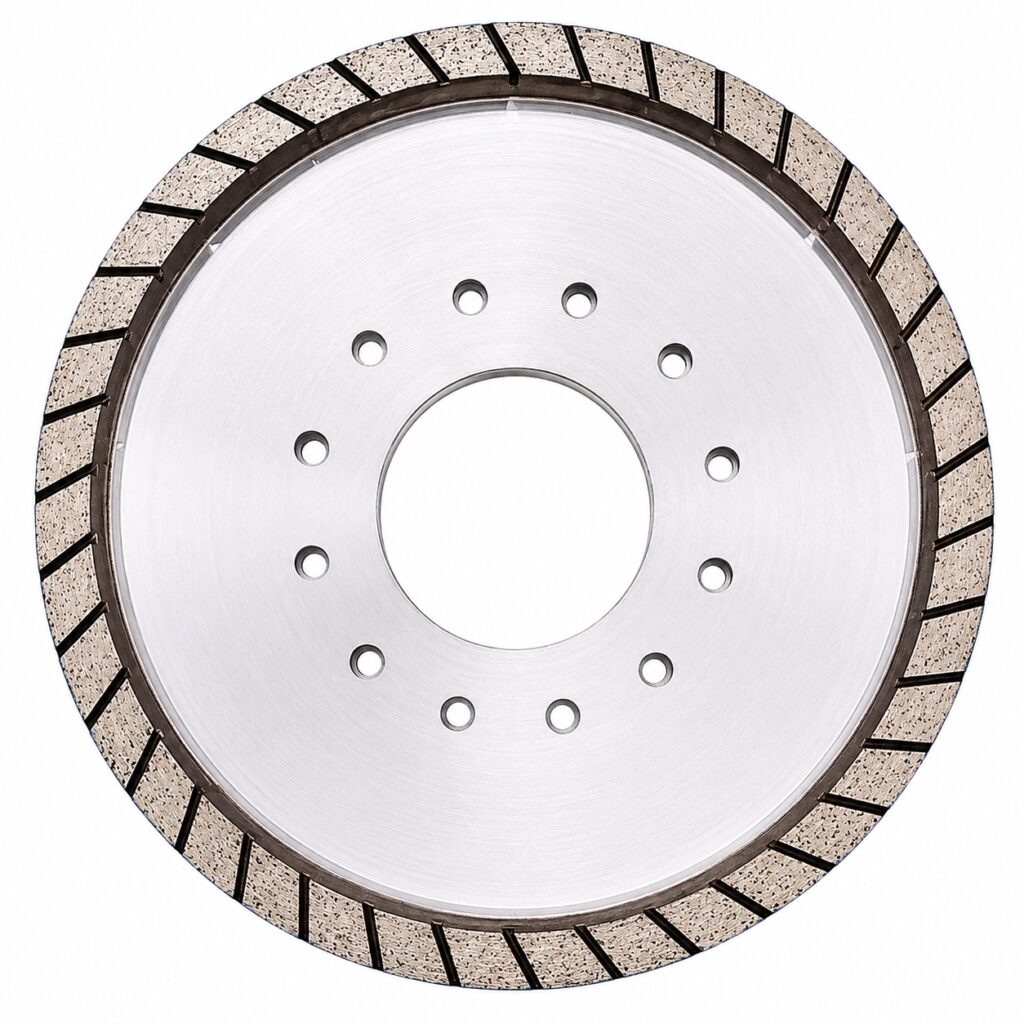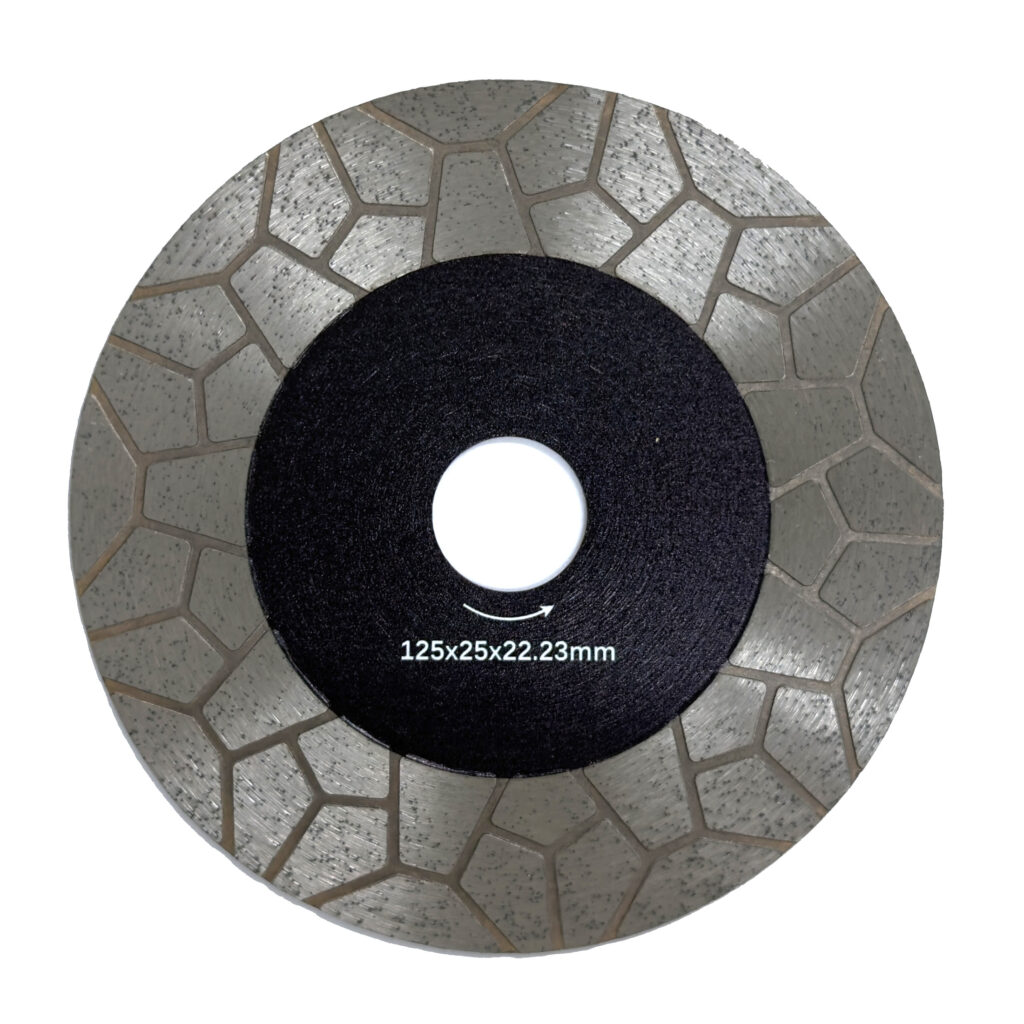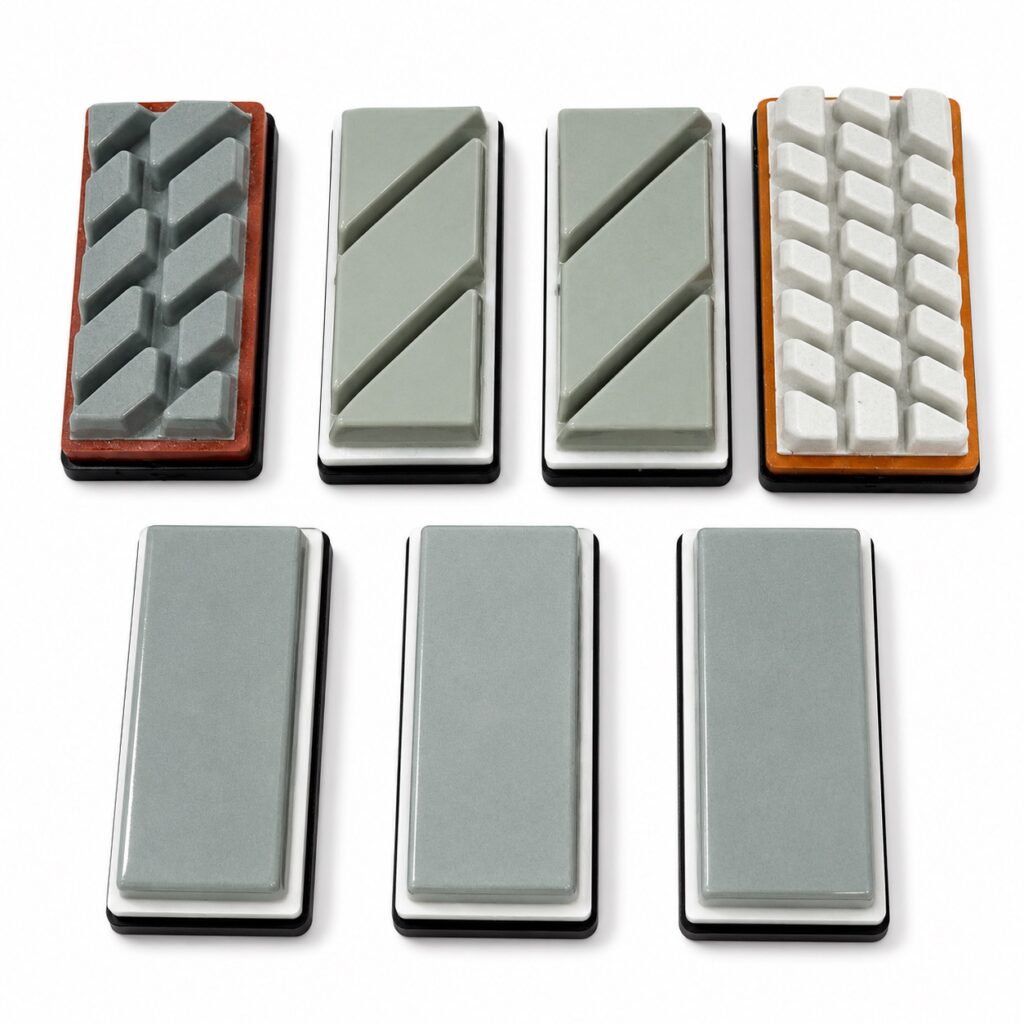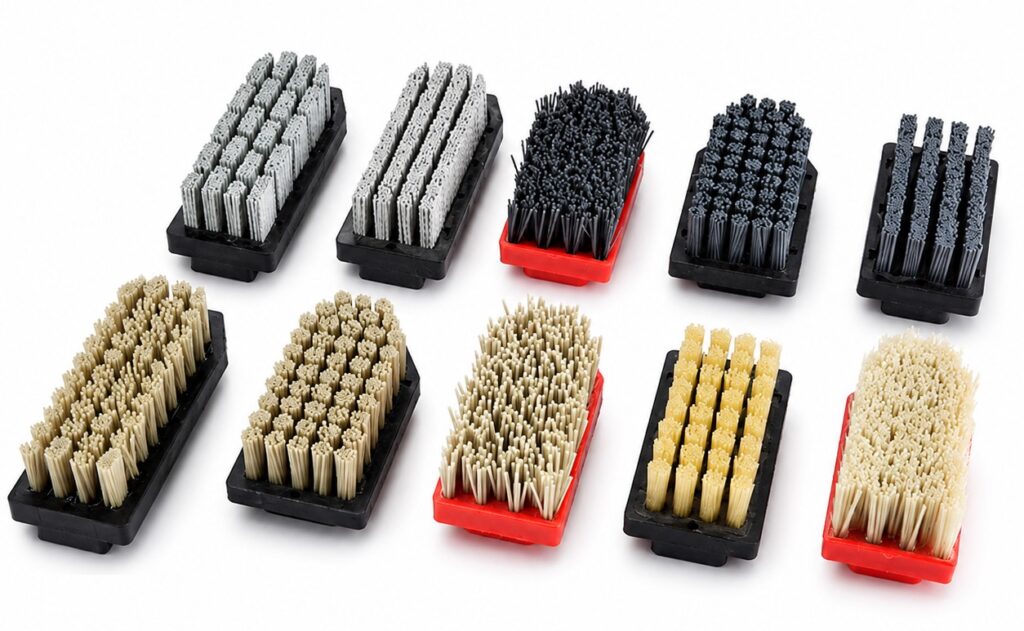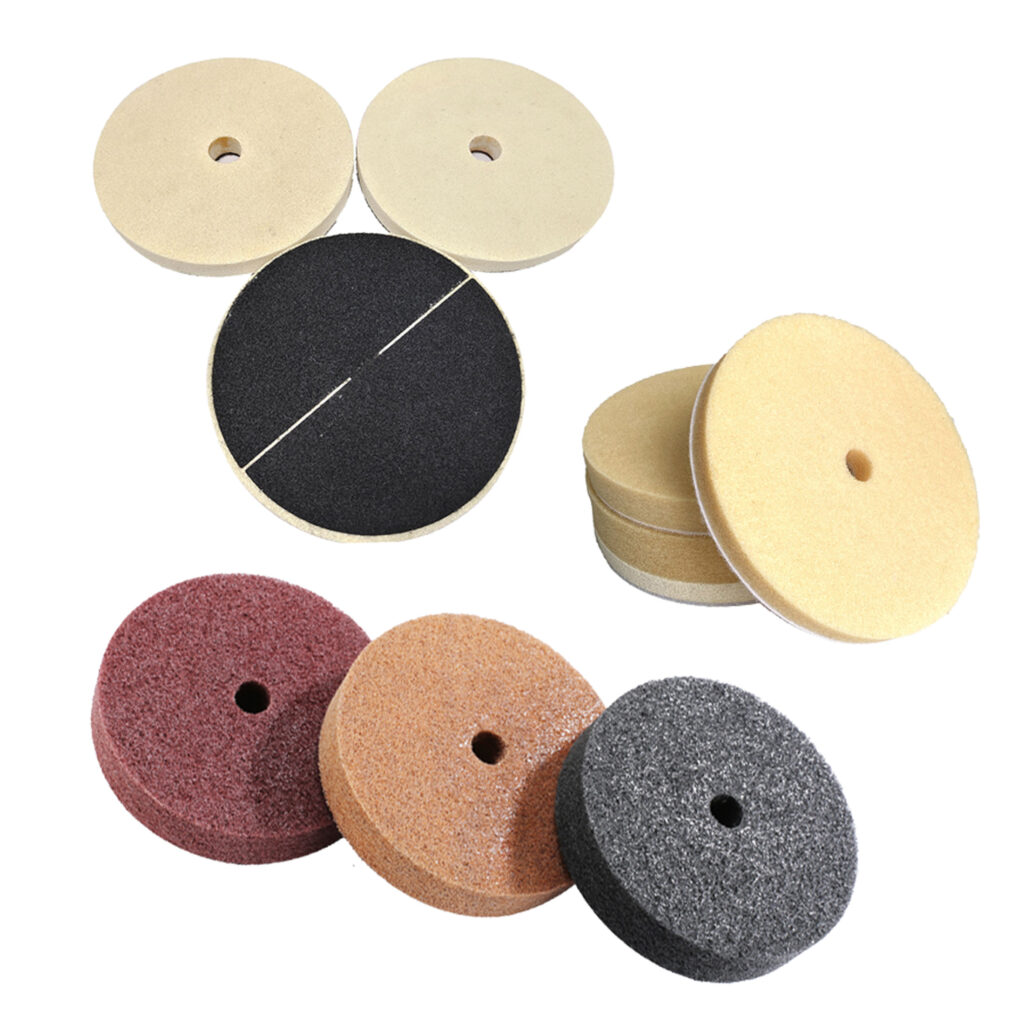
A scratch pattern or a dull band on the fired surface raises an immediate question: is the lappato abrasive worn or seated wrong, or is something upstream of the polishing head producing a mark that only becomes visible at this stage? Replacing a block resolves the question only if the block was actually the variable in play. Before that decision is made, the pattern on the tile needs to be read against where it sits on the line and what happened to the tile before it reached the suspect station.
Read Scratch Direction and Gloss-Band Location Before Removing Blocks
A scratch carries directional information. Its orientation relative to tile travel, and the spacing between repeated marks, points toward a mechanical origin before any block is touched. Where a mark runs parallel to travel direction and repeats at a regular interval, that regularity is consistent with a rotating or reciprocating element contacting the tile at a fixed relative position. Where the mark is irregular in spacing or angle, the originating condition is less likely to be a fixed geometric contact and more likely tied to something intermittent, such as loose debris or an inconsistent feed.
Gloss bands behave differently from scratches because they reflect a difference in surface texture across an area rather than a single line defect. A band’s width and its location across the tile face — centered, edge-biased, or full-width — describe how much of the polishing-head path is affected. A narrow band suggests a localized contact condition; a full-width band suggests something acting uniformly across the head’s working path.
Reading direction and location first, before any disassembly, keeps the inspection anchored to physical evidence rather than to an assumption about which component is due for replacement. A block near the end of its expected service interval is an easy target, but scratch orientation and band position either support or do not support that block as the source. Where the visual pattern does not align with that block’s position in the head arrangement, the inspection path needs to extend elsewhere before a replacement is made.
This reading step also establishes what to record. A scratch’s direction, its spacing, and a band’s width and position are the minimum descriptive facts that later comparisons depend on. Without them, later steps — comparing against the preceding grit stage, checking incoming flatness, separating gloss data from visual defect data — have nothing concrete to test against.
Map Each Symptom to Tile Travel and Polishing-Head Position
Once the pattern is described, it needs to be placed against the physical layout of the line: which head positions the tile passed under, and in what sequence, before the mark became visible. A polishing line typically alternates or sequences different head types along the travel path, and each head occupies a defined position relative to tile movement. A mark that repeats at an interval consistent with a single head’s rotational or oscillatory cycle narrows attention to that position. A mark with no such correspondence points away from a single-head explanation.
Scope matters as much as position. A pattern that appears across the full tile width differs in implication from one confined to a single track, and both differ from a pattern that only appears within a specific production lot. A full-width, cross-line pattern is consistent with something affecting every tile passing a given position — water delivery, a head setting, or a shared mechanical condition. A single-track pattern narrows attention toward one contact point or one segment of the working surface. A lot-specific pattern raises a different question entirely: whether the incoming material for that lot differed in a way that only becomes visible after polishing, independent of the equipment’s condition on that day.
These three scopes are not interchangeable evidence. A full-width pattern does not confirm a single-block problem, and a lot-specific pattern does not confirm an incoming-material problem, until the corresponding position or lot information has actually been checked against the mark. The value of mapping is that it converts a visual description into a location and a scope that the next inspection steps can test directly, rather than leaving the pattern as a general complaint about polishing quality.
| Visible pattern | Position or scope reference | How to use the comparison |
|---|---|---|
| Scratch direction and spacing | Tile travel direction and polishing-head positions | Check whether the mark pattern aligns with line movement and head position; alignment narrows the inspection path but does not prove the cause. |
| Repeating gloss band | Full tile width or one track | Keep the band’s width and track location attached to the defect record before attributing it to an abrasive block. |
| Affected tiles | Production-lot identity | Keep any lot-specific pattern visible when comparing abrasive, machine, water and incoming-surface explanations; lot association alone does not prove the cause. |
Inspect Incoming Flatness, Water Delivery and Holder Seating
A polishing head does not act on the tile in isolation. It acts on whatever surface and whatever contact conditions arrive at its position, and three of those conditions sit outside the abrasive itself: the flatness of the incoming tile, the delivery of water to the contact zone, and the seating of the abrasive holder that carries the block.
Incoming flatness changes how evenly a block’s working face contacts the tile. Where a tile arrives with a deviation from flat, contact pressure across the block’s surface is not uniform, and an uneven contact pattern can produce a mark that looks like an abrasive fault even where the block itself is sound. This condition is worth checking before a block is condemned, because flatness variation upstream of polishing is not something the abrasive can compensate for on its own.
Water delivery affects both lubrication and swarf removal at the contact point. Where water flow to a station is reduced or uneven, heat and debris at the contact zone change in ways that can alter the surface finish independent of the block’s own wear state. A water-related cause and a wear-related cause can produce visually similar marks, which is why water delivery belongs in the same inspection pass as the abrasive rather than being checked only after the block has been replaced and the mark persists.
Holder seating determines whether the block presents its working face to the tile at the intended angle and pressure. A block that is otherwise in acceptable condition can still produce an irregular mark if it is not seated correctly in its holder. This is a fit condition, not a wear condition, and distinguishing between the two changes what corrective action is actually needed — reseating differs from replacement.
None of these three conditions rules out the abrasive as the relevant variable. They establish what else must be checked, at the same time, so that a replacement decision rests on having compared the abrasive against the surface, the water, and the fit, rather than on the abrasive being the first and only place inspection stopped. Confirming these conditions is also the kind of project detail that matters when specifying or reviewing a configuration with a supplier, since the same incoming-flatness and water-delivery conditions on a project’s own line will determine what the abrasive experiences in that specific installation.
| Inspection area | Condition to inspect | Why it remains in the comparison |
|---|---|---|
| Incoming tile | Flatness | Keeps incoming-surface variation visible while the scratch or gloss-band pattern is assessed. |
| Water system | Water delivery | Keeps a water-related explanation visible before the blocks are blamed. |
| Abrasive holder | Holder seating | Checks the fit variable at the holder interface before the abrasive is replaced. |
Compare the Suspect Stage with the Preceding Abrasive Step
A polishing sequence runs through progressive grit stages, and each stage works on the surface condition the previous stage left behind. A mark visible at a given stage did not necessarily originate there. Where the preceding grit stage already left a scratch or an uneven texture, a finer stage downstream can reveal that earlier mark more clearly, or fail to remove it, without the downstream abrasive itself being out of condition.
This makes the preceding stage a direct comparison point rather than a secondary check. If a tile is pulled before it reaches the suspect stage and the same directional mark or textural unevenness is already present, the origin sits earlier in the sequence, and replacing the suspect stage’s block will not resolve it. If the mark is genuinely absent before the suspect stage and present after it, that comparison supports attention on the suspect stage itself, including its abrasive.
The condition that changes this judgment is how much correction capacity a downstream stage actually has over what arrives from the stage before it. A finer grit stage generally refines surface texture rather than removing coarse mechanical damage, so a scratch introduced earlier in the sequence is not something a later, finer stage is expected to erase. Where that is the case, a mark that persists across several stages points toward an earlier origin regardless of which stage happens to be where the defect was first noticed.
Making this comparison requires holding a tile sample at the boundary between the two stages, which is a practical constraint worth planning for before disassembly begins, since the comparison loses value once the tile has already passed further down the line and mixed with additional stages’ effects.
Separate Gloss Measurements from Visual Defect Records
Gloss is measured as an average reflectance value, commonly read at a 45-degree specular geometry as described in ASTM C346, and an average by construction can conceal a localized condition. A tile can return a gloss value within an expected range while still carrying a scratch or a gloss band that is visually apparent at certain viewing angles or under certain lighting. Keeping gloss readings in one record and visual defect observations in a separate record prevents the averaged number from being read as evidence that no localized issue exists.
This separation matters because the two records answer different questions. A gloss reading, taken according to a defined sampling approach, addresses whether the surface finish falls within an agreed target — and where that target and its sampling scheme are set, they remain a matter for the buyer and the project to define, since a standard test method establishes how the number is measured, not what the acceptance number is. A visual defect record addresses whether a specific mark, at a specific position, on a specific lot, is present. A stable gloss average and a real visual mark are not contradictory; they describe different aspects of the same surface, and a decision to replace an abrasive block should refer to the visual record, not to the gloss average alone, when the complaint is a localized scratch or band rather than an overall dullness across the tile.
Surface-quality review under a general standard such as ISO 10545-2 addresses dimensional and surface-quality determination, but it does not by itself establish which stage in a polishing line caused a given mark. That attribution depends on the position, scope, and stage comparisons described earlier, not on the surface-quality assessment alone.
| Record | What to retain | Decision boundary |
|---|---|---|
| Gloss measurement | 45-degree specular gloss readings, kept separate from visual defect observations | A stable average can coexist with a localized mark; gloss targets, sampling and batch acceptance remain buyer-specific. |
| Visual defect record | Scratch direction and spacing, gloss-band location and affected tile lot | Preserves localized patterns; surface-quality review does not by itself prove polishing-process causation or identify the abrasive as the cause. |
Decide Whether the Abrasive Is the Relevant Replacement Variable
At this point the inspection has produced several distinct pieces of evidence: where the mark sits relative to tile travel and head position, how widely it repeats across width, track, or lot, whether incoming flatness, water delivery, or holder seating offer an alternative explanation, whether the preceding grit stage already carried the same mark, and whether the visual record and the gloss record tell a consistent story. Replacing the abrasive block is the right action only where these pieces, taken together, point to the block’s own condition, its fit in the holder, or its wear state as the variable that explains the observed pattern.
Where the mark’s position does not correspond to the suspect head, where incoming flatness or water delivery offers an equally consistent explanation, where the preceding stage already shows the same mark, or where the visual pattern is confined to a single lot rather than following the block’s position across all lots, the evidence does not isolate the abrasive as the cause. In those situations, replacing the block addresses a variable that was not shown to be responsible, and the mark can be expected to persist because its actual source remains unaddressed.
Where the position, scope, and stage comparisons do converge on the suspect block — the mark appears at the corresponding head position, is absent before that stage, is not explained by flatness or water conditions, and holder seating has been confirmed correct — that convergence supports treating the block’s condition or wear as the relevant variable. This is also the stage at which the elastic lappato abrasive‘s condition and fit become the specific detail worth raising directly with the supplier reviewing the line, since a configuration review depends on knowing whether the reported issue traces to the abrasive itself, the holder, or a line condition outside the abrasive.
The judgment does not resolve to a single rule across all cases, because the conditions that point toward the abrasive in one situation are the same conditions that, when absent, point away from it in another. What stays constant is the requirement that each of the alternative explanations — position, scope, upstream condition, preceding stage, and the gloss-versus-visual distinction — has been checked before the block is treated as the replacement variable, rather than being replaced first and checked afterward.
| Evidence area | Question to resolve | Replacement boundary |
|---|---|---|
| Abrasive block | Do condition, fit or wear observations indicate that the block is the relevant variable? | Replace the block only when the evidence points to the abrasive. |
| Holder and water delivery | Could holder seating or water delivery explain the observed pattern? | Keep machine and water explanations open until they have been compared. |
| Incoming tile and lot scope | Do flatness and the affected-lot pattern point to incoming-surface variation? | Do not treat a lot pattern alone as proof of an abrasive fault. |
| Previous abrasive stage | What does comparison with the preceding grit step show about the suspect stage? | Keep the preceding stage in the inspection path before assigning the cause. |
| Measurement and visual record | Do gloss readings and localized visual marks tell the same story? | A stable gloss average does not clear a localized mark. |
Frequently Asked Questions
Q: Should we replace an abrasive as soon as a scratch or gloss band appears?
A: No. First preserve the pattern and position evidence, then compare abrasive condition, fit, and wear with holder seating, water delivery, incoming flatness, and the preceding grit stage. Replace the block only when that comparison points to the abrasive as the relevant variable.
Q: What should we record before changing the polishing setup?
A: Record the affected tile lot, scratch direction and spacing, band width and track location, and the related polishing-head position. Keep gloss readings separate from visual defect observations, and add what was found when checking flatness, water delivery, holder seating, and the preceding abrasive step.
Q: How should we use a defect that appears on one track, across the tile width, or only in one lot?
A: Use the scope to choose the next inspection path. A one-track pattern supports a position-specific check, a full-width pattern calls for a broader line comparison, and a lot-specific pattern keeps incoming-surface variation in view; none of these patterns alone proves the cause.
Q: Does a stable average gloss mean the tiles are free of polishing defects?
A: No. A stable average can coexist with a localized scratch or gloss band. Review the visual defect record alongside the gloss measurements, and apply the buyer’s own sampling, target, and batch-acceptance rules rather than using the average as a clearance by itself.
Q: What information makes a replacement decision easier to review with an equipment or abrasive supplier?
A: Provide the pattern map, affected lot, track and head position, separate gloss and visual records, and the observations from the flatness, water, holder, and preceding-stage checks. Ask for the abrasive’s condition, fit, and wear to be assessed against those alternatives so the next action addresses the evidence rather than the defect label alone.