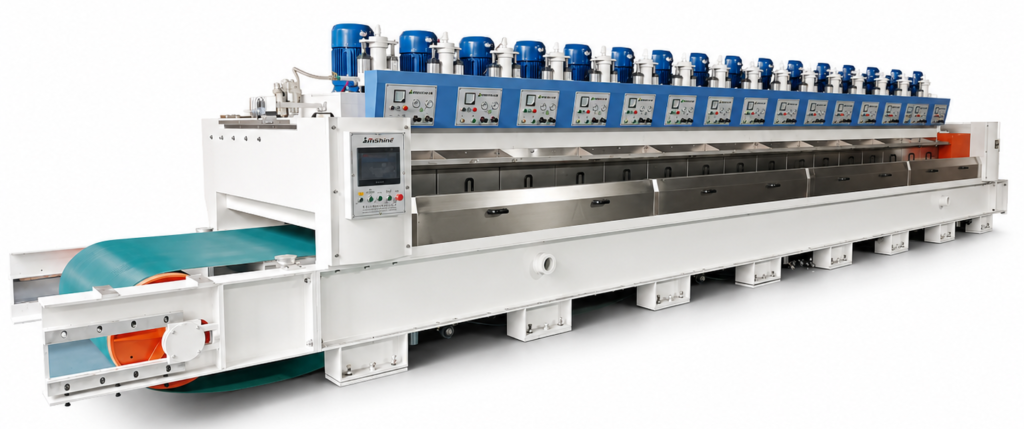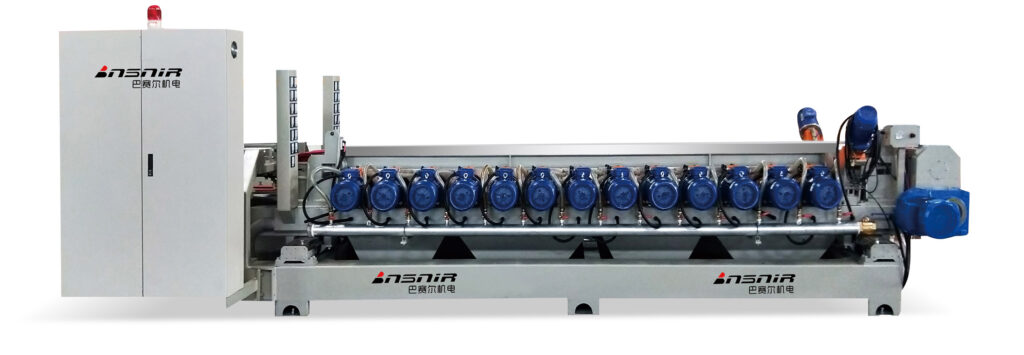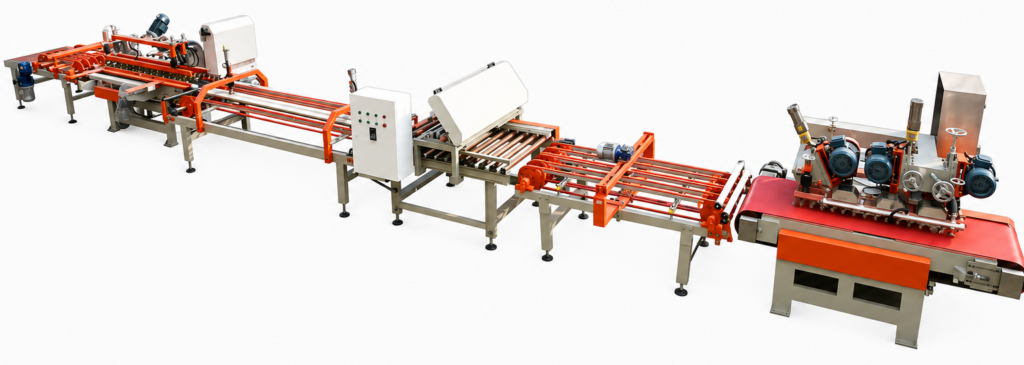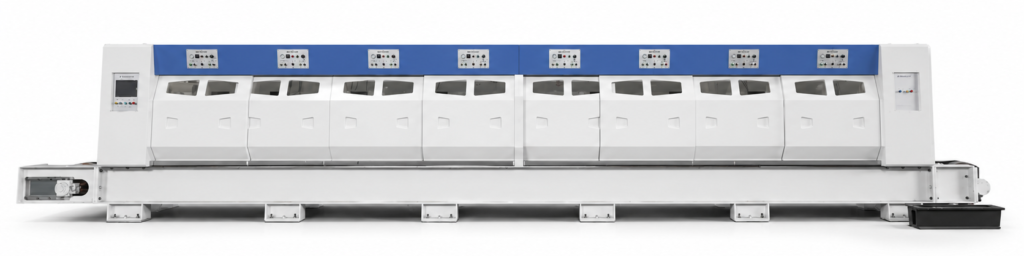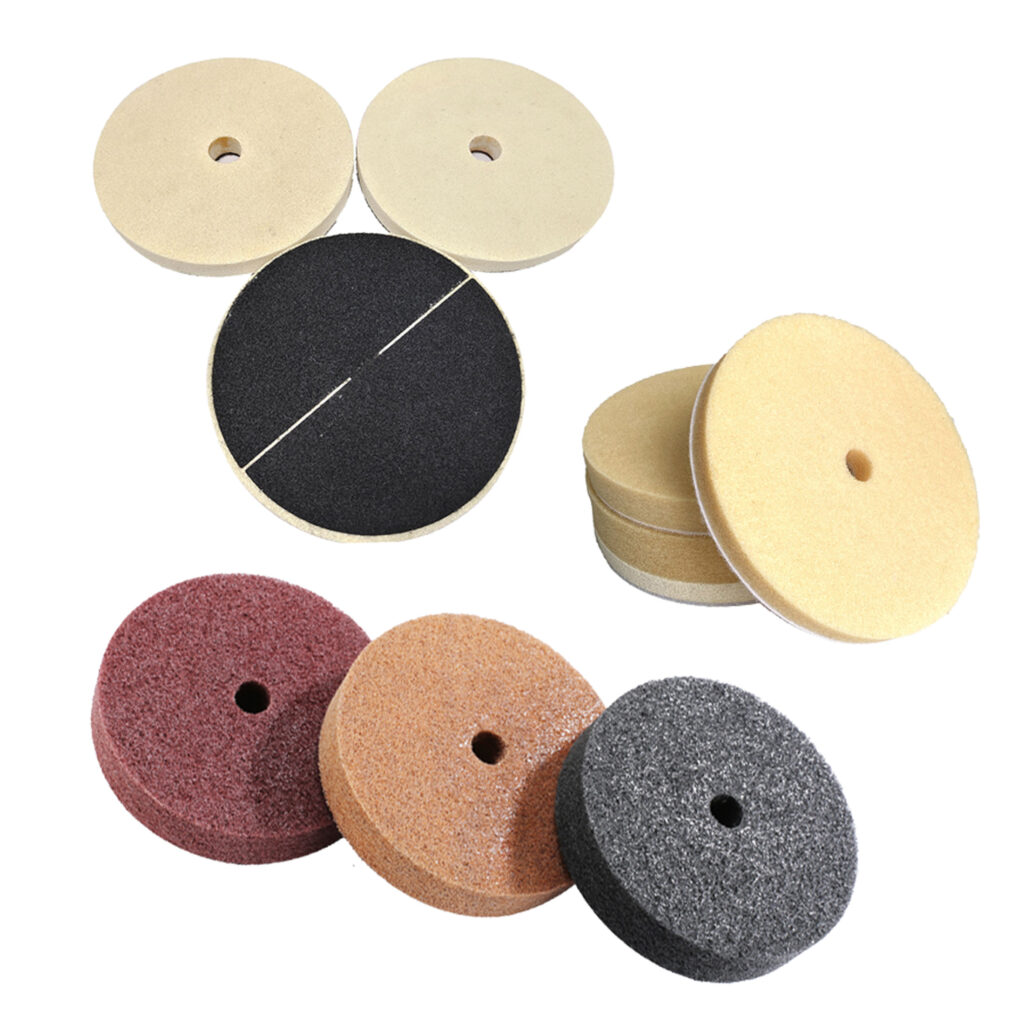
A replacement diamond squaring wheel can match the diameter shown in a catalog and still not fit the station it has to run in. Machine brand, wheel position, mounting pattern, and station duty often decide fit more than a nominal size does, and gaps in that data tend to surface after the order is placed rather than before. The practical question is which fit fields a tile factory can confirm from its own machine records and drawings, and which ones need written confirmation from the supplier for the specific project.
Identify the Exact Machine and Wheel Position
Start the record with the machine maker and model exactly as shown on the nameplate, then add the exact wheel station on that machine. A squaring line may carry more than one wheel position, and positions can differ in duty even within the same machine. Record the current wheel duty as it functions at that station, whether the station runs dry or wet, and any station-specific drawing or parts reference the plant already holds.
This matters because a familiar machine brand does not by itself prove fit across models or across positions within a model. Machines and their matching diamond tools are best evaluated together, and selection depends on the intended production stage rather than on the machine name alone. If the nameplate, the parts book, and the physically installed wheel disagree, that conflict is itself information the supplier needs before any fit decision can be closed.
Match the Mounting Geometry from Machine Data
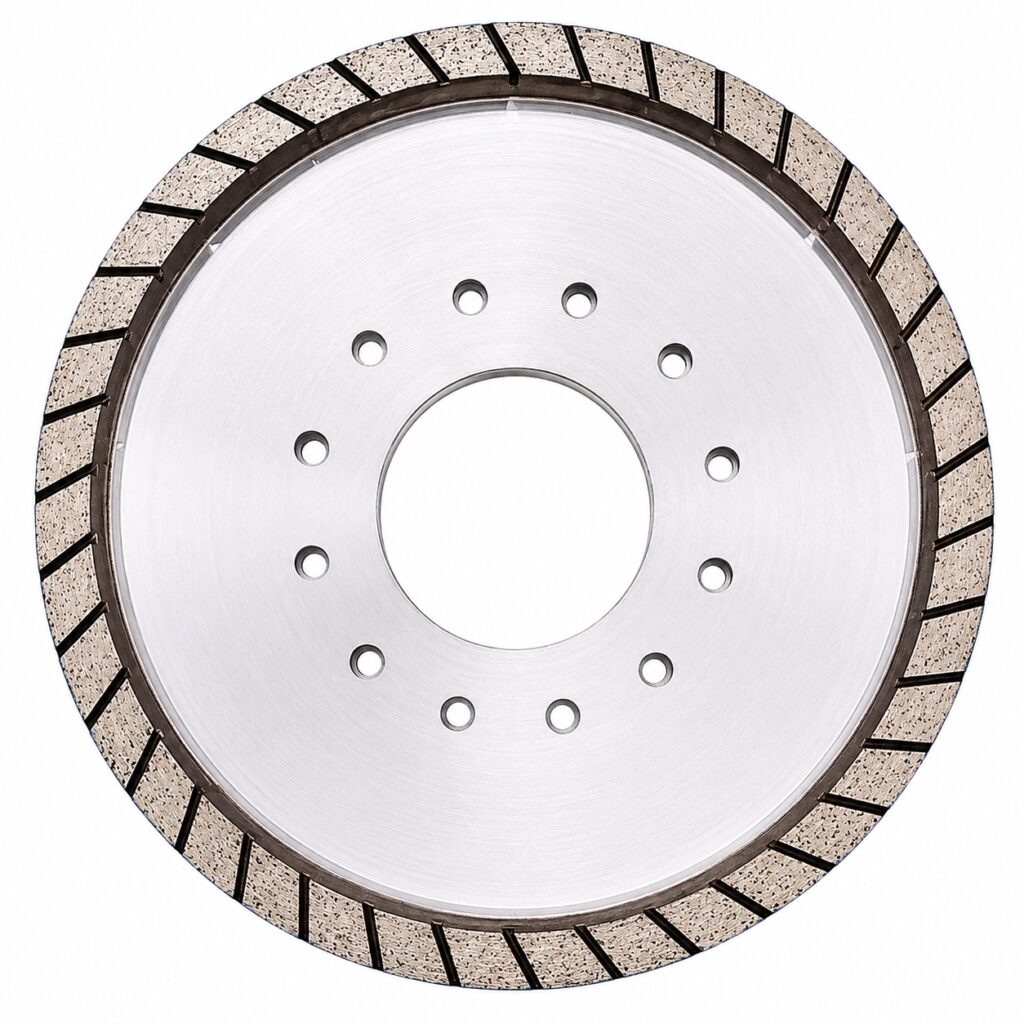
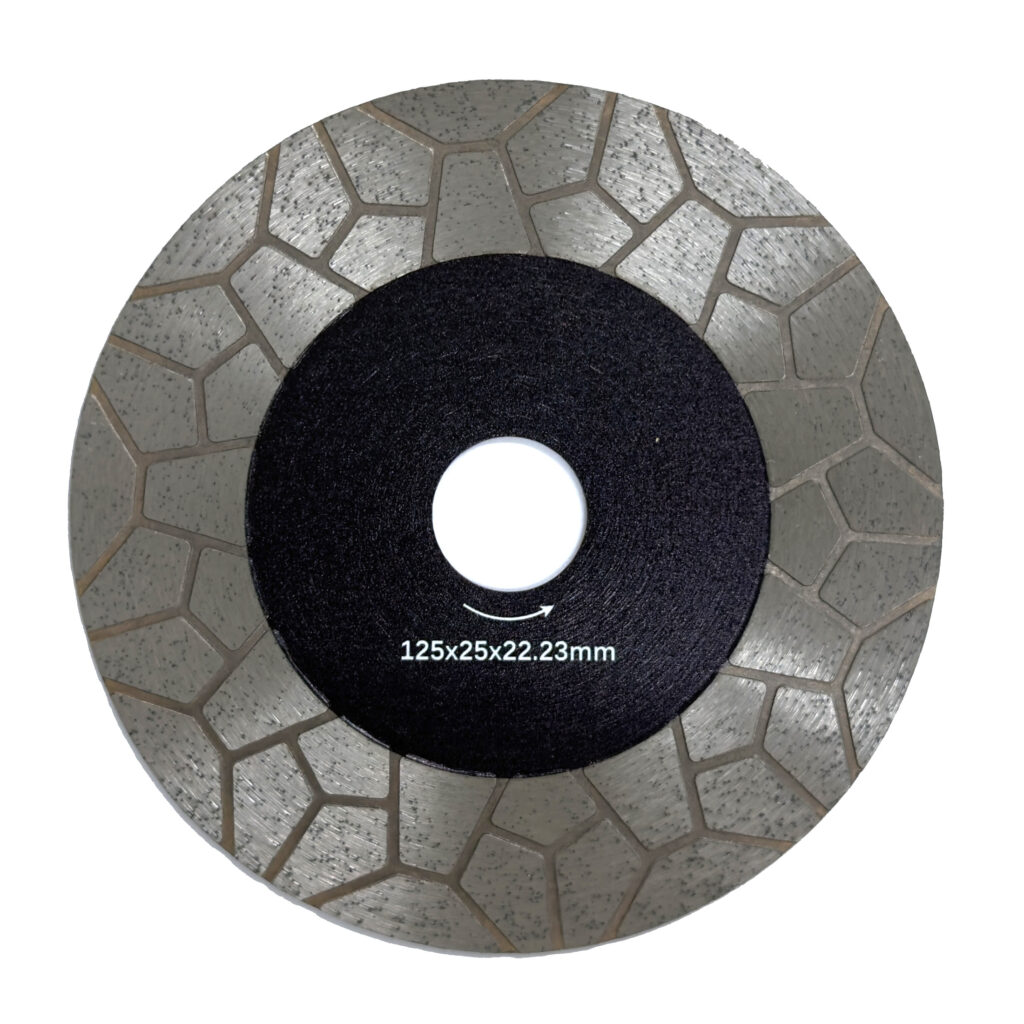
Geometry is the part of the decision that can usually be documented rather than assumed, provided the buyer copies values from the installed wheel or from machine documentation instead of from a product page. Market-reference squaring-wheel listings illustrate the fields that actually vary between variants: external diameter, inner diameter, mounting-hole quantity, distance between holes, and segment size. A current Xiejin resin-bond diamond squaring wheel page shows this kind of variant-level field structure across marketed options. Those published values are examples of what varies in the market; they are not a specification to copy into an order.
Where identifiers, part numbers, or drawings are unclear, a photograph of the existing wheel alongside a dimensioned sketch is usually more useful to the supplier than a description. The table below frames the fields as a handoff record: what the buyer supplies, and what the supplier has to return in writing.
| Fit field | Buyer record | Supplier confirmation |
|---|---|---|
| External diameter | Value from the installed wheel or machine document | Confirm suitability and clearance for the exact station |
| Inner diameter | Measured or documented value and reference source | Confirm bore or interface match |
| Mounting-hole quantity | Count from the existing mounting pattern | Confirm the supplied wheel pattern |
| Hole-spacing distance or pattern | Dimensioned machine or wheel record | Confirm complete pattern alignment; do not infer from brand |
| Segment size or wheel profile | Existing wheel record and station duty | Confirm that the proposed construction matches the intended responsibility |
| Revision identity | Drawing, photo, or part reference used by the buyer | Return the supplier drawing or data sheet revision for approval |
A matching diameter is not a fit confirmation; the complete mounting pattern still has to be confirmed for the exact station.
Confirm the Wheel Identity, Duty, and Tile Conditions
A traceable wheel designation helps both sides talk about the same item, but it is a naming tool rather than a compatibility proof. ISO 6104:2005 provides designation and nomenclature for rotating diamond or cubic-boron-nitride grinding tools, which supports aligning the requested wheel identity with a documented designation when the order is closed. The standard’s scope is terminology and designation; it does not establish ceramic-tile suitability, mounting dimensions, operating values, wheel life, or compatibility with a particular machine.
Duty has to be stated separately from identity. BASAIR’s current background distinguishes dry and wet contexts and treats metal-bond, resin-bond, and chamfering responsibilities as different duties on its wheel range, so the requested designation should line up with what the station actually does — stock removal at the squaring position or a chamfering or finishing responsibility. The tile side of the record is equally relevant to the comparison: material type, tile dimensions, thickness, incoming edge condition, and the target edge finish. Without those, the supplier is being asked to confirm duty against an incomplete picture.
Designation and duty description together still do not prove formulation, performance, direction of rotation, maximum speed, or tool life. Those remain project-specific confirmations rather than conclusions that can be drawn from a name or a standard reference. Buyers evaluating candidates for an installed machine can use the BASAIR diamond squaring wheels family as the enquiry point for dry/wet and duty-specific fit confirmation, with the understanding that the actual match is settled by the machine and station data exchanged for that project.
Close the Drawing, Trial, and Approval Handoff
The fit decision closes in writing. Ask the supplier to return a drawing or data sheet that shows the confirmed identification and fit fields, the stated duty, the process context, any exclusions, and any trial condition proposed for the project. Compare that document against the machine record assembled in the earlier steps rather than against the sales description, and name the person on each side who approves revisions so that a later change does not silently reopen a closed question.
If a critical dimension or the station duty is still unresolved, the more defensible position is to hold the order rather than assume that a familiar machine brand or a matching outer diameter is enough. A conditional trial may be a reasonable way to move forward in some projects, but it is a project decision with its own conditions, not a substitute for a confirmed mounting pattern and a stated duty. The handoff is complete when the accepted revision, the approved identity, and the unresolved items — if any — are all recorded before the purchase is placed.
Frequently Asked Questions
Q: Is the machine brand and wheel diameter enough to order a replacement squaring wheel?
A: No. Tie the machine maker and model to the exact station, then confirm the bore, mounting-hole quantity and pattern, wheel profile, and clearance. A familiar brand or matching external diameter does not establish fit across machine models or positions.
Q: What can we send when the current wheel has an unclear part number?
A: Send the machine nameplate details, exact wheel position, available parts or station drawings, and photos or a dimensioned sketch of the existing wheel. Identify where each dimension came from so the supplier can return a traceable drawing or data sheet for comparison.
Q: If a proposed wheel fits the mounting, is it suitable for the work we do?
A: Mounting fit is only one part of suitability. Match the wheel’s stated removal or finishing duty and wet or dry context to the station, tile material, dimensions, thickness, incoming edge condition, and target finish. A designation or matching geometry alone does not confirm the proposed formulation or performance.
Q: When should we hold a replacement-wheel order?
A: Hold it when a critical dimension or station duty remains unresolved. Before purchase, compare the supplier’s confirmed drawing or data sheet with the machine record, including duty, process context, exclusions, and any trial condition, and identify who approves drawing revisions.