
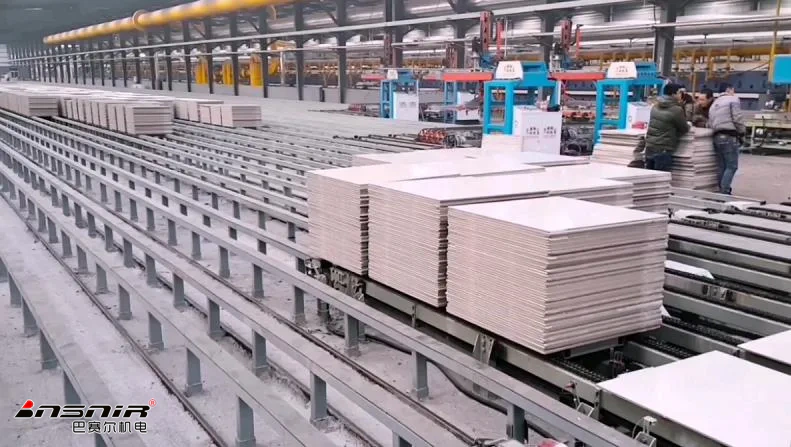
A tile-line buffer or accumulator temporarily holds product so a short downstream interruption does not immediately stop the upstream process. Its required capacity and mechanism come from the arrival rate, protected stop time, product condition, restart sequence and available space—not from a generic “number of tiles” claim.
1. Define the stop that the buffer must absorb
List each expected interruption: normal package-material change, downstream format change, pallet exchange, short fault recovery, inspection hold or planned maintenance. Record how long the upstream process should continue, the tile arrival rate during that period, and whether product must remain in original sequence. This establishes the minimum functional duty before a chain store, lane accumulator, stack buffer or other project mechanism is selected.
This page covers short-duration line protection and controlled restart. It does not replace batch transfer and production storage, a general conveyor/positioning interface, or the packaging process itself.
2. Turn the stop case into a buffer requirement
| Decision | What to calculate or confirm | Why it changes the mechanism | Acceptance evidence |
|---|---|---|---|
| Protected stop time | Incoming rate × required minutes, plus an agreed operating margin | Sets the minimum usable product count, not merely the frame size | Timed downstream-stop trial without upstream starvation or overflow |
| Single tiles vs. stacks/pallets | Product state, mass, support and permitted contact | Changes the carrier, lift, chain, lane and guarding concept | Representative product load/unload and surface inspection |
| Sequence preservation | FIFO requirement, permitted resequencing and recipe/batch identity | Determines lane logic and retrieval order | Tracked entry/retrieval test across mixed batches |
| Restart behavior | Release rate, downstream ramp-up, gap recovery and upstream coordination | Avoids emptying the buffer faster than the next process can accept | Controlled restart and return-to-normal-flow trial |
| Floor vs. pit-integrated route | Line elevation, floor loading, pit/drainage, clear height and access | Changes civil work and maintenance/safety access | Approved layout, civil drawing and service clearances |
3. Use partner examples to confirm mechanisms, not capacity promises
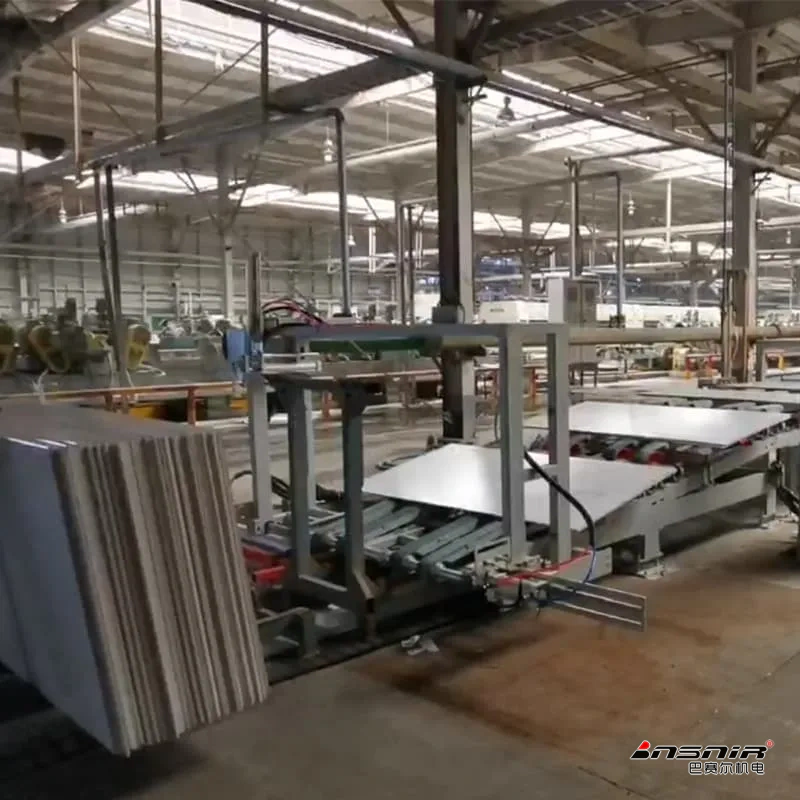
AITAO publishes an Automatic Billet Storage Line product object. Its SSBL partner page separately states that the conveying chain can store multiple pallets and that the standard arrangement may require a pit. These are direct evidence that chain-based transfer and storage routes exist within the authorized partner range.
The pages do not establish a universal buffer duration, product count or restart performance. SACMI’s published storage-line example independently shows that industrial ceramic storage can combine loading/unloading units, storage boxes, vehicles, product identification, routing and safety control, but that project architecture and its values are not transferred to BASAIR. The selected system must be calculated from the buyer’s actual flow and stop cases.
4. Protect the product and control the recovery sequence
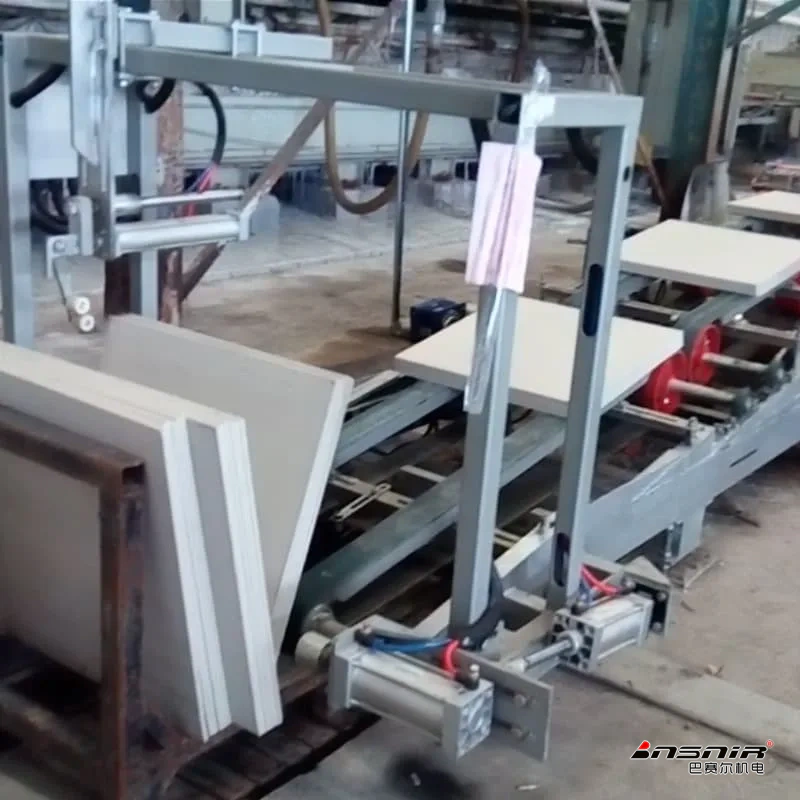
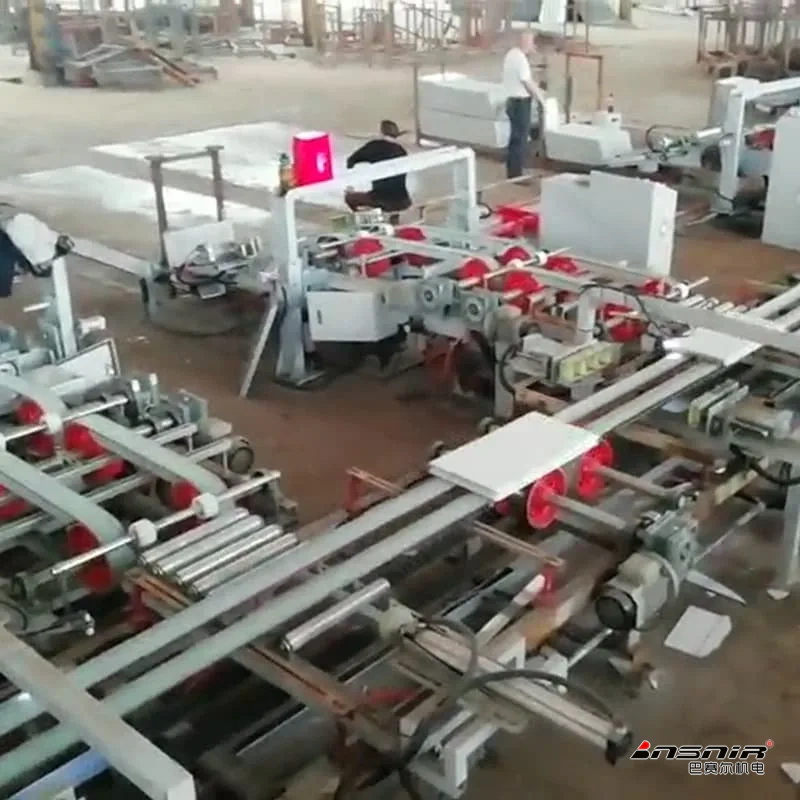
- Product protection: material, surface, edge sensitivity, permitted contact, separator/frame, stack height/mass and acceptable dwell condition.
- Flow: infeed rate, downstream rate, protected stop scenarios, simultaneous formats, recipe/batch identity, bypass and maximum hold time.
- Mechanical: carrier or lane, support points, lift/travel, retained-load condition, floor/pit, drainage, service access and recovery path for damaged product.
- Controls: full/empty/available states, upstream stop threshold, downstream release, sequence tracking, safe restart, power-loss retention and manual recovery.
- Safety: fixed/interlocked guarding, crush and shear zones, safe personnel entry, emergency-stop zoning, stored energy, load retention and local compliance responsibility.
- Acceptance: agreed tile/stack range, protected-stop duration, sequence retention, restart profile, fault recovery, damage criteria and measured usable capacity.
5. Submit the operating cases that size the accumulator
| Submission item | Minimum detail | Decision enabled |
|---|---|---|
| Stop cases | Cause, frequency, required protected time, upstream arrival and downstream restart rate | Usable capacity and release logic |
| Product state | Single tile/stack/pallet, material, finish, sizes, mass, separator/frame and photos | Carrier, lane, support and contact method |
| Sequence rules | FIFO, permitted resequencing, recipe changes, batch tracking and quarantine/reject route | Storage and retrieval control |
| Existing line | Layout, directions, elevations, space, current signals and bottleneck history | Physical and control integration |
| Site boundary | Power, air, floor/pit, drainage, clear height, access and safety requirements | Installation, utilities and responsibility matrix |
| Operation and schedule | Shifts and operating hours, wet or dry environment, and planned installation or production-start date | Duty assumptions, environmental design and project sequence |
Connect the buffer with the current automatic packaging line and the wider tile automation and packaging solution.
Submit your stop cases, flow rates and layout for buffer configuration review