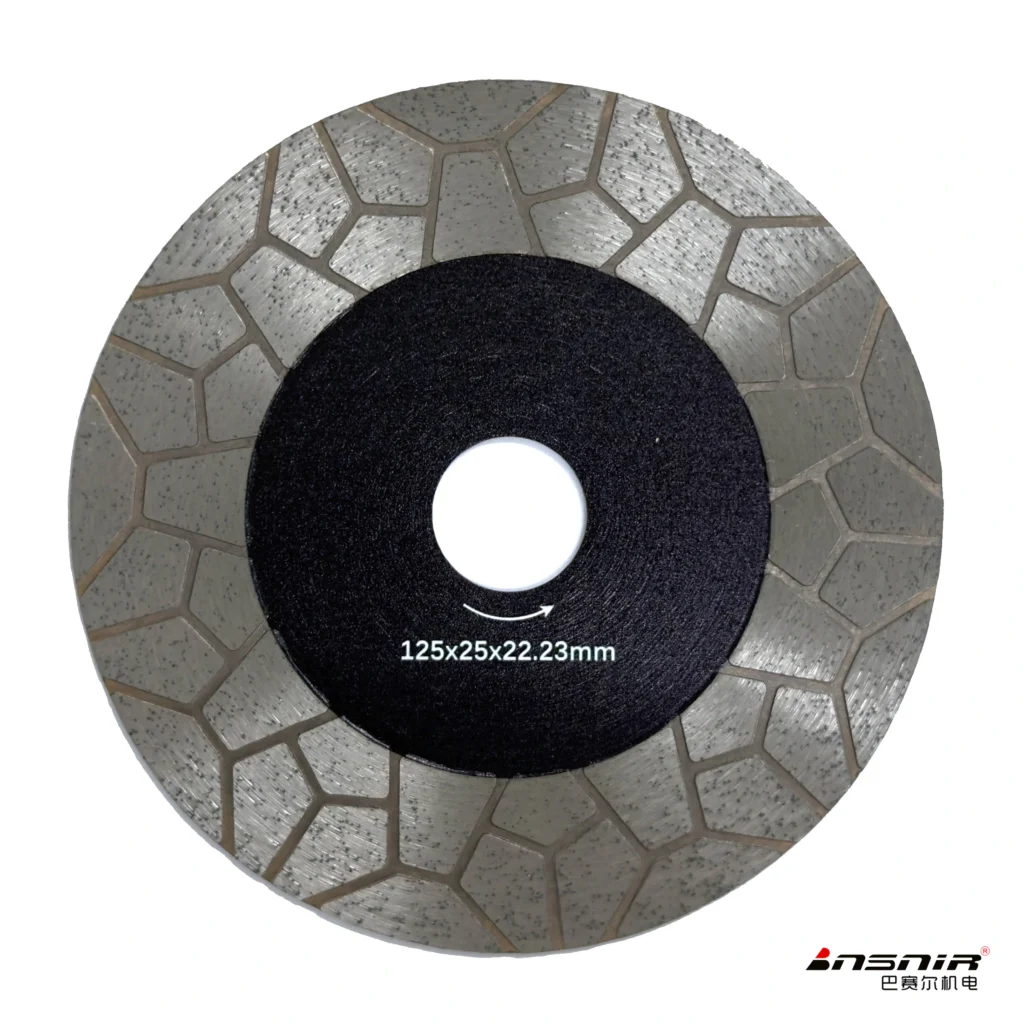
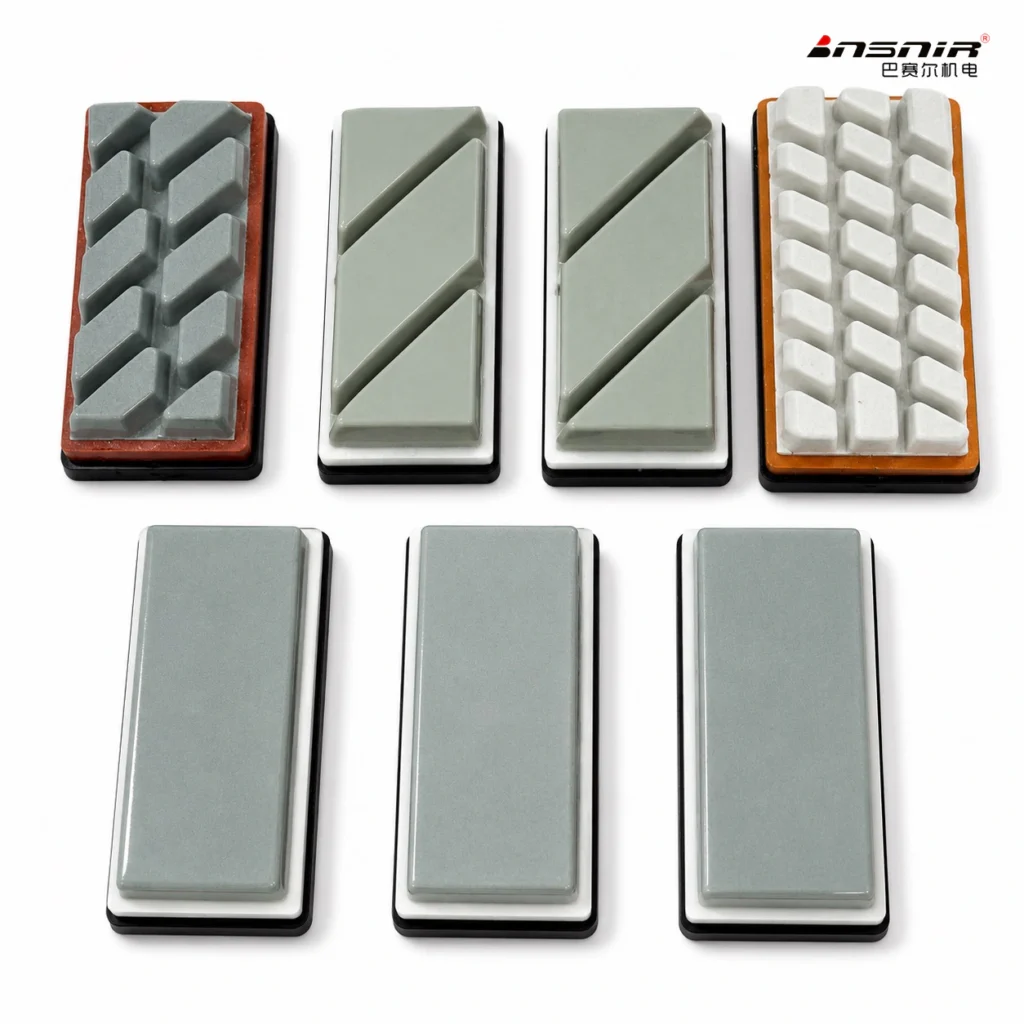
Choosing between a silicon-carbide Fickert brush and a diamond Fickert brush for a ceramic or porcelain line is not a question with a single correct answer. It depends on which surface effect the production line is being asked to deliver, and whether that effect has actually been confirmed on the material in question under the line’s own settings. A production or process engineer facing this choice needs a way to test both candidates against the same target rather than relying on what either abrasive type is generally known for.
Surface and texture requirements that drive the comparison
The starting point for this comparison is not the brush at all — it is the surface the line is required to produce. Lappato, satin, semi-polished, and other textured effects each describe a different relationship between the abrasive action and the tile surface: how much of the surface is engaged, how the texture reads under inspection light, and how consistent that texture needs to be across a batch. Before any brush material is evaluated, the target texture has to be defined in terms the production team can actually check against a representative tile, not just a general category name.
This matters because the same descriptive term for a finish can be reached by more than one abrasive approach, and the reverse is also true — a single brush type does not guarantee one fixed result independent of the tile body, the glaze or surface treatment, and the processing stage where the brush is positioned in the line. Where the target texture is defined early and tied to a representative surface, the later comparison between silicon carbide and diamond becomes a question of which candidate reaches that already-defined target, rather than a debate about which abrasive is inherently better.
The processing stage also shapes what the brush is being asked to do. A brush positioned earlier in a polishing or finishing line is working on a different starting surface than one positioned near the end, and the texture it needs to produce or preserve changes accordingly. If the line’s configuration changes — a different stage assignment, a different upstream surface condition, or a different downstream finishing step — the requirement placed on the brush changes with it, even if the stated target texture name stays the same.
This is also where edge condition enters the requirement, not as an afterthought but as part of what “surface and texture” means for a tile product. A texture that reads correctly across the main body of the tile but behaves differently near the edge is not yet a confirmed result; it is a partial one. Defining the requirement at this stage means deciding, in advance, whether edge appearance is part of the accepted finish or a separate check to be reviewed on its own terms.
Silicon-carbide candidate questions for the assigned tile duty
Once the target texture and the assigned duty are defined, the silicon-carbide brush becomes a candidate to be tested against that duty, not a default choice. The relevant questions concern how this abrasive type behaves under the specific conditions the line will impose on it: the tile body and surface being processed, the position in the line, the pressure-related settings in use, and the speed the brush will run at.
A central question is whether the texture this candidate produces on the representative tile matches the texture defined in the surface requirement — not an approximate match, but the specific result the process has been asked to deliver. A silicon-carbide brush that performs differently on a glazed surface than on an unglazed or textured body is not failing a general test; it is responding to a difference in the material being processed, and that difference has to be accounted for in how the candidate is judged for this assigned duty rather than for tile products generally.
Wear behavior is a second line of inquiry. How this candidate wears under the controlled settings used in the trial affects whether the texture it produces at the start of a run is the same texture it produces later in the same run. If the wear pattern changes the surface result over time, that is a property of the candidate under these settings on this material, not a fixed characteristic that transfers automatically to a different tile body, a different machine, or a different set of pressure and speed settings.
Unwanted marking is a third question that belongs specifically to this candidate’s evaluation. Any marking found during inspection needs to be attributed to conditions — the settings, the material, the stage — rather than treated as a general property of silicon carbide as an abrasive family. FEPA Abrasives Standards‘ terminology context clarifies grit-designation language that may appear in technical documentation, but it does not establish which abrasive family is suited to a given tile duty; that remains a question the controlled trial on the assigned duty has to answer. Where BASAIR supplies silicon-carbide Fickert brushes for ceramic and stone finishing, project-specific information about the target texture, the material, and the line’s settings is what allows a configuration to be proposed for review against this assigned duty, rather than a generic recommendation being offered in its place.
Diamond candidate questions for the same controlled duty
The diamond brush is evaluated against the identical assigned duty, using the same representative tile surface and the same target texture already defined. This parity is what makes the comparison meaningful: if the diamond candidate is tested under different settings, a different material sample, or a different stage position than the silicon-carbide candidate, any difference observed between the two reflects the change in conditions as much as it reflects the abrasive type itself.
The first question for this candidate is the same one asked of the other: does the texture it produces on the representative surface match the defined target? Diamond as a superabrasive family is associated with a broad range of applications including polishing, but that general association does not establish that a diamond Fickert brush will produce the specific texture this line requires on this tile body. FEPA Abrasives’ material on superabrasive terminology provides broad context for how diamond abrasives are described and applied, without extending to a claim about compatibility with a particular brush composition, a particular tile product, or a particular finish outcome — that determination depends on the controlled trial, not on the terminology alone.
Wear pattern is again a relevant question, and here the comparison has a structural dimension: whether this candidate’s wear behavior over the course of a run holds the texture steady, drifts toward a different result, or interacts with the pressure-related settings differently than the silicon-carbide candidate did under its own trial. If the diamond candidate shows a different wear pattern, that difference needs to be recorded as an observation under these specific settings, not generalized into a claim that diamond abrasives wear better or worse than silicon carbide as a category.
Edge effects deserve the same attention here as they did for the first candidate. A diamond brush that produces an acceptable main-surface texture but a different result at the tile edge has not yet cleared the same bar the silicon-carbide candidate was held to. Keeping this question explicit for the diamond candidate, rather than assuming edge behavior will resemble the main-surface result, is what keeps the two candidates on comparable footing through to a selection decision.
Hold machine settings and inspection conditions comparable
A comparison between two abrasive candidates only produces a usable answer if the conditions surrounding the trial are held stable while the brush material is the variable being tested. This means the machine position where the brush operates in the line, the pressure-related settings applied to it, the running speed, and the inspection conditions used to judge the resulting surface should all remain the same across both the silicon-carbide trial and the diamond trial.
The reasoning behind this is straightforward but easy to lose in practice: if any of these conditions changes between the two trials, a difference in the resulting texture could be a property of the brush material, a property of the changed setting, or some combination of the two — and there is no way to separate these after the fact. A faster running speed, a different pressure setting, or a shift in where along the line the brush is positioned can each independently change how a given abrasive engages the tile surface, regardless of whether that abrasive is silicon carbide or diamond.
Inspection conditions carry the same requirement. A texture or marking that is visible under one lighting condition or viewing angle may not register under another. If the inspection setup used to evaluate the silicon-carbide candidate differs from the one used for the diamond candidate — different light, different angle, different distance — any difference recorded between the two candidates may reflect the inspection method rather than the abrasive performance.
Where a project needs to compare candidates across more than one duty — for example, more than one target texture, or more than one tile body — each comparison should be run as its own controlled set, with its own stable settings held across both candidates within that set. Carrying settings from one duty’s comparison into another duty’s comparison reintroduces the same risk of conflating a condition change with a material difference.
This is also the point at which project information becomes directly useful to a supplier review. Where BASAIR is asked to configure or quote squaring, chamfering, or polishing equipment alongside matched abrasive brushes, the settings and inspection conditions confirmed during this kind of trial are part of what allows equipment and tool selection to be reviewed against the line’s actual operating conditions rather than against assumed ones.
Select the material only within the verified finish window
| Trial observation | Decision evidence to record | Selection boundary |
|---|---|---|
| Texture development | The texture produced on the representative tile surface | The result supports selection only when it matches the target texture |
| Unwanted marking | Any unwanted marks found during inspection | A candidate with unwanted marking is outside the approved finish window |
| Edge effects | The observed finish at tile edges | Edge results remain part of the finish decision rather than being hidden by the main-surface result |
| Wear pattern | The wear pattern observed during the controlled trial | The selection record must include wear behavior observed under the compared settings |
| Repeatability | Whether the finish repeats under the same stable comparison conditions | A one-off result does not establish a repeatable finish window |
A selection between silicon carbide and diamond Fickert brushes is justified only by what the controlled trial actually demonstrated, within the specific conditions under which it was run — not by a general preference for one abrasive family over the other. The verified finish window is bounded by the representative tile surface used, the settings held stable during the trial, and the inspection conditions applied to both candidates.
Within that window, the decision rests on whether a candidate’s texture matches the target, whether it introduces unwanted marking, how it performs at the tile edge as well as across the main surface, how its wear pattern behaves under the trial’s settings, and whether the result repeats rather than appearing once and not again. A candidate that satisfies the target texture on a single pass but has not been checked for repeatability under the same stable conditions has not yet earned selection — a one-off result and a verified finish window are not the same thing.
Where the silicon-carbide candidate and the diamond candidate produce different trade-offs — one matching the target texture more closely on the main surface, the other showing a different edge result or a different wear pattern — the selection should follow whichever candidate meets the complete set of recorded observations, not whichever shows the strongest result on a single measure. A texture match that comes with unwanted marking, or with an edge effect outside the approved finish, has not met the full requirement even if the main-surface texture itself looks correct.
If the assigned duty changes — a different tile body, a different target texture, a different stage position in the line — the verified finish window established for the first duty does not transfer automatically to the new one. Each new duty requires its own controlled comparison, under its own stable settings, before a material selection for that duty can be considered supported. What carries forward is the method of comparison, not the specific result. Where a project is working with BASAIR on equipment and abrasive configuration across more than one duty or more than one line, this is the information that keeps each selection tied to its own verified conditions rather than to an assumption carried over from a different trial.
Frequently Asked Questions
Q: Can I choose between silicon carbide and diamond Fickert brushes by abrasive material alone?
A: No. Treat both as candidates until a controlled trial on the representative tile surface shows which one produces the target texture at the intended process stage. The selection should be tied to that verified finish window rather than to a general preference for either abrasive material.
Q: What should stay the same during a side-by-side brush trial?
A: Keep the machine position, pressure-related settings, speed, and inspection conditions comparable. Changing these factors between candidates makes it difficult to tell whether the observed finish came from the brush material or from the trial conditions.
Q: What information should I prepare before requesting trial samples?
A: Define the representative tile surface, target texture, intended process stage, proposed machine settings, and inspection method. This gives both candidates the same duty and makes the resulting observations useful for a purchase decision.
Q: Is an acceptable finish on the main tile surface enough to approve a brush?
A: No. The approval check should also cover unwanted marking, edge effects, the observed wear pattern, and whether the finish repeats under the same stable conditions. A good central-surface result can otherwise hide a boundary that matters in production.
Q: When can the trial result be used for production selection?
A: Use it only for the tile surface, target texture, process stage, and operating conditions that were actually compared. Record the successful settings and repeatability evidence so a one-off result is not treated as a universal silicon-carbide-versus-diamond rule.