
Stone profile grinding and polishing wheels. Stone profile wheels are selected from a dimensioned section and the duty of each station: forming, fine grinding or polishing. BASAIR can review wheel-family options for a defined stone-edge process. A wheel photograph establishes its visible form, not its grit, formulation, allowable speed or machine fit.
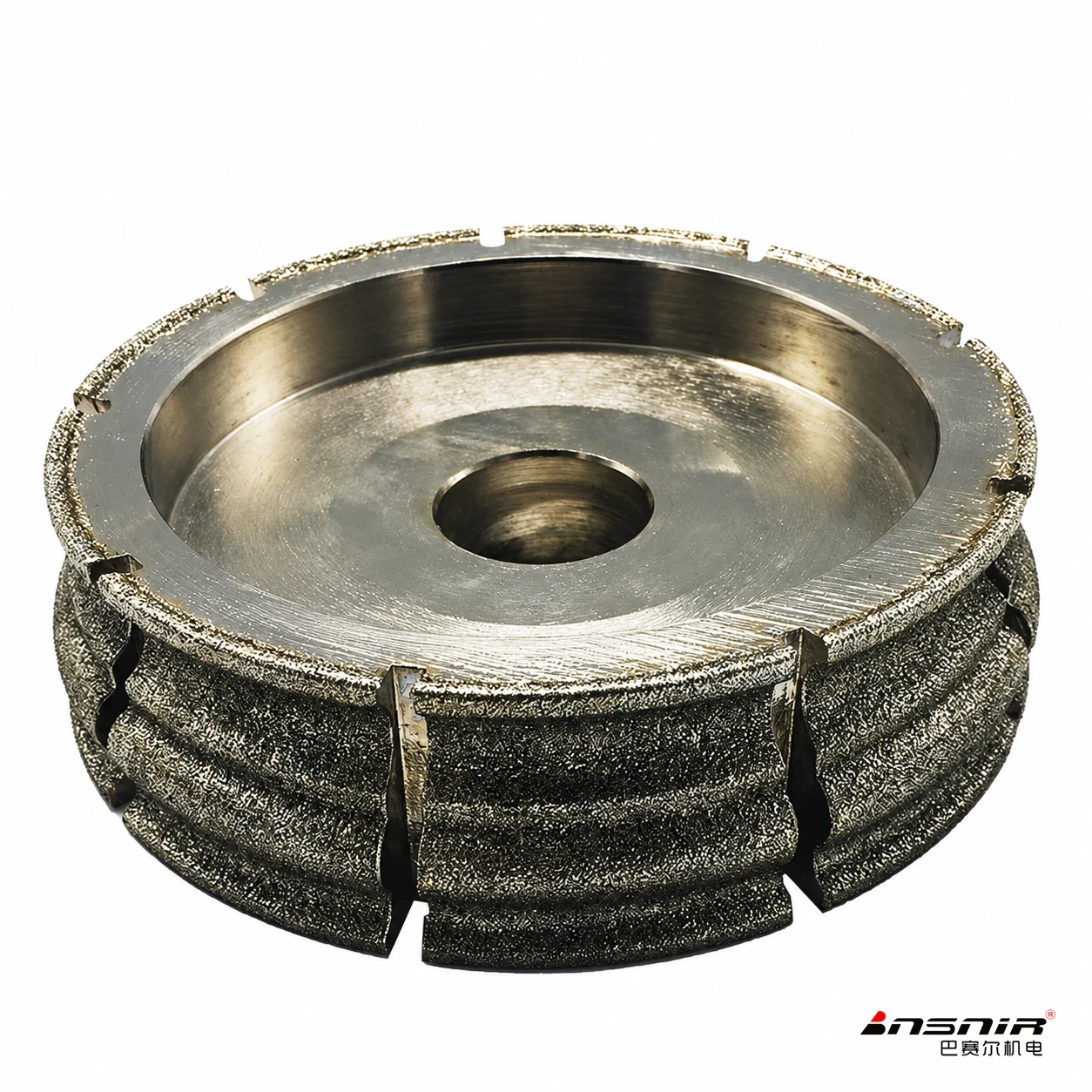
Match the wheel to its place in the profile sequence
This family includes profile-polishing, fine-grinding, resin and nylon-labelled options. Those catalogue names are starting points for matching, not an approved sequence or a statement that every wheel contains diamond. Confirm the exact item construction in the proposal.
Forming and polishing are different responsibilities
A forming wheel creates the required contour from the available stock. Fine grinding reduces the marks left by the previous stage; polishing refines the already correct profile. A fine polishing wheel cannot be used to compensate for a wrong forming radius or an under-supported blank.
Send the profile drawing and identify the working surface on each wheel. For a continuous line, mark the head position, incoming profile condition and tool used immediately before and after the proposed item. For manual equipment, state the holder, travel and operator contact method.
Choose resin or nylon options by the actual task
A resin-labelled wheel needs its abrasive, bond, grade and working pattern specified together. A nylon-labelled wheel needs its fibre/abrasive construction and intended surface-conditioning duty confirmed. The family name alone does not prove removal rate, final gloss or interchangeability.
The additional source entries do not provide a verified dimensional or grade table. No fixed wheel size, grit progression, bond recipe or speed rating is therefore promised here. BASAIR can review the labelled sample and current process to narrow the candidate set.
Check mechanical fit and operating conditions
Measure outside diameter, bore or attachment, overall thickness, working width and profile radius. Show the spindle, flange, spacers, drive direction and guard clearance. Include the permitted speed, wet/dry condition and water delivery at the contact zone.
Match the selected wheel to the actual stone, incoming stock and finish sample. Natural stone, quartz and sintered surfaces should not be treated as interchangeable from color or hardness descriptions alone. The supplied item must be approved for the host machine and proposed conditions before use.
Send the evidence for a wheel match
Provide clear photographs of the current tool and markings, a measured section drawing, material samples, head position, machine interface and the finish problem. Describe scratches, profile mismatch, edge damage or rapid wear separately so the proposed change addresses the real stage.
For the whole equipment sequence see stone profile forming and polishing equipment. For flat pad and holder selection see polishing pads. A trial should retain the same material and preceding stages while checking profile, appearance and usable wheel behavior.
Send drawings and material details for a configuration review