
A tile secondary-processing workshop is configured from the finished part, not from a universal machine list. Straight sizing, a 45-degree decorative joint, a polished bullnose, a fixing groove and a bonded inlay all require different references, support, tooling and inspection. BASAIR therefore treats the workshop as a project route assembled around the buyer’s drawings, product mix, batch size and available utilities.
The equipment shown below represents selectable process directions. Final machine model, working range, tools, speed and acceptance values depend on the actual ceramic or porcelain material, approved samples and engineering confirmation.
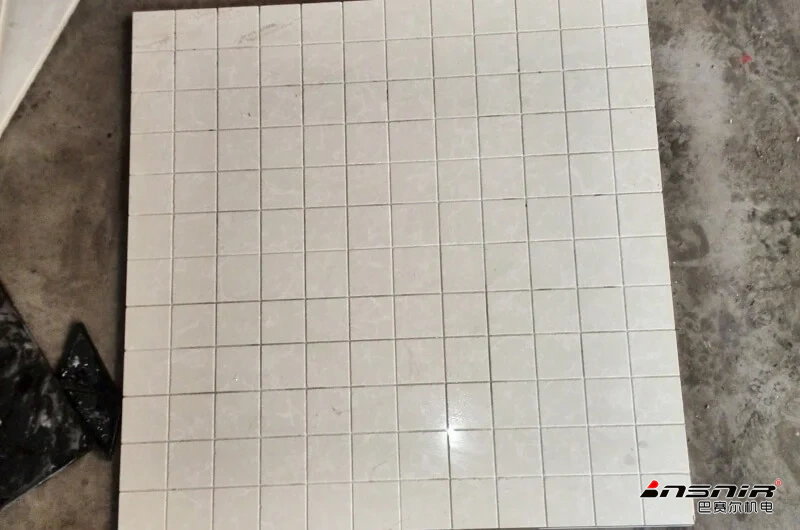
Route the job by the edge or feature that must be delivered
| Requisito concluído | Starting route | São necessárias evidências |
|---|---|---|
| Repeated straight sizes | Manual CNC cutting for operator-paced work or automatic CNC cutting for coordinated infeed and outfeed | Raw and finished sizes, cutting pattern, material, thickness, batch mix and required post-cut edge |
| Cut plus saleable straight edge | Cutting and chamfering line, double-belt edge grinding ou bilateral offset edge processing | One or two working sides, support width, finished width, chamfer and line direction |
| 45-degree decorative joint | 45-degree chamfering; retained-head and inner-chamfer tasks remain separate configurations | Joint section, decorative face, retained material, support method and acceptable chipping |
| Bullnose or arc edge | Bullnose and arc-edge polishing | Full-scale profile, blank dimensions, polished faces and protected surface |
| Back groove or visible decorative groove | Back grooving for fixing-side geometry; forming and polishing for visible L/V or other finished grooves | Cross-section, location, depth, visible-finish requirement and dry/wet route |
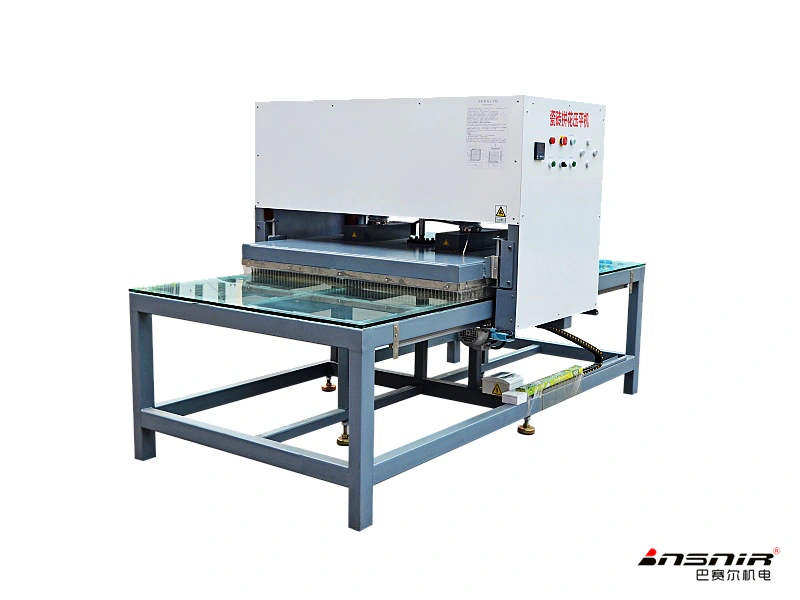
| Bonded inlay or assembled mosaic | Inlay flattening press after the assembly and adhesive process are fixed | Layer build-up, adhesive state, protection layers, flatness method and handling sequence |
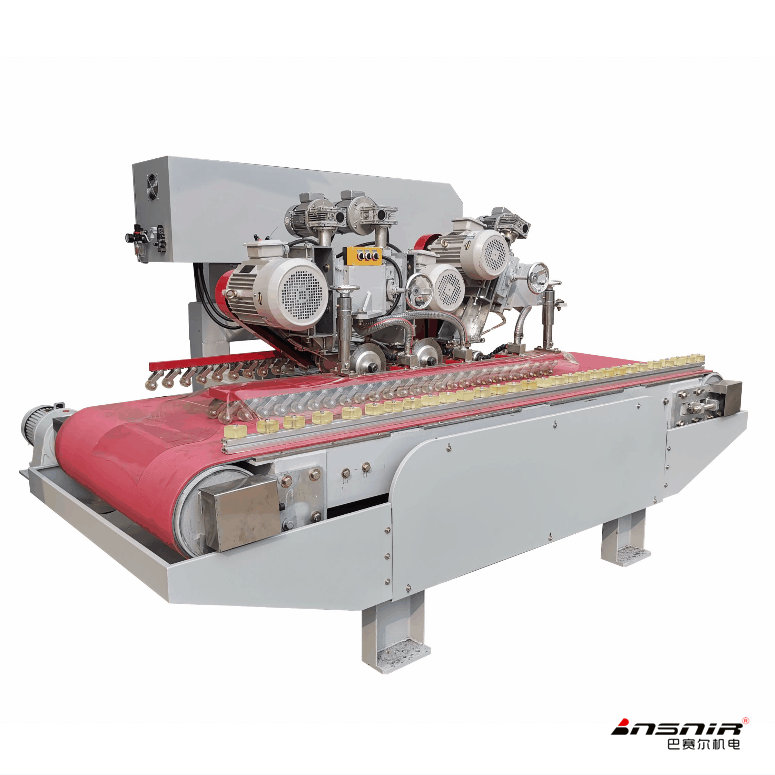

Build a workshop flow that can change products without losing the reference
A practical flow normally begins with drawing review and blank preparation, then separates straight cutting from special-edge and groove routes. Parts that need several operations should keep a defined datum face and orientation between stations. Inspection belongs between irreversible steps: a wrong blank should not continue into profiling or polishing.
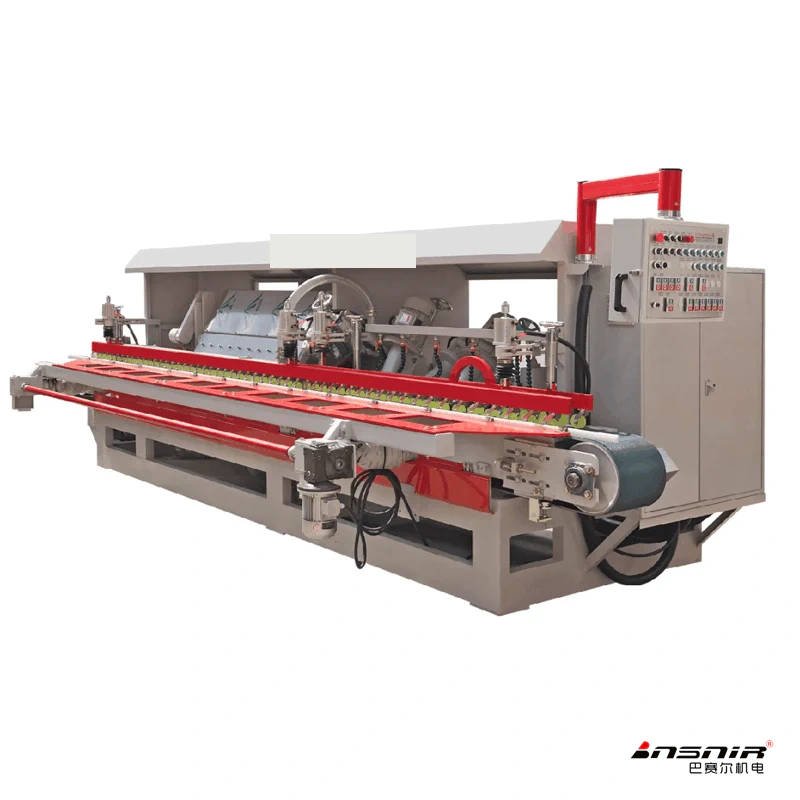
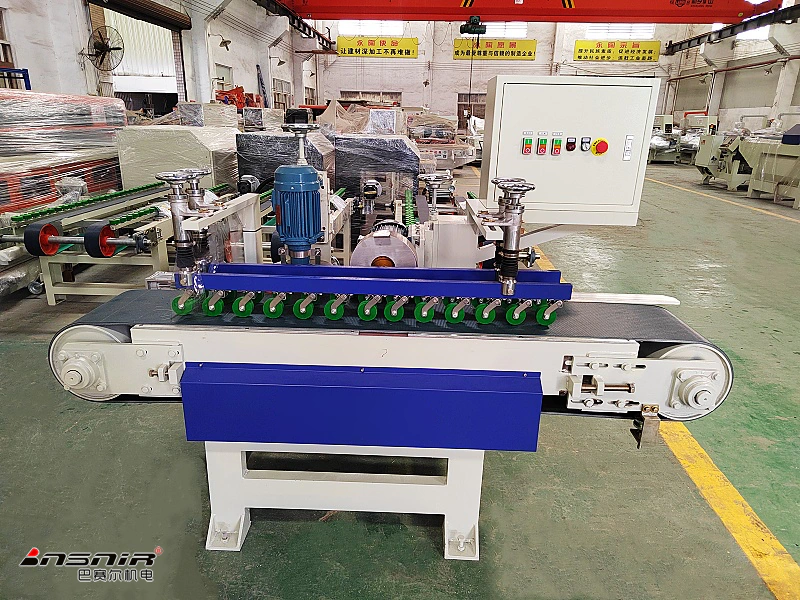

Close the machine, utility and acceptance interfaces
Blade, chamfering and groove-tool selection remains a separate interface; use the cutting and grooving tools route after the machine position and finished geometry are fixed.
| Interface | Confirm before layout | Prova de aceitação |
|---|---|---|
| Part reference | Decorative face, datum, feed direction, supported width, clamping and transfer orientation | Approved drawing and marked sample |
| Product mix | Size/profile families, batch lengths, changeover sequence and inspection points | Representative production matrix, not only the largest part |
| Serviços públicos e resíduos | Voltage, water, drainage, slurry route, compressed air and dust capture where applicable | Site utility schedule and responsibility boundary |
| Resultado | Dimensions, edge/profile section, groove, flatness, surface and chipping method | Trial pieces made from the approved material and drawing |
Prepare a useful workshop inquiry
- Material, glaze or surface, thickness, raw size and clear photographs
- Dimensioned finished-part drawings with working and protected faces marked
- Operations in order, product mix, quantity per batch, shifts and target flow
- Existing equipment, operator loading points, working heights and transfer direction
- Available floor plan, access, electricity, water, drainage, air and dust collection
- Approved samples or measurable limits for size, groove, edge, flatness and appearance
Request a tile secondary-processing workshop review
This solution is a project configuration path, not a fixed package or a claim that one machine performs every task. Final scope, output and acceptance depend on the buyer’s material, drawings, selected equipment and engineering confirmation.