
Cutting and waterjet parts belong to two different identification systems. Saw-blade spacers are mechanical stack components whose dimensions determine blade positions and finished strip widths. Waterjet consumables belong to a specific high-pressure pump and cutting head, where part number and precise geometry are critical.
This page separates those routes so buyers can send evidence that supports a safe match. BASAIR does not treat a generic “waterjet nozzle kit” or “saw spacer” as universally compatible.

Separate blade-stack geometry from high-pressure part identity
| Familia | What determines compatibility | Primary evidence |
|---|---|---|
| Saw-blade spacers | Spindle/flange, spacer bore and outside diameter, individual thicknesses, material, runout/parallelism requirements and full blade-stack order | Dimensioned stack drawing, measured spacers, blade body/segment widths, target product widths and installed photos |
| Waterjet consumables | Pump make/model/serial, head assembly, part number/revision, mating dimensions, pressure circuit location and material | Nameplates, manual/parts-list reference, original packaging/code and macro photos with measurements |
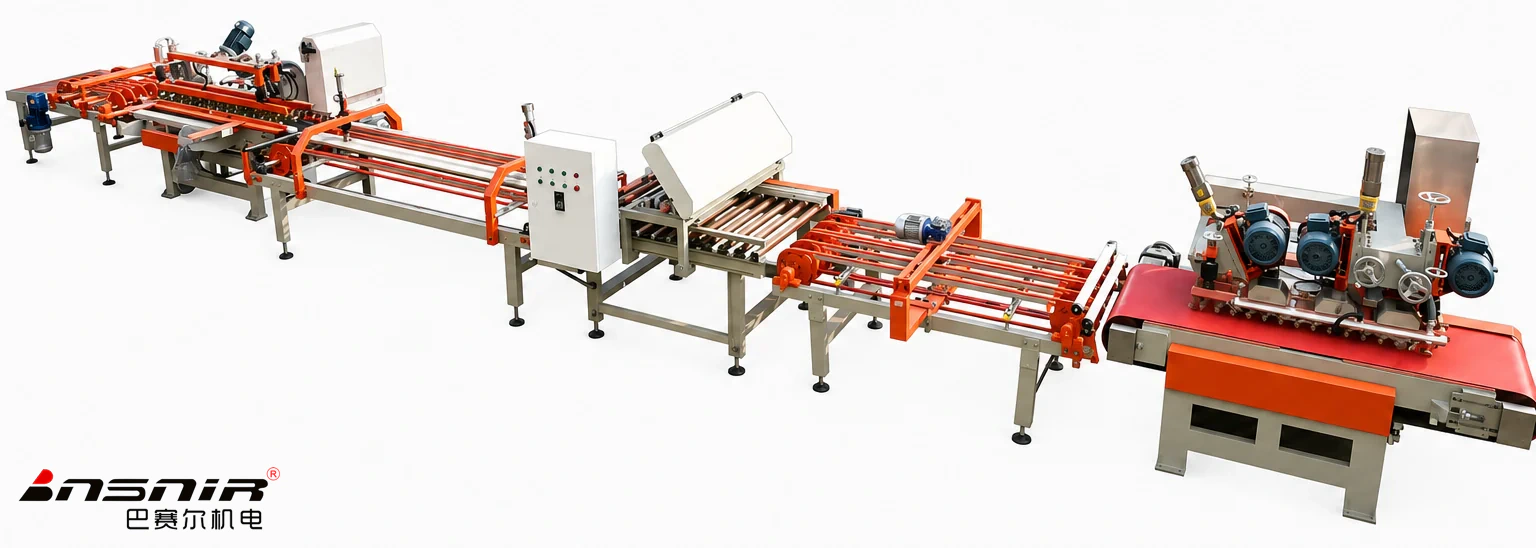
A spacer stack defines blade position and finished widths
On a sistema de corte de baldosas cerámicas o multi-blade cutter, the result depends on blade body/segment geometry, spacer thickness and the complete clamped stack. Record every component in order from a stated spindle end. Do not provide only the desired strip width.
- Measure spindle diameter, usable threaded/clamping length, flange faces and rotation.
- Measure each spacer’s bore, outside diameter, thickness and any key, slot or step.
- Record blade body and working-edge/segment thickness for every blade family in the stack.
- Draw the intended product widths and identify kerf/allowance assumptions that require trial confirmation.
- Keep left/right or drive/free-end orientation consistent across drawing and photographs.
Waterjet consumables follow the pump and head bill of materials
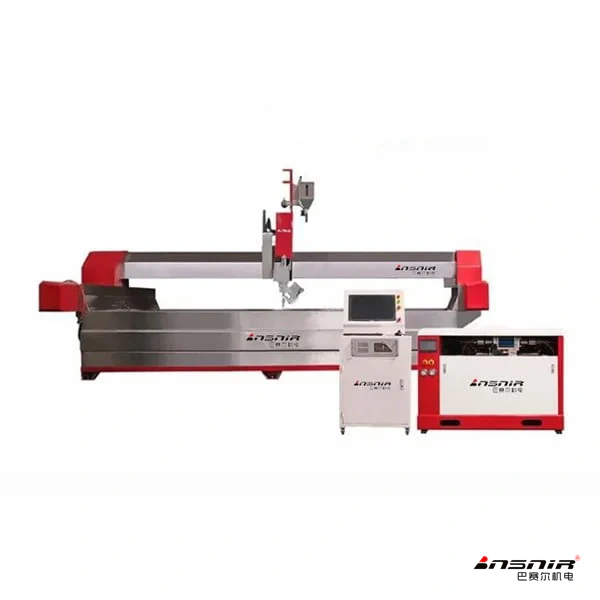
A waterjet system can contain an orifice/jewel, mixing chamber, focusing/mixing tube, nozzle body, seals, check valves, intensifier parts and filters, among other components. Similar names do not establish fit. Use the exact pump and head parts list when available, and preserve the original code or packaging.
Para waterjet systems, record whether the part is on the low-pressure water side, high-pressure pump, high-pressure tubing, cutting head or abrasive circuit. Do not install a substitute based only on approximate outside dimensions in a high-pressure assembly.
Keep old parts and measurements traceable
- Assign each removed part a photo label tied to machine, location and removal date.
- Photograph it before cleaning if deposits or wear indicate the failure mode, then after cleaning for geometry.
- Measure undamaged references and record the measuring tool and units.
- Do not combine components from different pump/head revisions in one sample bag.
- When sending a physical sample, protect sealing and precision faces and include the photo label.
Information needed for a cutting or waterjet part inquiry
For saw-blade spacers
- Machine model/serial, spindle and flange drawing, blade-stack order and rotation
- Measured spacer dimensions, material/specification if known, quantity and photos with scale
- Blade dimensions, target finished widths, current result and runout/width problem
For waterjet consumables
- Pump, intensifier and cutting-head manufacturer/model/serial and nameplate photos
- Exact part number/revision, source manual or parts-list page and requested quantity
- Front/back/side and macro photos, measured dimensions and original packaging
- Installed location, operating hours if tracked, leakage/wear/failure symptom and mating-part condition
Send cutting or waterjet part evidence for identification
La compatibilidad depende de la geometría exacta del husillo o la pila, o de la identificación exacta de la bomba o el cabezal de chorro de agua, la revisión de la pieza, las dimensiones, los materiales y las interfaces de acoplamiento. No se da a entender que exista una intercambiabilidad universal.