
Discos de diamante para escuadrar are production-line tools used to remove controlled material from ceramic or porcelain tile side edges during dimensional rectification. The correct wheel is selected for a specific machine position by working condition, bond, base, rim structure, grit, removal task and mounting interface—not by diameter or appearance alone.
BASAIR supplies dry and wet squaring-wheel families for ceramic tile squaring and chamfering lines. This page covers the squaring positions; silicon carbide or diamond chamfering wheels are selected separately for the small-chamfer station.
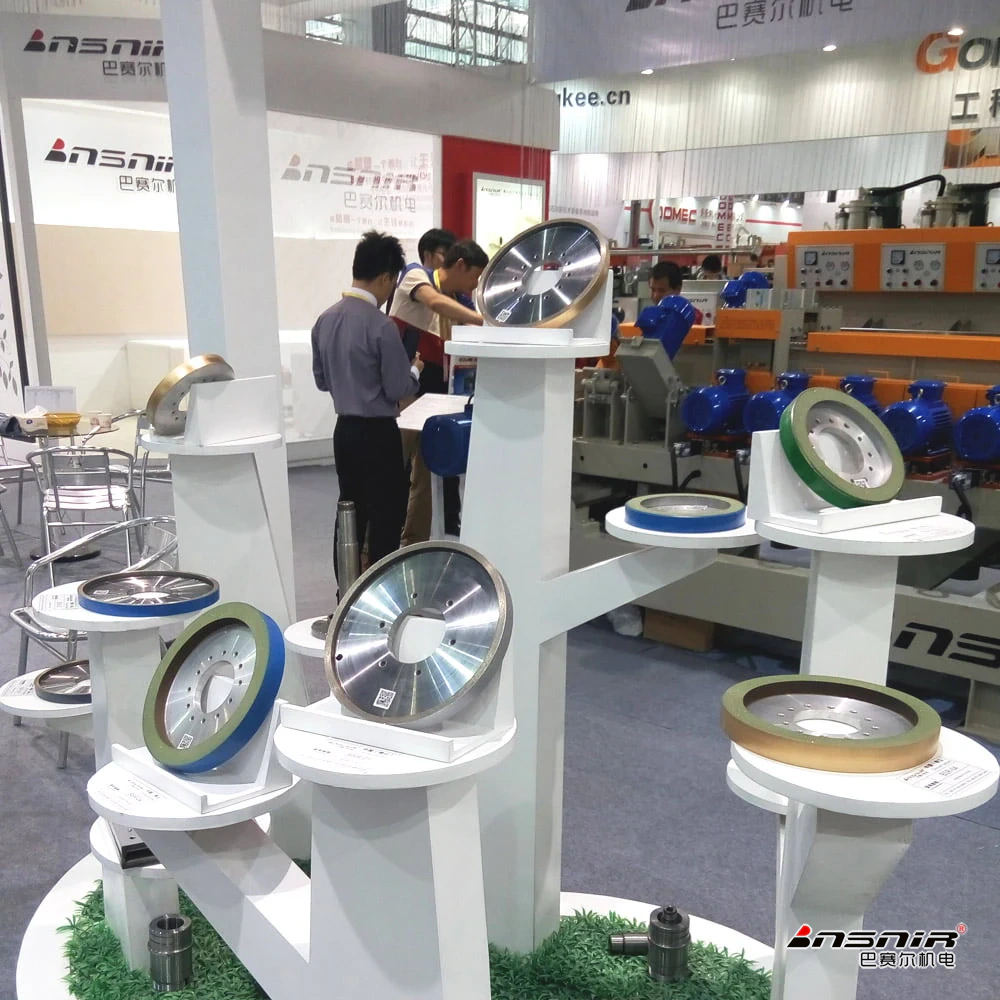
How to select a diamond squaring wheel
| Variable | Available or typical BASAIR route | What the buyer must confirm |
|---|---|---|
| Working condition | Dry or wet | How the machine cools and clears grinding debris; never run a wheel in an unapproved condition |
| Bond | Metal bond or resin bond | Required removal, tile body, current tool sequence, line position and desired edge after that position |
| Base | Current BASAIR families include steel-base metal wheels and aluminum-base resin wheels | Base design, thickness, mounting face and machine clearance from the actual wheel or drawing |
| Rim structure | Continuous/toothless or toothed families | Wheel family, removal task, contact condition and the approved arrangement for that machine position |
| Abrasive grade | Multiple grit ranges are available across the product families | Incoming edge, removal per position, preceding/following wheel and required finish; grit labels alone are not a complete match |
| Mounting interface | Outer diameter, bore, pitch-circle/bolt pattern and ring dimensions vary | Measured dimensions, spindle/head type, rotation, left/right position and clear photos of both wheel faces |
Metal bond and resin bond have different line responsibilities
Metal-bond wheels are commonly evaluated for earlier positions where more edge material must be removed and wheel form must be maintained. Resin-bond wheels are commonly evaluated for later positions where the line needs a finer edge after the preceding removal stages. This is a selection starting point, not a universal sequence: the tile body, allowance, feed rate, machine condition and trial result decide the final arrangement.
Dry and wet wheels are not interchangeable labels
A dry wheel must work with the machine’s dry-grinding and dust-control arrangement. A wet wheel must work with the water delivery, cooling and slurry path. Changing the process condition may require changes to more than the wheel, including the machine setup and downstream cleaning or drying.
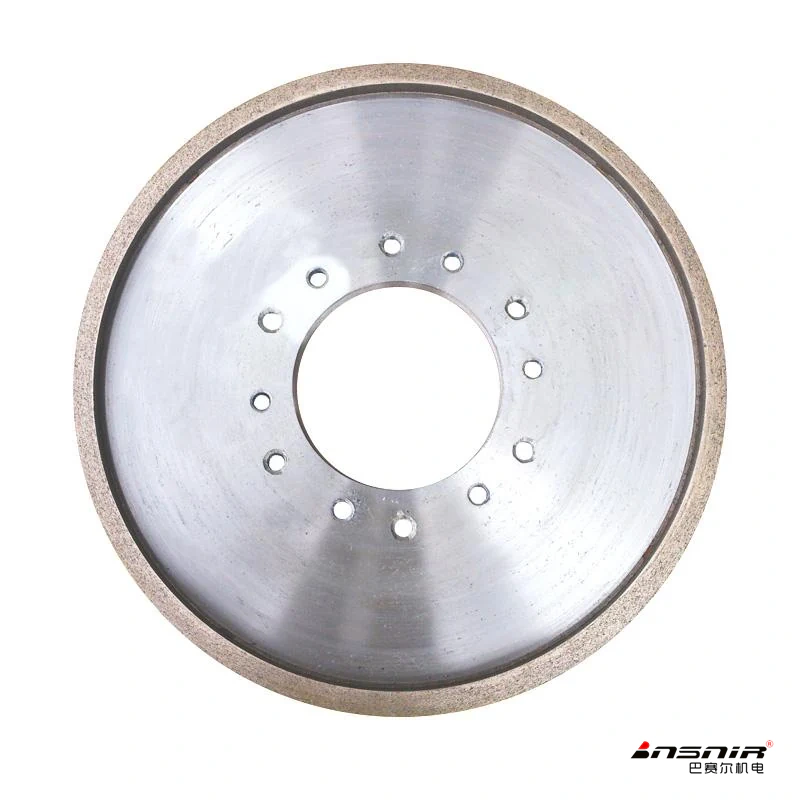
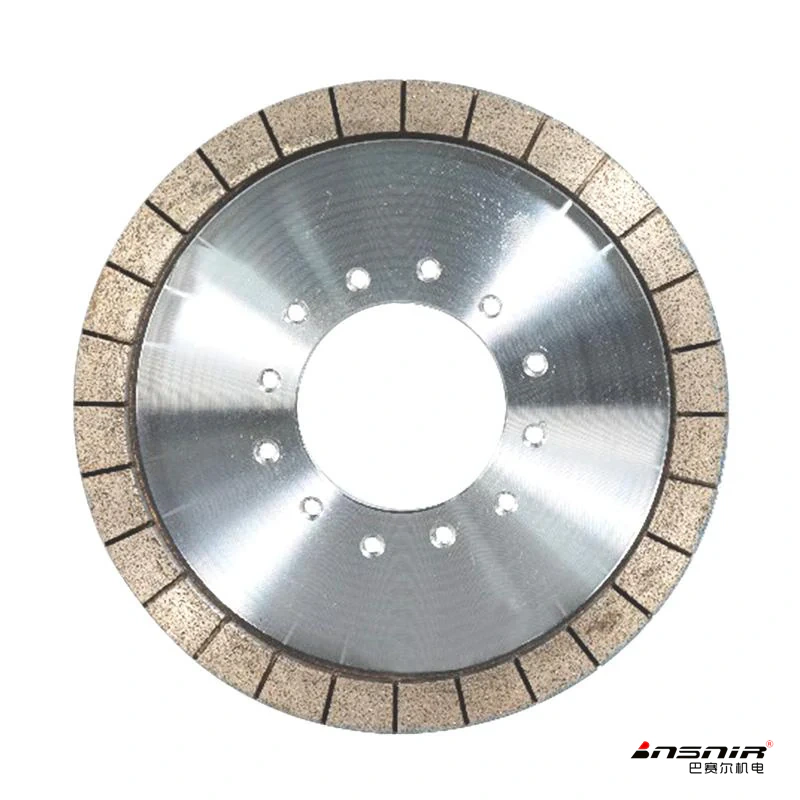
BASAIR squaring-wheel product-family map
The BSR codes below identify current BASAIR family combinations. They help narrow the selection but do not replace a dimensioned wheel specification. Diameter and hole-pattern information is intentionally confirmed per inquiry because current published source tables contain multiple configuration combinations.
| Familia | Working condition | Bond | Base | Rim | Selection role |
|---|---|---|---|---|---|
| BSR01 | Seco | Metal | Steel | Continuous / toothless | Evaluate for a dry metal-bond position after confirming removal, dimensions and machine interface |
| BSR02 | Seco | Metal | Steel | Dentado | Evaluate for a dry metal-bond toothed position under the approved line arrangement |
| BSR03 | Seco | Resin | Aluminum | Continuous / toothless | Evaluate for a later dry resin-bond finishing position after the preceding wheels are known |
| BSR04 | Seco | Resin | Aluminum | Dentado | Evaluate where the confirmed dry resin-bond sequence calls for a toothed rim |
| BSR08 | Húmedo | Metal | Steel | Dentado | Evaluate for a wet metal-bond position after water delivery, removal and mounting are confirmed |
| BSR09 | Húmedo | Resin | Aluminum | Continuous / toothless | Evaluate for a wet resin-bond finishing position after the preceding tool sequence is known |
Separate product boundary: BSR06 silicon carbide and BSR07 diamond chamfering wheels belong to the chamfering-station comparison, not this squaring-wheel family table.
Match the wheel sequence to material removal and line position
A squaring line normally divides the edge task across multiple positions. A practical tool proposal therefore starts with the complete sequence rather than an isolated SKU.
| Position responsibility | Questions to answer | Selection implication |
|---|---|---|
| Initial removal | How much fired-edge allowance is present, how variable is it, and what edge defects enter the line? | Defines the removal distribution and which metal-bond family should be evaluated first |
| Intermediate correction | What remains after the first positions, and what marks must the following positions remove? | Defines the transition in bond/grit and whether a different rim structure is required |
| Final squaring finish | What edge appearance and dimensional result must enter the chamfer or inspection stage? | Defines the later resin-bond positions and the sample acceptance check |
Do not infer that a finer grit automatically solves chipping or visible marks. Alignment, bearing/head condition, wheel runout, pressure, feed, removal distribution, cooling or dust clearing and incoming tile variation can produce similar symptoms.
Dimensions and mounting data required for a reliable match
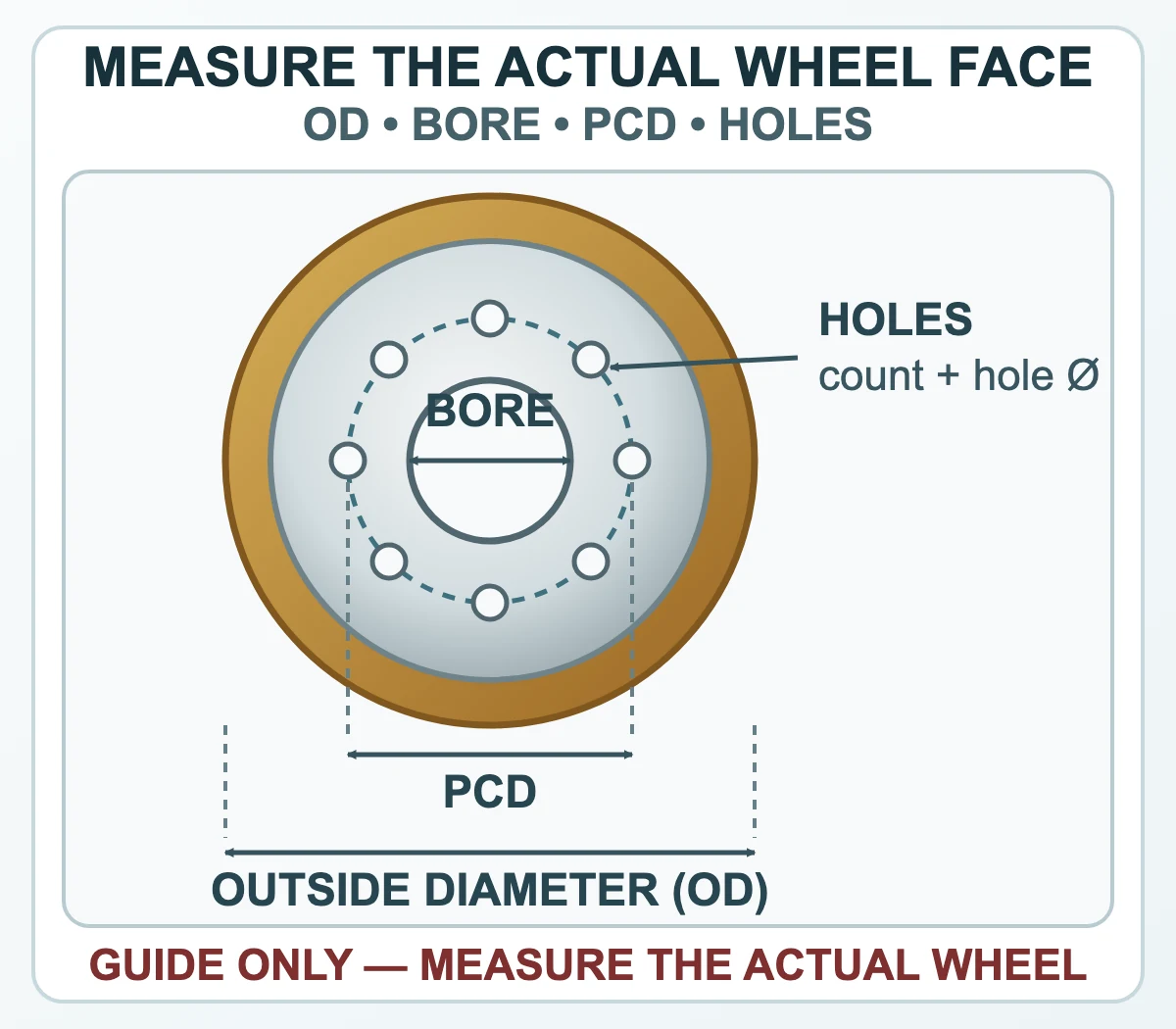
Two wheels with the same outside diameter may not fit the same head. Record the following from the old wheel, machine drawing or a measured sample:
- Outer diameter and total wheel/base thickness
- Central bore diameter
- Number and diameter of mounting holes
- Pitch-circle diameter (PCD) or center-to-center hole measurement
- Diamond ring width and height, including the remaining usable ring if replacing a worn wheel
- Mounting-face recess, shoulder, flange or other location features
- Rotation direction, spindle/head identification and left/right machine position
- Clear photographs of the front, back, side, label and installed position
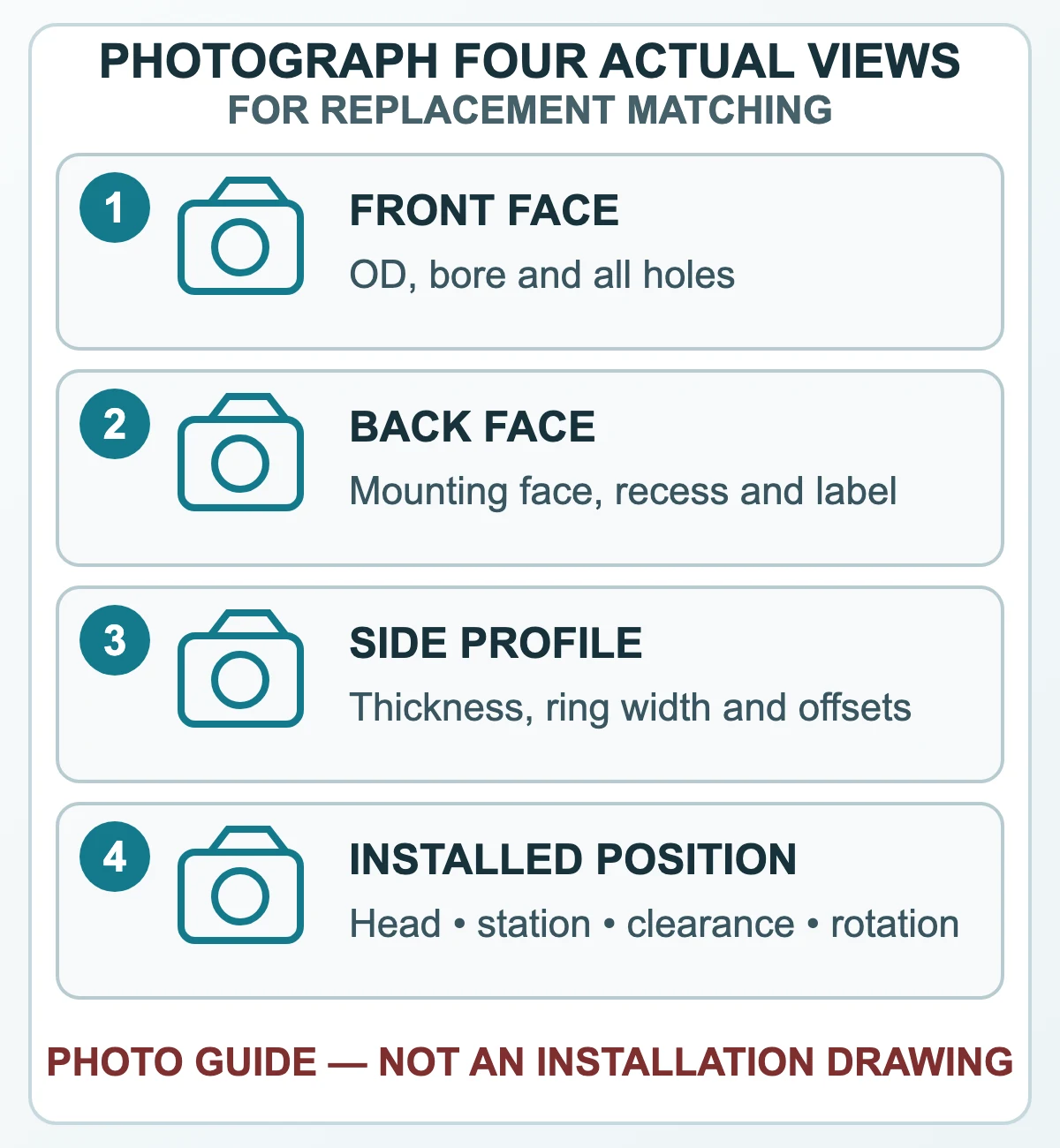
Process checks before changing the wheel specification
| Observed issue | Check before changing the product |
|---|---|
| Edge chipping | Incoming edge condition, removal per position, wheel sequence, feed, alignment, vibration/runout and the dry/wet process condition |
| Visible grinding marks | Transition between positions, resin finishing stage, wheel condition, pressure, runout and whether an earlier wheel leaves excessive marks |
| Dimensional drift | Machine setting, alignment and width-adjustment mechanism, wheel wear on both sides and the measurement method |
| Heat, loading or abnormal wear | Approved working condition, cooling/water or dust clearing, bond/grit, contact, removal, feed and tile material |
| Wheel does not fit | Bore, PCD/bolt pattern, mounting-face features, base thickness, clearance and correct machine position |
If the issue includes motor, shaft, head or mounting behavior, identify the related machine part before ordering tools and provide the motor or spindle nameplate, installation position and measured interface.
Information required for a squaring-wheel quotation
- Machine manufacturer/model if available, squaring head and exact wheel position
- Dry or wet working condition, including water or dust-control arrangement
- Tile body/material, surface type, water absorption if known and incoming edge photos
- Current wheel code, bond, grit and any readable label
- Outer diameter, bore, PCD/bolt pattern, base thickness, ring width and ring height
- Rotation direction, left/right position and photographs of both wheel faces and the installed wheel
- Current sequence by machine position, feed rate and estimated removal per side
- Target edge result and the problem, if any, observed with the current setup
- Required quantity and whether the request is for a trial, replacement position or complete line sequence
Send wheel photos and dimensions for selection
Product-family descriptions and typical line roles are selection references. Final bond, grit, dimensions, fit, process setting, performance and acceptance depend on the customer’s tile, machine, line position, working condition and confirmed sample or engineering review.