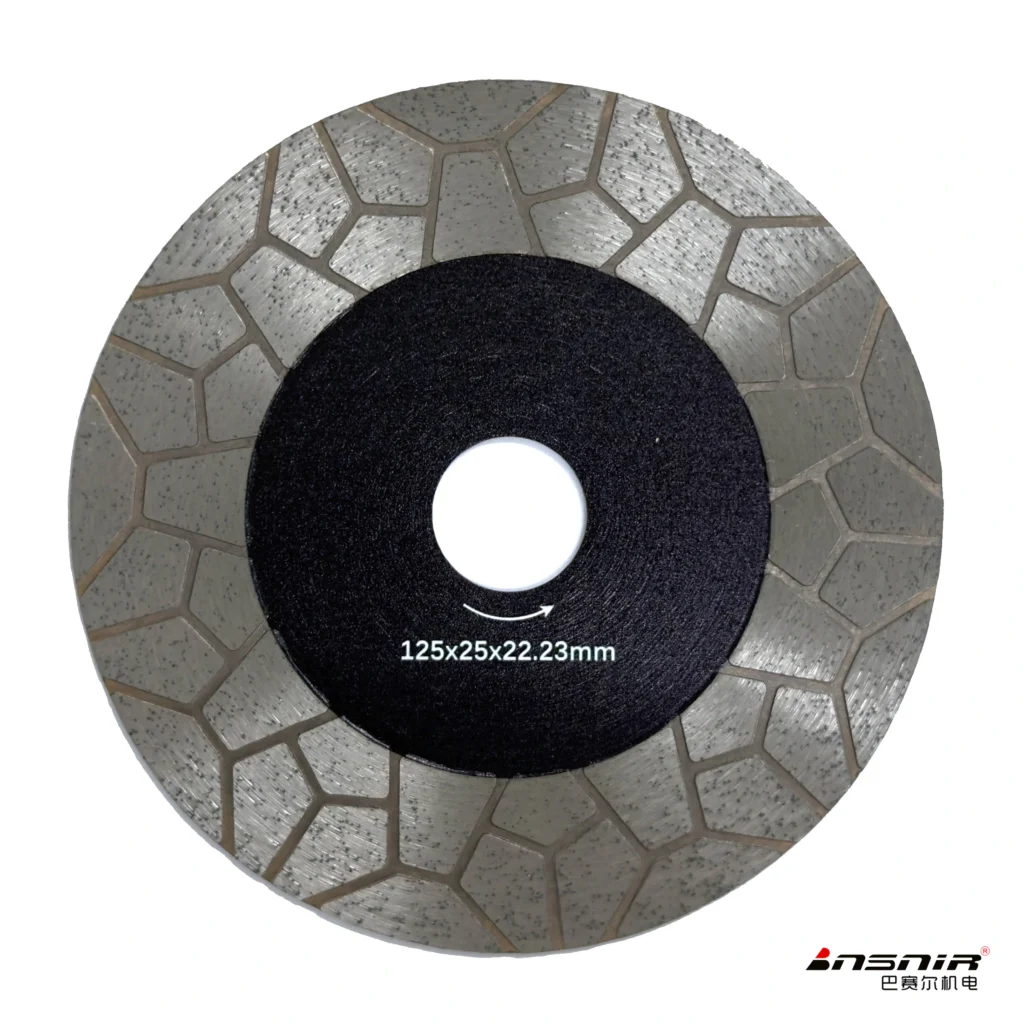
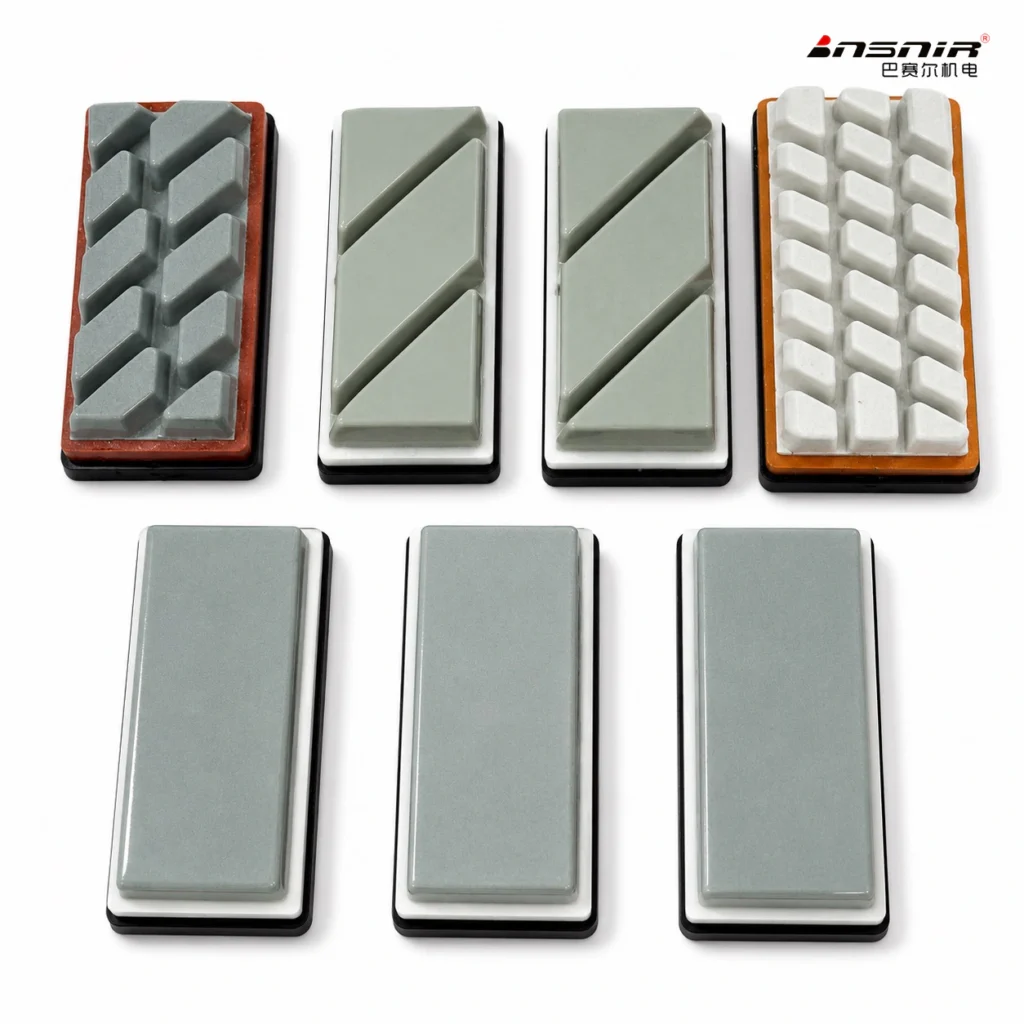
Suppliers should provide a waste-stream schedule for every residual that leaves the squaring line—naming its origin, collection point, physical description and the receiving system the factory must have in place. The gap between a proposal that says “waste collection included” and one that lists four separate streams with equipment boundaries and maintenance duties is exactly where budget surprises hide. If you are comparing dry and wet squaring proposals at the same time, the information you need from each supplier is structurally different, because the residuals are physically different.
Identify the residual streams
Every squaring line produces more than one kind of residue, and a proposal that uses a single label for all of them is not yet complete enough to compare.
Identify the residual streams
| Stream or duty | Supplier information | Buyer-side question |
|---|---|---|
| Dry dust | Pickup, collector and removal boundary | Where does collected material go? |
| Wet slurry | Outlet, return and collection arrangement | Can the receiving system handle the stated duty? |
| Maintenance residue | Cleaning access and removal path | Who handles material outside normal discharge? |
| Reuse or disposal claim | Material and receiving-condition basis | What remains unverified for the proposed route? |
Dry squaring generates grinding dust at each head—fine ceramic or porcelain particles suspended in the air at the point of cut, then carried by extraction airflow toward a collector. That is the primary production stream. Separately, the grinding wheels themselves wear and may be dressed or changed on a maintenance cycle; the removed material and any cleaning residue from the head enclosures constitute a secondary stream that the production schedule does not account for automatically.
Wet squaring substitutes process water for air cooling and dust suppression. The primary stream is suspensión—a suspension of ceramic fines, water and in some cases bonding material from the diamond wheels—that drains from the machining zone. Return water that has been recirculated may carry a different concentration of fines than fresh overflow. Where multiple heads run in sequence, slurry character can shift along the line. Maintenance again creates its own residue: wheel changes, tank cleaning and periodic filter servicing each produce material that must go somewhere.
Ask each supplier to submit a stream schedule: for every residual, name the origin point, the collection point, its physical state, and the system it must discharge into on the factory side.
That schedule is the basis for everything that follows. Without it, two proposals that look comparable in price may be drawing the boundary between supplier scope and factory responsibility at completely different places.
Describe dry collection boundaries
The dust produced at each grinding head is the defining residue of a dry squaring line, and the supplier’s proposal should trace exactly how it moves from the point of generation to a container the factory can remove.
Dust pickup starts at the hood or enclosure around each grinding head. The design of that enclosure—its geometry relative to the wheel, its clearance to the tile surface—determines how much of the generated dust enters the extraction airflow rather than escaping into the machine hall. This is the upstream limit of the collection system, and suppliers should describe it, because an enclosure that is loosely fitted will load the extraction duct with less dust than it creates, leaving the remainder to settle on adjacent equipment.
Productos relacionados
- Línea de máquinas para el escuadrado y el biselado de baldosas cerámicas — Revisa la familia de líneas de cuadratura al definir los límites de la máquina y la respuesta de la utilidad; los elementos auxiliares siguen estando sujetos al alcance del proyecto.
- Ruedas de diamante para el acabado de los bordes de las baldosas cerámicas — Consulta la gama de herramientas de escuadrado junto con la máquina ofrecida y su funcionamiento en seco o en húmedo.
From the pickup point, extraction airflow moves dust through ducting to a collector—typically a cartridge filter unit or a cyclone-and-filter arrangement. The proposal should state where that collector sits relative to the line, how it is sized for the head count and tile material, and what its discharge point is. The discharge point is the collection boundary: the location where contained dust passes from the supplier’s scope to the factory’s handling system. That might be a hopper outlet, a container connection or a bag-change station. If the supplier draws the boundary at the filter discharge and the factory has no bin or pneumatic conveyance already in place, the gap is a project cost, not a minor detail.
Removal route matters too. Consider a project where the filter unit is positioned above a finished-goods corridor with no vehicle access. The dust exits the hopper, but there is no practical path to a skip. The proposal should identify the removal route assumption, even if the factory ultimately controls what happens next.
Maintenance adds to this picture. Cartridge filters need cleaning cycles—either pulse-jet or manual—and eventually cartridge replacement. Removed cartridges, cleaning residue from the head enclosures and any spilled material from container changes are all part of the collection duty. A well-structured proposal will describe the access points for each of these tasks and what the factory should plan to receive.
Do not accept “dust extraction included” as a complete description. The question is where the dust exits the supplier’s equipment and in what form.
Describe wet collection boundaries
A wet squaring line manages its residual through drainage, and the proposal should describe every point where slurry or water leaves the machining zone and where the factory’s system must begin.
Slurry outlets are typically located at low points in the machine base, with drain connections sized for the expected flow rate at the line’s operating speed. The proposal should state the connection size, flow assumption and whether the slurry arrives at that point as a continuous stream or in surges driven by tile cadence. These details affect what the factory needs to install downstream—a sump, a holding tank, or a direct connection to a treatment plant.
Where the line recirculates process water, the proposal should describe the return collection point separately from the initial drain. Recirculated water carries a different concentration of fines depending on how much separation occurs upstream; the proposal should state what separation is performed within the supplier’s scope—if any—and what the assumed incoming water quality is for each recirculation pass. Do not assume that collected water from a wet squaring line is automatically suitable for reuse in a glaze or polishing application elsewhere in the plant. That determination requires a project-specific assessment of the actual fines load and chemistry.
The separation assumption is a particularly important variable when comparing two proposals. One supplier may include a settling tank and return pump within the machine skid; another may draw the boundary at the drain outlet and assume the factory has a centralised water-treatment system. Both are valid designs, but they are not equivalent quotes.
Maintenance on a wet line introduces residue that is distinct from production slurry. Tank cleaning, filter-press cake (if separation equipment is included), and the removal of accumulated sediment from collection troughs all require planned access and a receiving route. The proposal should identify where each of these tasks takes place, what access the machine structure provides, and what the factory should expect to remove and how often.
Lecturas relacionadas
- ¿Extracción de polvo o gestión del agua? Analiza las interfaces de servicios en torno al escuadrado de baldosas — Revisa los límites de los servicios públicos específicos de cada ruta antes de comparar el alcance de los proveedores.
- ¿Qué documentación sobre la disposición de la fábrica debe acompañar a una solicitud de presupuesto para una línea de escuadrado? — Elaborar un esquema de planta coherente que sirva de base para comparar los requisitos de conexión y acceso.
- ¿Qué datos sobre piezas de recambio y ruedas de escuadrado deben solicitar los compradores antes de la compra? — Separate spare supply and consumable data before comparing purchase scope.
Compare handling and maintenance scope
When two suppliers quote different collection scope, the right comparison method is a side-by-side list of included equipment, transfer points, service access and operating assumptions—not a headline price comparison.
Build a simple column structure for each proposal. Under each supplier’s column, list:
- every piece of collection equipment included (extraction fan, filter unit, settling tank, return pump, or similar);
- every transfer point where material moves from supplier equipment to factory infrastructure;
- the maintenance tasks the supplier’s design requires the factory to perform and at what interval;
- any operating assumption the collection system depends on, such as compressed-air supply for filter cleaning, a minimum drainage fall angle, or a centralised water-treatment connection.
A lower headline price that places the settling tank, the slurry pump and the sump outside its scope may cost more in total installation than a higher quote that includes them. That is not unusual—it is a natural result of suppliers drawing scope boundaries differently—but it only becomes visible when the comparison is structured at the level of transfer points and equipment.
Disposal and recycling claims require the same rigour. If a supplier states that squaring dust can be recovered for use in a secondary process, or that slurry cake can be sent to a specific receiver, ask for the material characterisation that supports the claim and the conditions under which the receiving arrangement holds. Collection and lawful downstream handling are separate questions. A supplier can reasonably describe what their equipment delivers to the factory’s boundary; what the factory then does with it is governed by local requirements that only the factory can verify. Where a verified receiving agreement exists for a specific stream, it can define a bounded route that is worth including in the cost model—but the verification work belongs to the project, not to the proposal.
Before the final comparison is made, the factory should have confirmed its own infrastructure at every transfer point the proposals describe: extraction-duct connection points and available static pressure, drainage fall and sump capacity, water-treatment inlet specifications and any compressed-air availability at the filter location. With those inputs defined, the differences between proposals resolve into specific equipment and civil items that can be priced and assigned clearly.
Referencias
- Catálogo general de BMR: procesos completos de acabado de línea para cerámica — El catálogo distingue entre pulido, lapeado, tratamiento, escuadrado en seco/en húmedo y corte en seco/en húmedo, e identifica los módulos adyacentes de alimentación, transferencia, secado, aplicación, lavado, limpieza y control dimensional. Catálogo del sistema BMR de primera mano; la disponibilidad y las disposiciones de los módulos son específicas de BMR y no acreditan el alcance de BASAIR, los servicios necesarios, el rendimiento, la secuencia ni la compatibilidad. Utilícese únicamente como referencia de mercado para distinguir entre procesos y módulos.
- BMR — 4.0 Proceso de acabado: Automatización del escuadrado en seco — El artículo describe el ajuste automático del husillo y del desgaste, el posicionamiento según el tamaño, el control vinculado a recetas y la recuperación del polvo de escuadrado en una implementación del sistema de escuadrado en seco BMR. Se trata de una implementación específica del proveedor y del modelo. No se debe deducir que BASAIR ofrezca la misma automatización, el mismo sistema de recogida de polvo, el mismo orden de ajuste, el mismo ahorro ni la misma capacidad de inspección.
- OSHA 29 CFR 1910.1053 — Sílice cristalina respirable — La norma OSHA 1910.1053 establece los requisitos de la industria general de EE. UU. para controlar la exposición laboral a la sílice cristalina respirable. Contexto de exposición de los trabajadores; no se debe deducir la concentración de polvo, el estado de cumplimiento ni el diseño de las medidas de control sin disponer de datos sobre las tareas y la exposición.
- ISO 20607:2019 Seguridad de la maquinaria — Manual de instrucciones — Principios generales de redacción — La norma ISO 20607 establece los principios generales para la redacción de las partes de los manuales de instrucciones de la maquinaria relacionadas con la seguridad; marco de documentación; no verifica que el manual de un proveedor concreto esté completo.
Preguntas frecuentes
P: How should collection be scoped when two lines share the same receiving system?
R: Describe each line’s outlet separately and ask the factory to review the intended simultaneous operating case at the shared boundary. A receiving system accepted for one line should not silently be treated as verified for the combined duty.
P: What if collection equipment is included but its emptying service is excluded?
R: Show the equipment purchase and routine handling responsibility separately. Before comparing operating scope, identify who arranges containers, removal and access; a delivered collector alone leaves those recurring duties unanswered.
P: How should we compare one central collection proposal with several local collectors?
R: Compare the same residual streams and receiving boundary, then show the different service and removal journeys. Keep any claimed reuse or disposal benefit separate until its material and receiving conditions are supported.