
Squaring and chamfering tools are selected by the machine station and the edge result it must produce. Disc squaring wheels remove controlled material to establish tile dimensions; chamfering wheels create a small or decorative bevel; peripheral wheels use a different spindle and contact geometry. These tools are related, but they are not interchangeable.
This page is the family-selection entry point for ceramic tile edge tools. For a quotation, BASAIR confirms the working condition, bond or abrasive type, line position, mounting interface and target edge from the actual machine and tile data.
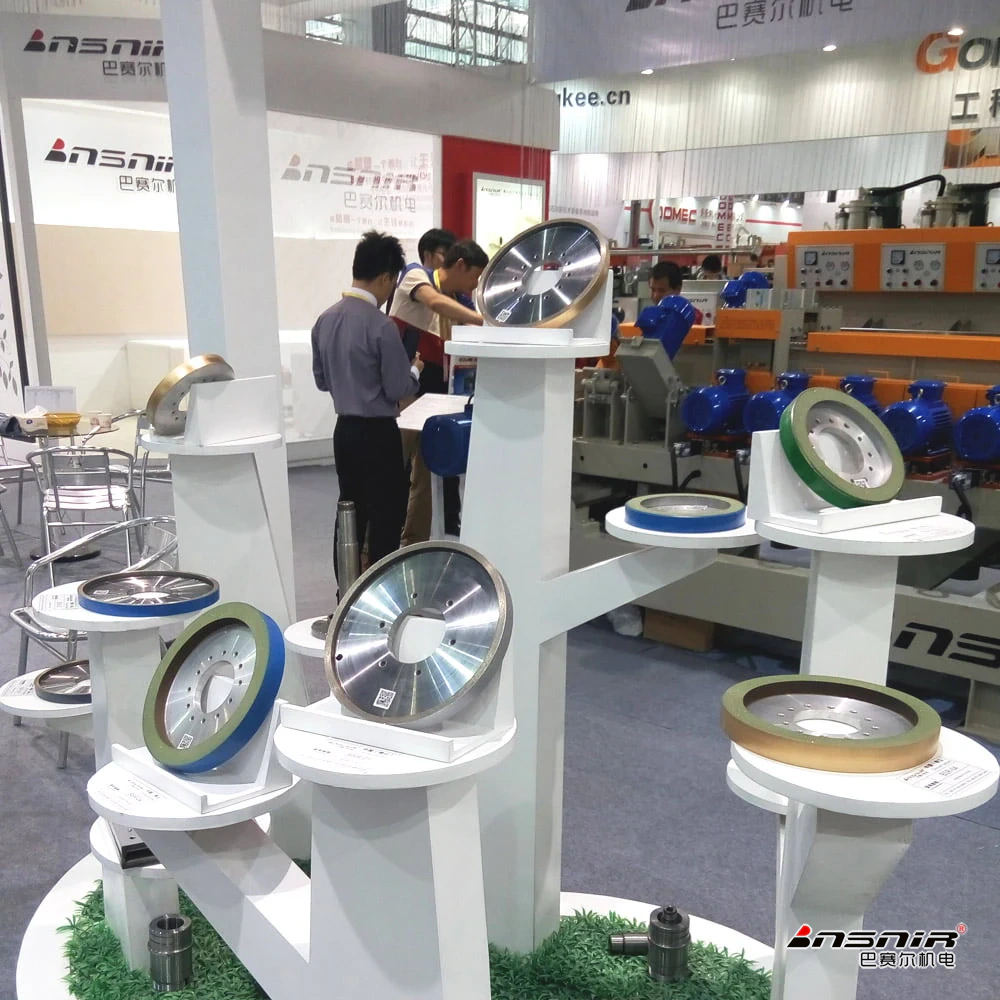
Match the tool family to the line station
| Familia de herramientas | Station responsibility | Identification data |
|---|---|---|
| Disc diamond squaring wheels | Rectify side edges and distribute removal from rougher to finer positions on a continuous squaring line | Dry/wet condition, bond, rim, grit, outside diameter, bore, pitch-circle/holes, ring dimensions, rotation and position |
| Muelas de biselado | Produce the selected small chamfer or bevel after the main edge-sizing stage | Silicon carbide or diamond route, chamfer position, profile, wheel dimensions, bore/mounting, angle and required finish |
| Peripheral squaring wheels | Work through the wheel periphery on a compatible spindle/head arrangement | Machine/head identity, spindle, complete profile, diameter/width, working layer, rotation, coolant and clearance; supply is project-confirmed |
Disc squaring wheels form a sequence, not a single specification
On a línea de escuadrado y biselado, earlier wheel positions commonly carry more removal and later positions refine the edge left by the preceding tools. Metal- and resin-bond routes, continuous and segmented/toothed rings, and dry or wet operation must be assigned to real positions. A grit number without the line map is not enough.

Confirm removal allowance per side, line speed, tile body, dry/wet condition, wheel count and current sequence. When replacing an existing wheel, photograph both faces and the installed position, then measure the old wheel rather than relying only on the printed label.
Chamfering wheel selection begins with the finished bevel
A production-line small chamfer protects and finishes the tile edge after squaring. A decorative 45-degree joint is a different process and may use different machinery and tools. State the finished chamfer width, angle, top/bottom position, visible surface, chipping limit and whether the edge is wet or dry.
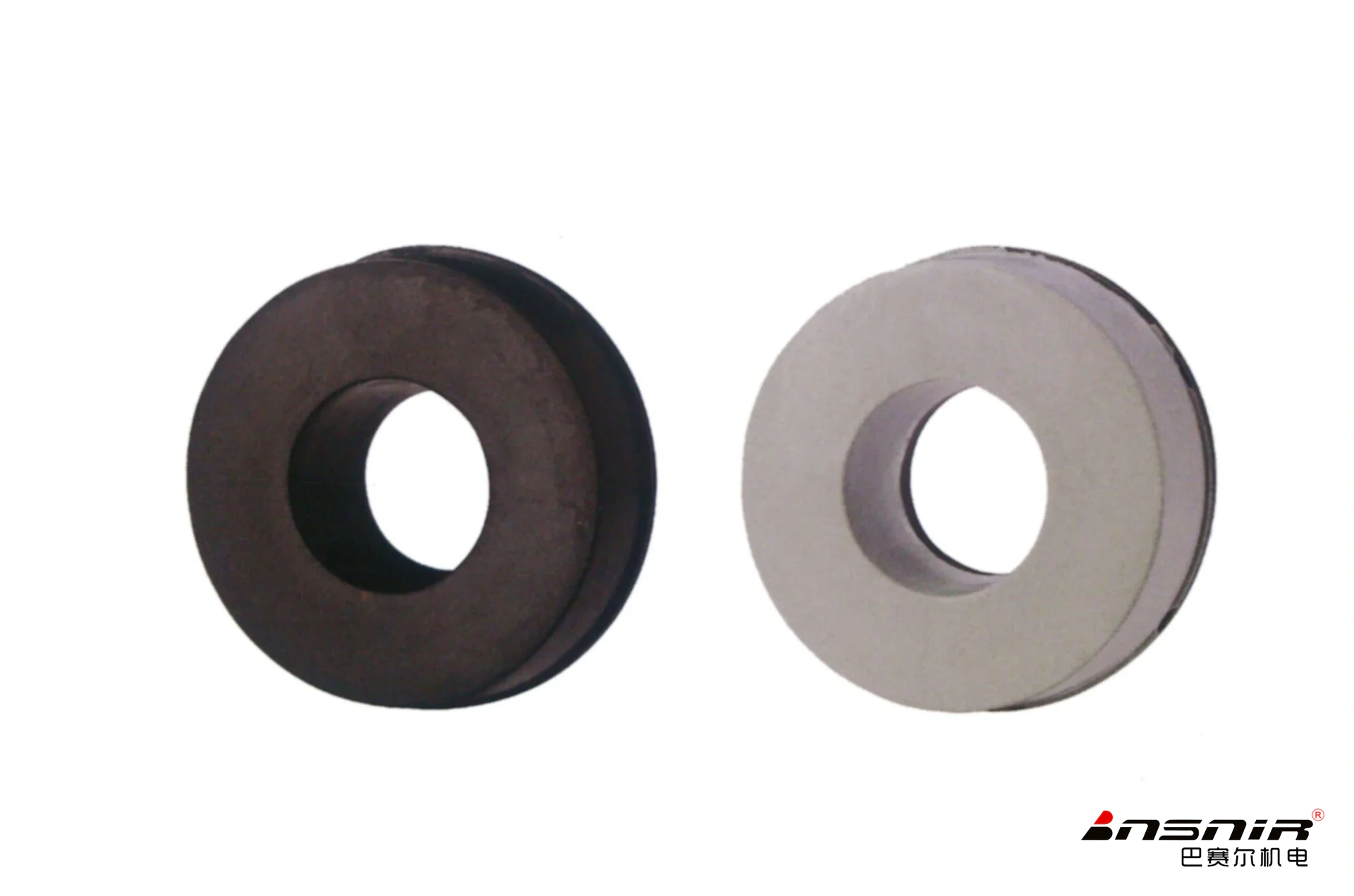
Silicon-carbide and diamond chamfering families can serve different machine positions and finish requirements. Neither material name alone establishes life, feed rate or edge quality. Selection should follow the tile, tool contact, machine speed, cooling and an agreed trial method.
Peripheral wheels require a separate machine-interface check
A peripheral wheel contacts the tile through its outside working surface, so the spindle, width, profile, axial location and clearance differ from a disc wheel that presents a face/ring to the edge. Peripheral-wheel supply remains project-configured: send the machine manual or head drawing, installed photos and a dimensioned sample before treating it as an available replacement.
Information needed to match an edge tool
- Machine manufacturer, model, head type, station number, left/right side and rotation
- Tile body, glaze/surface, thickness, incoming edge and removal per side
- Dry or wet working condition, coolant/water condition, line speed and current wheel sequence
- Outside diameter, center bore, pitch-circle diameter, hole count/diameter and face/thickness/offset measurements
- Clear photos of front, back, side, label and installed position; current tool code if available
- Target edge or chamfer drawing, acceptance checks, trial quantity and observed failure mode
Request a squaring or chamfering tool match
Tool type, dimensions, bond, grit sequence, expected result and replacement interval depend on the material, machine, station, process conditions, selected configuration and trial confirmation.