
Select a diamond Fickert by the polishing head, holder length and its position in the grinding sequence—not by block colour or a generic grit chart. BASAIR can configure metal- and resin-bond Fickert abrasives for rough and intermediate grinding, but L90, L140 and L170 are not automatically interchangeable. The current tool, clamp, tile surface, removal task and neighbouring tools have to be identified before an exact item is quoted.
Send your Fickert and polishing-head details
Start with the holder, not the abrasive colour
L90, L140 and L170 describe nominal length families. They are useful identifiers, not a promise that every block with the same nominal length will lock into every head. Confirm the base length, back-seat profile, clamping method and clearance against the current tool. If the tool is being changed rather than replaced like for like, include photographs of the empty holder and a correctly installed block.
Utiliza el cabezales de la línea de pulido guide when the head or clamp also needs identification. For the complete machine and head arrangement, see the máquina pulidora de baldosas cerámicas.
| Punto de selección | What it controls | Evidence BASAIR needs |
|---|---|---|
| L90, L140 or L170 | The nominal length family that must fit the holder | Current-tool measurement, side and back-seat photographs, and a photograph of the clamp |
| Metal or resin bond | The intended removal and refinement role within the sequence | Tile surface, removal task, current bond and grit marking, and the tools immediately before and after |
| Working-face and tooth pattern | Contact geometry and open paths across the working face | Straight-on working-face photograph, tooth dimensions, current scratch pattern and water condition |
| Grit and formula | Cutting response and the surface handed to the next tool | Exact current item marking, target sample, line speed, water pressure and trial feedback |
Metal bond and resin bond have different jobs in the sequence
A metal-bond Fickert is normally evaluated for an earlier rough or intermediate position where the line needs defined material removal. A resin-bond Fickert can be evaluated for a later transition or intermediate position where marks from the previous stage need to be refined before the next tool. These are selection starting points, not fixed recipes. The exact bond, diamond formulation and grit must be tied to the confirmed product and tested against the actual tile and line conditions.
| Proceso de evaluación | Typical sequence question | No des nada por sentado |
|---|---|---|
| Metal-bond Fickert | What material or surface variation must the rough or intermediate position remove before the next tool? | One formula, grit or tooth pattern will suit every tile body, glaze or line speed |
| Resin-bond Fickert | What marks must be reduced, and what surface must be handed to the following tool? | The same grit number behaves identically across different bonds or formulas |
If the required operation is elastic finishing on a glazed surface rather than rigid rough or intermediate grinding, move to elastic Lappato abrasives. This page does not cover elastic final polishing, magnesite abrasives for stone or Fickert abrasive brushes.
Choose L90, L140 or L170 by the actual head interface
| Length family | Use it only when | Minimum check |
|---|---|---|
| L90 | The head and clamp are confirmed for the nominal 90 mm family | Current block, holder pocket, locking direction and clearance |
| L140 | The head and clamp are confirmed for the nominal 140 mm family | Current block, holder pocket, locking direction and clearance |
| L170 | The head and clamp are confirmed for the nominal 170 mm family | Current block, holder pocket, locking direction and clearance |
Do not convert from one length family to another from the machine name alone. Two heads on similar lines may use different seats, retainers or clearances. When no readable tool marking remains, measurements and photographs take priority over a visual guess.
Identify the working face before changing the tooth pattern
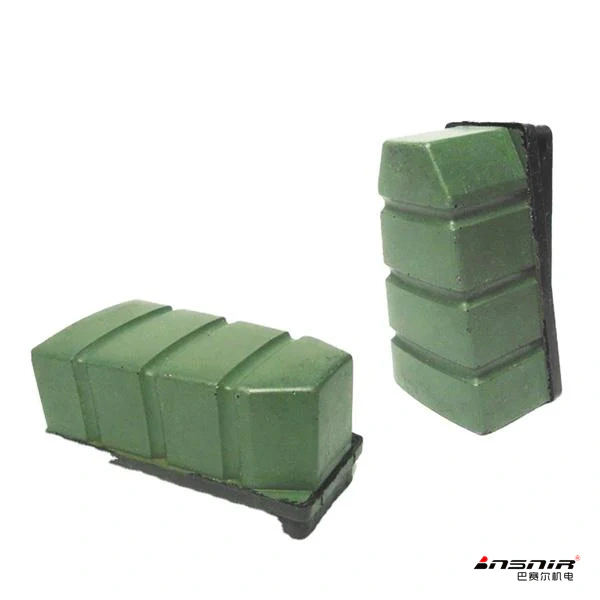
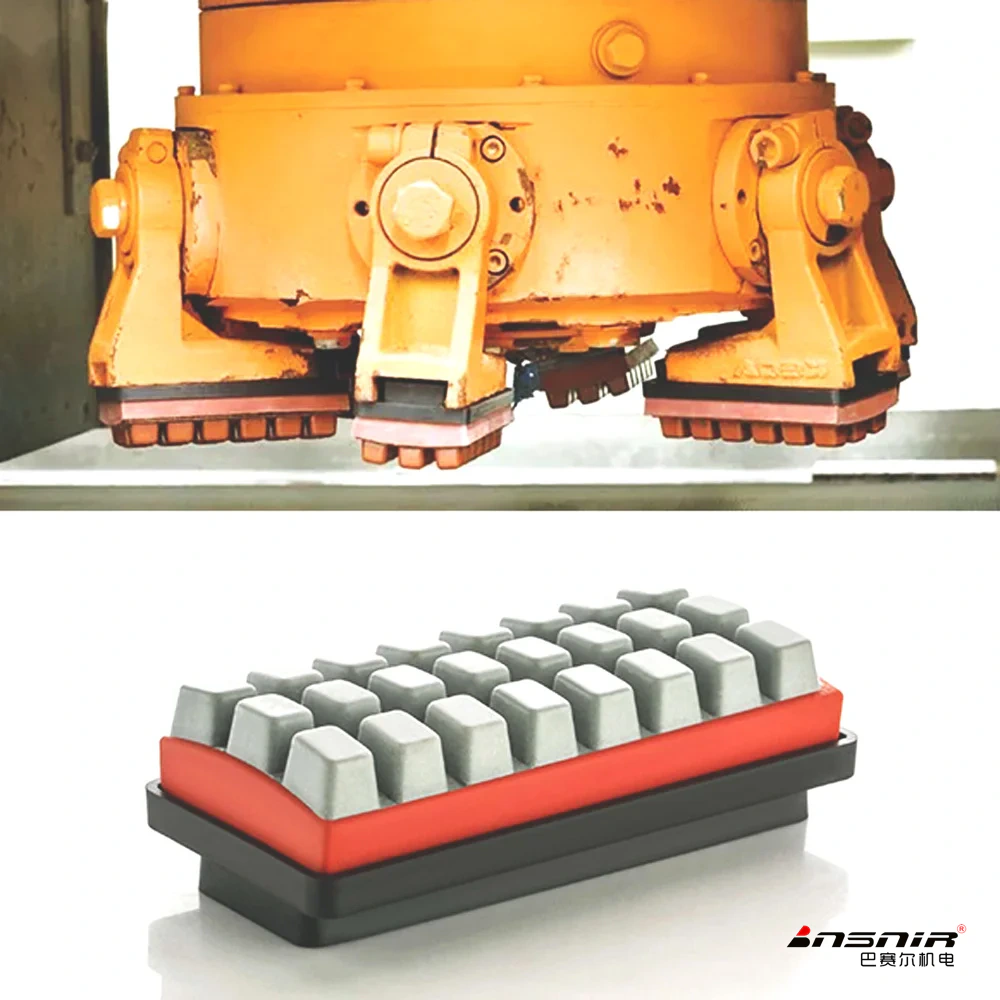
The BASAIR source range shows long-and-short teeth, bevelled teeth and square teeth. These names describe visible working-face geometry; they do not by themselves prove a bond, grit or performance level. Record the current pattern and the problem you want to correct, then compare a candidate under the same tile, water and line-speed conditions.
Place the Fickert between the correct upstream and downstream tools
The Fickert cannot be selected as an isolated consumable. First identify whether the line is still correcting flatness or removing stock, or whether it is already preparing the surface for later finishing. The herramientas de calibración y rectificado guide separates calibrating rollers, cylindrical or satellite wheels and Fickert rough/intermediate grinding. The polishing-machine page shows the wider line context, while the elastic Lappato page covers the later flexible finishing responsibility.
- Record the tool immediately before the Fickert position, including its type, bond, grit or marking and current condition.
- Record the tool immediately after the position and the surface it expects to receive.
- State the removal task: initial surface correction, reduction of marks from the prior stage or preparation for the next stage.
- Describe the current defect with close photographs: deep lines, uneven contact, remaining marks, loading or another visible issue.
- Provide a target tile or approved target-surface sample. A gloss number alone does not identify the scratch pattern or surface appearance.
Information needed for an exact quotation
- Machine manufacturer, model and a full photograph of the polishing section.
- Polishing-head model or marking, head count, holder count and clear photographs of the head, clamp and installed tool.
- Current-tool photographs from the working face, side and back seat; include a ruler in the length and base-interface views.
- Nominal length family—L90, L140 or L170—and the measured overall length, base width, height and locking details.
- Current bond, tooth pattern, grit and any product code that can still be read. Do not infer these from colour.
- Tile body and surface: ceramic or porcelain body, glazed or unglazed face, tile size and thickness.
- Required removal or correction task, current surface problem and the target sample or target-surface photographs.
- Complete tool sequence around this position, including the tools and grits before and after it.
- Water pressure at the head, available flow information, line speed and any known water-quality issue.
- Required quantity by length, bond, tooth pattern and grit, plus whether the request is for a controlled trial or a production batch.
After these inputs are reviewed, BASAIR can bind the quoted length, bond, tooth geometry, grit and formula to an exact product or controlled trial. The current source set does not support a fixed efficiency, service-life, energy-saving or universal-compatibility promise; final behaviour depends on the tile, machine, water, line speed, sequence and confirmed formulation.
Media note: the available installation photograph does not show a verified L90, L140 or L170 measurement. The approved source set also lacks an image explicitly identified as a resin-bond Fickert for this rough/intermediate responsibility and lacks a result photograph tied to an exact metal- or resin-bond Fickert configuration with recorded process conditions. These gaps are intentionally not filled with a similar-looking image. Please include the current tool measurements and a target sample with the enquiry.