
Correias e peças para esteiras transportadoras must be identified by function and measured interface. Endless timing belts, open-ended timing belts and tile transport belts can all appear as long flexible components, but their tooth profile, joint, tensioning, surface and installation responsibilities are different.
Distinguish transport duty from drive duty
An industrial-belt description is not enough to choose between a conveyor belt and a toothed drive belt. A smooth carrying face, teeth on the underside, reinforcement and end construction need to be identified from the actual component.
For a transport position, document the material contact face, wet slurry exposure, tracking guides, joint and support bed. For a drive position, measure the tooth pitch and form and show the mating pulley. These are different operating interfaces even when the belt widths look similar.
The additional generic belt entry does not establish polymer, reinforcement, pitch, joint or load rating. Send readable markings and installed photographs together with measurements; BASAIR can then review the correct replacement family without assigning an unverified universal fit.
This page helps maintenance and purchasing teams collect the evidence needed for a replacement. BASAIR does not assume universal compatibility from a machine brand, belt color or a partial printed code.
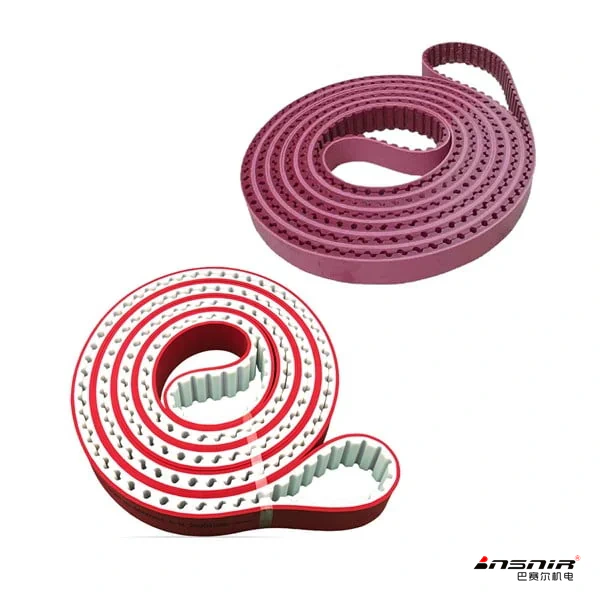
Identify the family before measuring a replacement
| Família | Visible/function clue | Minimum identification fields |
|---|---|---|
| Endless timing belt | Closed loop with teeth that engage pulleys; loop length is fixed | Pitch/profile, tooth count or pitch length, width, construction/material, backing/coating and machine position |
| Open-ended timing belt | Toothed strip with two ends clamped, joined or otherwise fixed in the mechanism | Pitch/profile, cut length, width, end-fixing detail, orientation, reinforcement and travel/stroke |
| Tile transport belt | Flat or profiled contact surface carries the tile rather than positively indexing through teeth | Endless/open construction, length, width, thickness, surface, joint, tracking features and wet/dry environment |
Timing-belt pitch and tooth form must match the pulley
Measure pitch between corresponding tooth points across several teeth and divide to reduce single-measurement error. Record tooth height and profile with a scale in the photograph. If the belt is endless, provide tooth count when possible; pitch length can then be checked against pitch and count. Do not substitute outside circumference for pitch length without stating how it was measured.
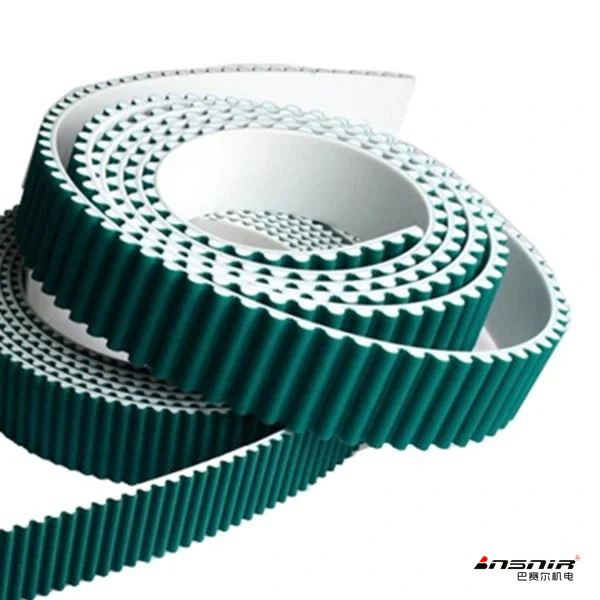
For an open belt, photograph both fixed ends and the route through pulleys, guides and tensioners. State the mechanism’s full stroke and the installed direction. Cutting a belt to an approximate old length without confirming the tensioning allowance can leave insufficient adjustment.
Transport belts are selected for contact and environment
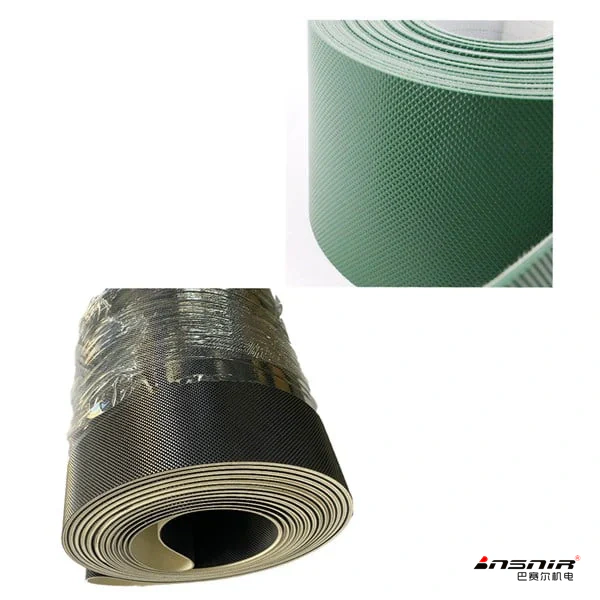
Record whether the belt carries the tile face, edge or support fixture; whether the line is wet, dry, dusty or chemically exposed; and whether the belt must resist marking or slipping. Photograph the splice/joint, belt underside, edges, guides, pulleys and tensioner. If cleats, holes, guides or tracking ribs are present, provide their measured positions.
Para sistemas de transporte e posicionamento, a belt can affect datum and product spacing as well as transport. Note paired-belt spacing, speed relationship and left/right identity.
For cross-checking the machine, tool and replacement-part evidence in one request, use the planned guia de compatibilidade de máquinas, ferramentas e peças de reposição.
Use a repeatable measurement and photo set
- Photograph the complete machine area and mark the belt’s location and travel direction.
- Photograph the full belt, label/code, tooth or contact surface, back, edges and joint or end fixing.
- Measure width and thickness at undamaged areas.
- For timing belts, record pitch/profile and tooth count or installed length.
- For transport belts, record total length/circumference and joint, surface and tracking features.
- State whether dimensions came from a new spare, worn belt, drawing or machine measurement.
Information needed for a belt or conveyor-part inquiry
- Machine manufacturer/model, serial or line identity and exact belt location
- Belt family, current printed code and quantity
- All measured dimensions with units and measurement method
- Tooth profile/pitch/count or transport surface/joint/tracking details as applicable
- Wet/dry environment, product contact, speed, tensioning and observed failure
- Clear photographs with scale plus a short video of the installed belt if the path is unclear
Send belt measurements for identification
Compatibility is confirmed from the actual machine location, dimensions, tooth or surface structure, installation and operating environment; machine brand or appearance alone is insufficient.