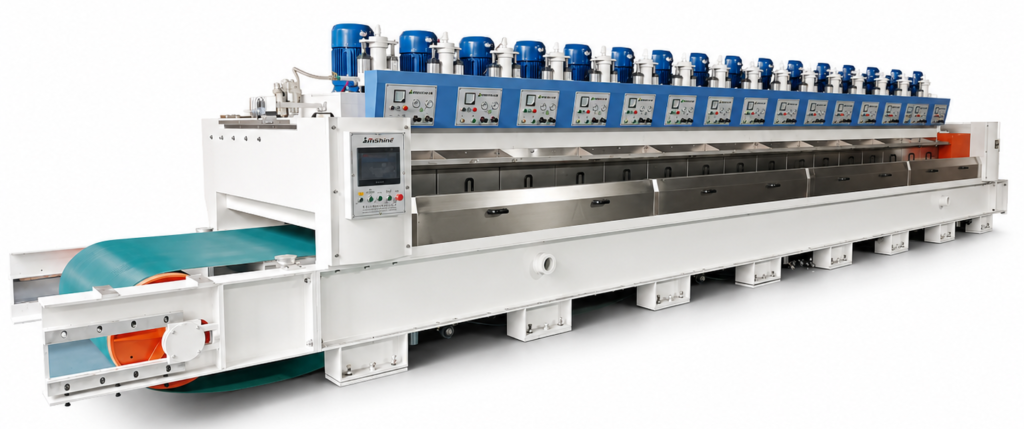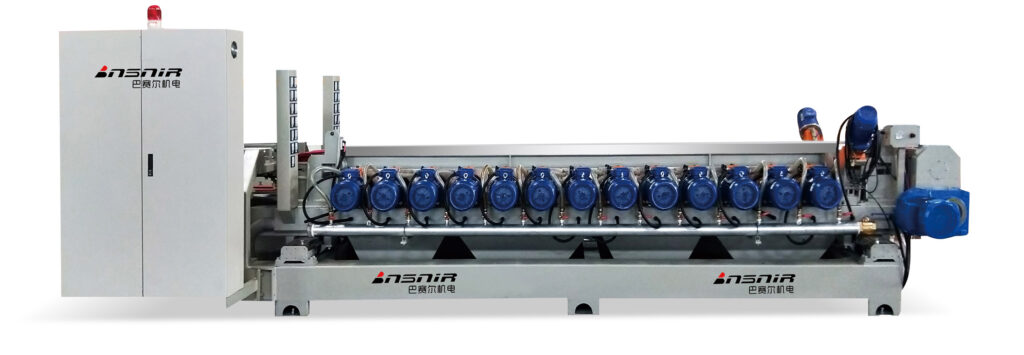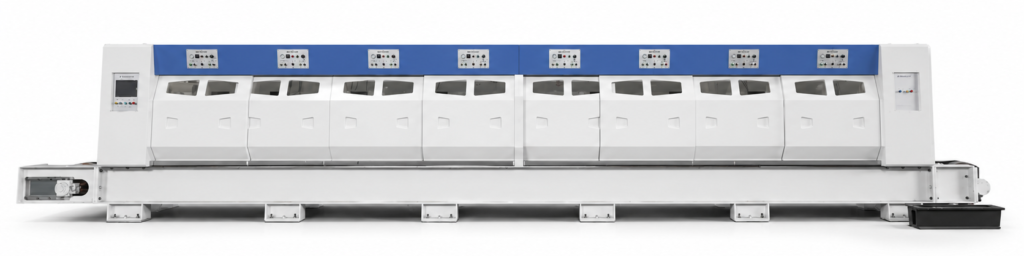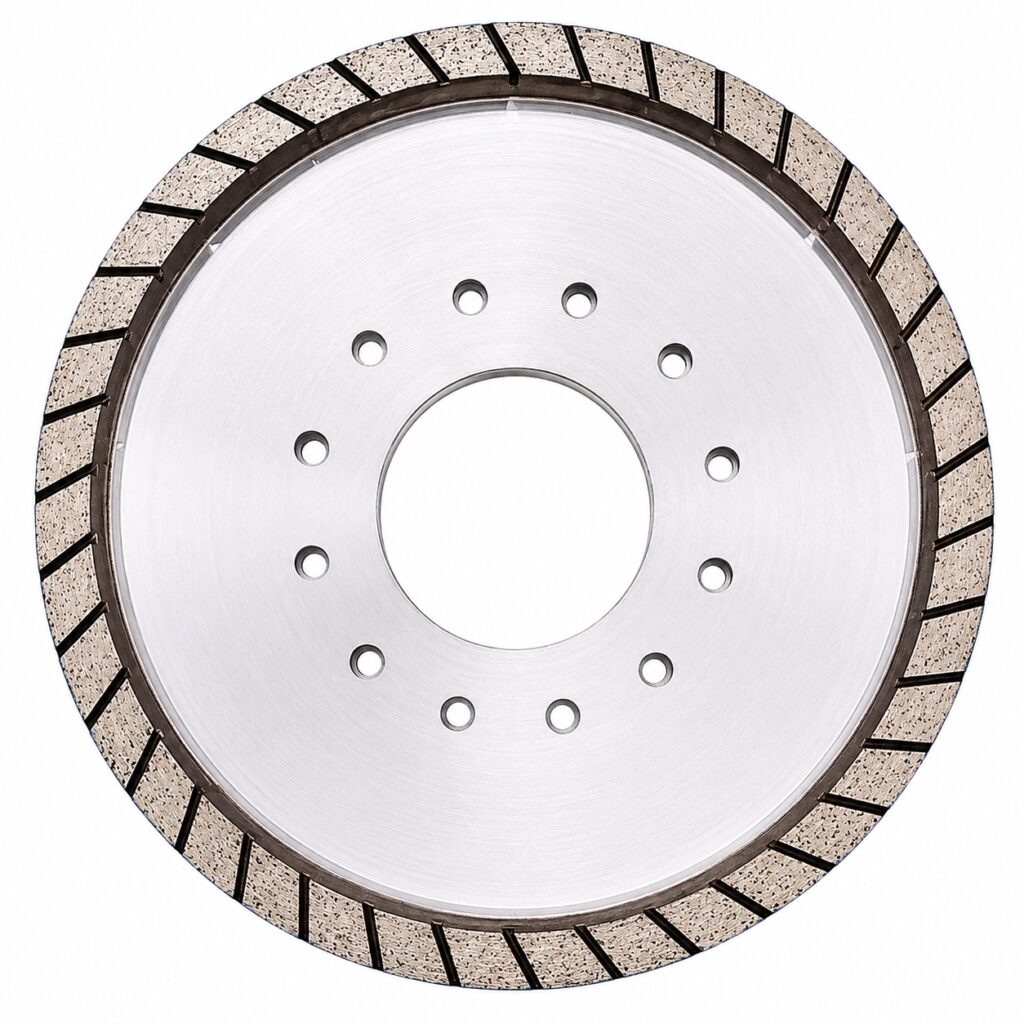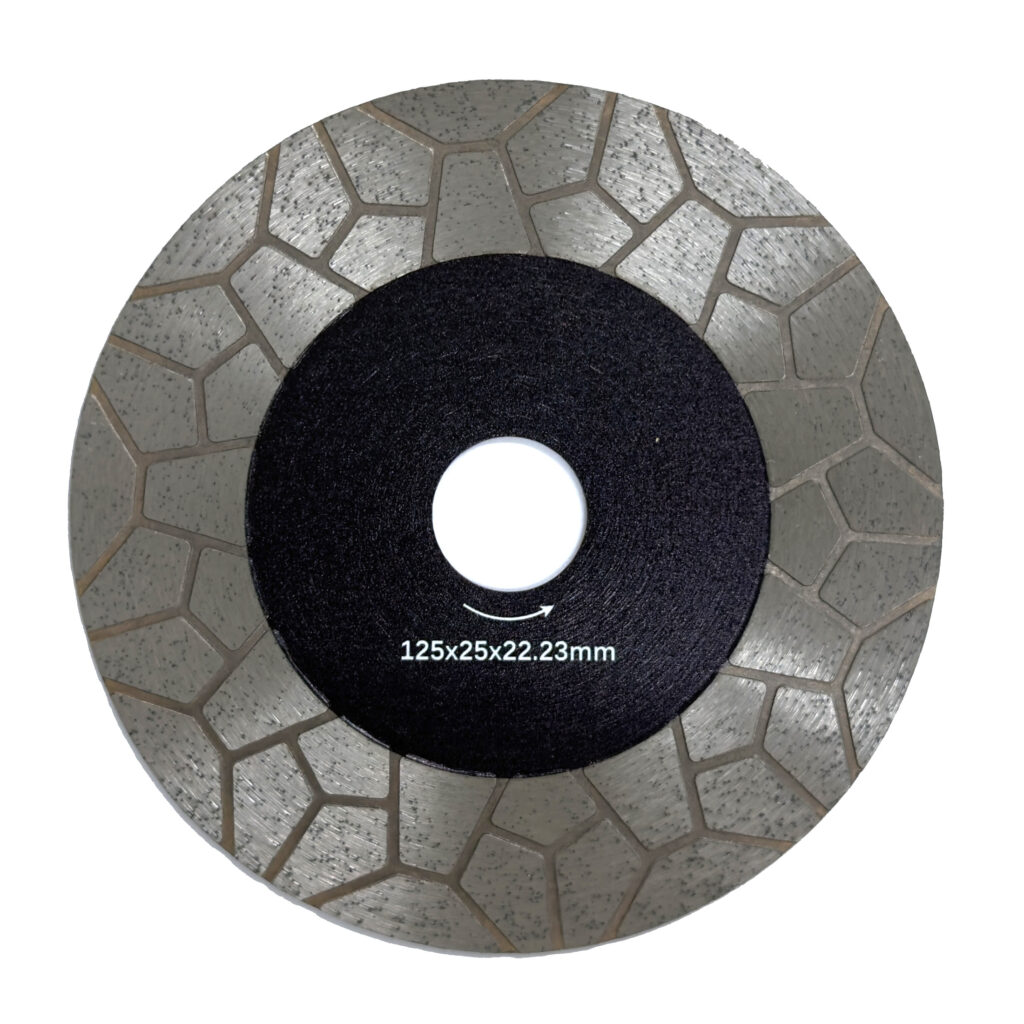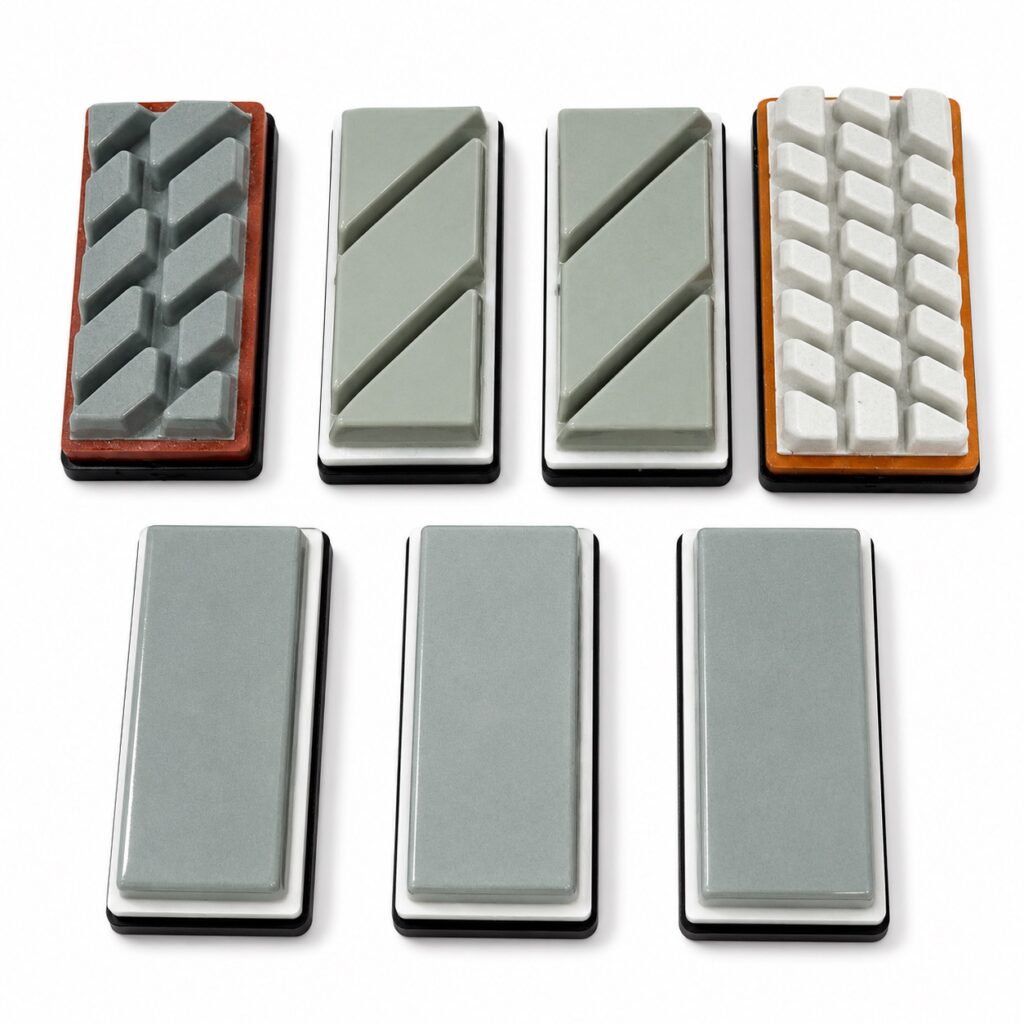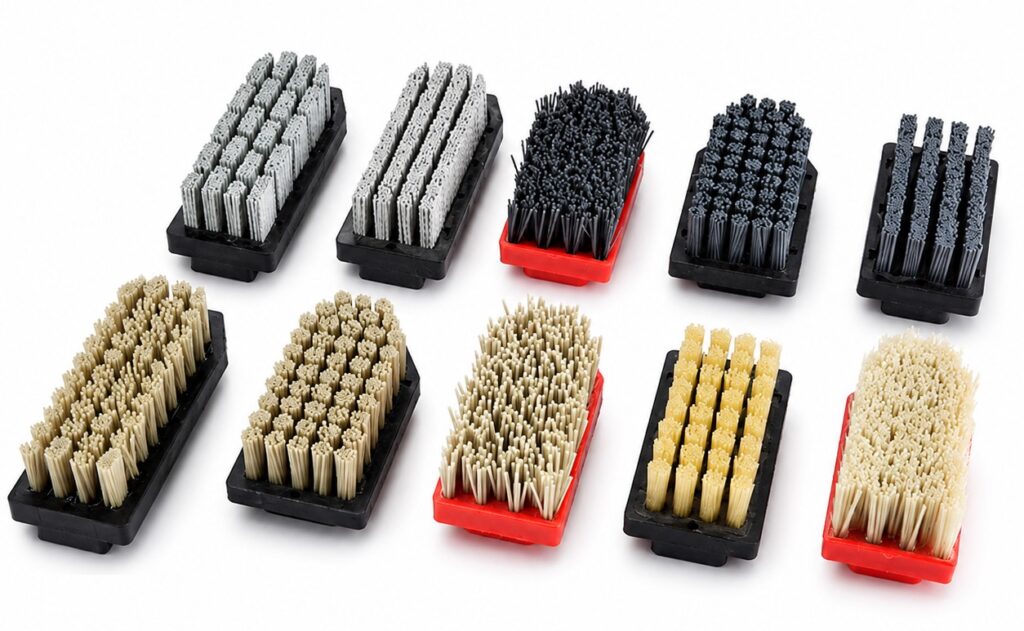
When a linha lapidada starts producing blocks with uneven wear, the immediate question is not which block or supplier is at fault, but what the wear pattern itself is telling you before it gets erased by rotation or replacement. A wear map read in isolation can point in several directions at once; the same pattern can originate from a head problem, a contact problem, or a process shift downstream. Getting a reliable diagnosis depends less on catching the wear and more on how completely you preserve and compare the evidence around it.
Preserve Wear Evidence by Block and Head Position
A wear pattern only carries diagnostic value while it stays linked to where and when it occurred. Once a block is rotated to a different head position or discarded, the physical evidence of how it wore in its original location is gone, and any conclusion drawn afterward has to rely on memory or assumption rather than a verifiable record. This is why the wear map needs to be captured, not just observed, before any block is moved or replaced.
The condition that changes the value of this evidence is timing relative to block handling. If the photograph and position record happen before rotation, the wear pattern can be tied to a specific head, a specific stage in the line, and a specific set of contact conditions at that location. If the record happens afterward, or if blocks get mixed between positions before anyone documents them, the same wear pattern becomes ambiguous — it could reflect the position it is found in, the position it came from, or some combination influenced by the rotation itself.
For a plant running multiple heads across a lappato line, this has a direct consequence for how any wear-related complaint gets investigated. A single unusual wear photograph without a position reference cannot tell you whether the issue is localized to one head or distributed across several. Investing in a simple, repeatable capture step — image plus head position, recorded at the same time — determines whether a later comparison is even possible. Where this step is skipped, subsequent diagnostic effort has to reconstruct conditions instead of comparing them directly, which weakens every conclusion built on top of it.
This preservation discipline also matters for anyone who later needs to correlate wear evidence with abrasive batch information or supplier review. A configuration or quotation review depends on the buyer being able to describe, with location and condition intact, what the wear pattern actually looked like in place — not a general impression of “uneven wear” after the block has already moved on.
| Evidence to preserve | O que registrar | Por que isso é importante |
|---|---|---|
| Block wear image | Photograph each block before rotation or disposal | Preserves the visible wear pattern for comparison |
| Machine location | Record the block’s head position with its image | Keeps the wear map tied to the machine location |
| Comparison context | Record the tile lot and settings used for the blocks being compared | Shows whether the wear patterns came from comparable conditions |
| Related surface observations | Record scratch, gloss and water observations with the wear record | Helps distinguish a local contact clue from a line-wide process change |
Classify Tapered, Edge-Heavy and Patchy Patterns Without Assigning Cause
Tapered, edge-heavy, and patchy wear are distinct visual patterns, and naming them precisely is a useful first step — but naming a pattern is not the same as diagnosing its source. Each of these three shapes can plausibly arise from more than one underlying condition, and the same underlying condition can, depending on where in the line it occurs, produce more than one of these shapes.
A tapered pattern describes wear that changes gradually across the face of the block, suggesting some form of uneven contact across the surface being processed. An edge-heavy pattern describes wear concentrated toward one side or boundary of the block, which points toward a localized contact condition rather than a uniform one. A patchy pattern describes wear that is irregular and non-continuous, which suggests inconsistency rather than a steady gradient. These descriptions are useful because they are observable and repeatable — two people looking at the same block should classify it the same way — but none of them, on its own, tells you whether the cause sits in the block’s seating, the head’s alignment, the material being processed, or the settings applied to that run.
The condition that determines how much weight to give a classification is whether it repeats across multiple blocks and multiple cycles in the same position. A single instance of any of these three patterns is an observation. A repeated instance, especially one that recurs after a block is replaced with a fresh one in the same position, shifts the pattern from a possible coincidence toward a signal tied to that specific location or condition rather than to the individual block.
Treating classification as a separate step from cause-assignment protects the diagnostic process from a premature conclusion. If a tapered pattern is immediately assumed to mean one specific thing, the checks that would otherwise reveal a different explanation may never get performed. Holding the classification open — describing what is seen without committing to why — keeps the subsequent checks meaningful rather than confirmatory.
Compare Blocks Run on the Same Tile Lot and Settings
A wear pattern is only informative relative to another wear pattern produced under comparable conditions. Comparing a block that processed one tile lot against a block that processed a different lot, or comparing blocks run under different machine settings, introduces variables that have nothing to do with the head, the holder, or the abrasive itself, and any difference in wear between them could be explained by those variables alone.
This is a simple rule in principle, but it requires discipline in practice, because production schedules do not usually organize themselves around diagnostic convenience. A tile lot changes, a setting gets adjusted for a different material, and by the time someone wants to compare wear across blocks, the blocks in question may have been exposed to a mix of conditions rather than one controlled condition. When that happens, the comparison does not fail outright, but its interpretive value drops substantially — a difference in pattern might reflect a difference in lot or settings rather than a difference in head, holder, or contact condition.
The practical consequence is that useful comparisons often need to be planned rather than assembled after the fact. If a diagnostic question is forming — for example, whether one head position is producing different wear than another — the blocks intended for that comparison need to be tracked through the same tile lot and the same settings from the outset, with the position record described earlier kept intact throughout. Retrofitting a comparison from blocks that happened to be pulled at different times, under different conditions, tends to produce an answer that looks conclusive but is not.
Where mixed conditions are unavoidable — because production does not pause for diagnostics — the buyer’s own conclusion should be held loosely until a cleaner comparison can be arranged. A single well-controlled comparison outweighs several loosely matched ones for this purpose.
Check Holder Seating, Contact and Head Condition
Once a wear pattern has been classified and confirmed through comparison, the next step is examining the physical conditions that could produce a non-uniform pattern in the first place: how the block sits in its holder, how it makes contact with the tile surface, and the condition of the head itself. These three checks address the mechanical side of the question before any assumption is made about the abrasive’s formulation or the process settings applied further down the line.
Seating refers to whether the block is held in the position and orientation intended for it, without play or misalignment introduced at the holder interface. If seating is inconsistent, the block can experience contact that is uneven for purely mechanical reasons unrelated to the abrasive material or the tile being processed. Contact refers to how the block actually meets the tile surface during operation — whether that contact is distributed as intended or concentrated in a way that would produce exactly the tapered or edge-heavy patterns described earlier. Head condition refers to the state of the head assembly itself, since wear or play at the head level can introduce the same kind of inconsistency independent of any single block’s seating.
The condition that connects these checks to the earlier classification is straightforward: a mechanical explanation should be ruled in or out before other explanations are pursued, because a seating or head issue can reproduce itself across every block placed in that position, regardless of the abrasive’s own characteristics. If these checks come back clean — seating consistent, contact even, head condition sound — the diagnostic question shifts away from the mechanical system and toward the process or material conditions instead. If they do not come back clean, correcting the mechanical issue and re-observing wear on a fresh block becomes the logical next step before drawing any conclusion about the abrasive itself.
Pair Wear Records with Scratch, Gloss and Water Observations
A wear pattern examined alone can suggest several explanations at once. Pairing it with scratch, gloss, and water observations from the same run narrows that range by showing whether the issue is confined to the contact point that produced the wear, or whether it shows up across the tile surface in a way that points to a broader process condition.
Scratch observations describe marks on the tile surface that may correspond spatially to the wear pattern on the block that produced them. Gloss observations describe how uniformly the surface reflects light after processing, which can reveal inconsistency that a wear pattern alone would not fully explain. Water observations describe how the surface interacts with water during or after processing, which can reflect conditions related to contact, flow, or surface finish that are independent of the abrasive’s wear state. None of these three observations proves, by itself, what caused the wear pattern — but together with the wear record, they help distinguish between two different kinds of problems.
Where a wear pattern is accompanied by surface effects that are similarly localized — scratches concentrated in the same region as the wear, for instance — the combined evidence points toward a local contact condition tied to that specific block, holder, or head position. Where a wear pattern exists but the surface effects are distributed more broadly across the tile, unrelated to the specific block’s position, the combined evidence points instead toward a condition affecting the line more generally, such as a shared process setting.
This pairing does not replace the mechanical checks described earlier; it runs alongside them. A clean mechanical check combined with a localized surface effect suggests the explanation lies elsewhere in the contact chain. A flagged mechanical check combined with a localized surface effect strengthens the case that the mechanical issue is the relevant one. The value of pairing these records lies in cross-referencing them rather than reading any single observation as conclusive on its own.
Set the Next Diagnostic Test Before Changing the Abrasive
The evidence gathered through wear preservation, classification, controlled comparison, mechanical checks, and paired surface observations exists to answer one practical question: what should be tested next, before any decision is made to change the abrasive itself. Changing the abrasive in response to a wear pattern that actually originates from a seating, contact, or head condition does not resolve the underlying issue, and it removes the opportunity to observe how that same condition would have affected a fresh block.
Where the mechanical checks turn up a seating, contact, or head issue, the logical next step is correcting that condition and re-running the comparison with a new block in the same position, under the same tile lot and settings, before drawing any conclusion about the abrasive. Where the mechanical checks come back clean but the paired surface observations point toward a broader, line-wide effect rather than a localized one, the next step shifts toward examining process settings or conditions shared across positions, rather than toward the specific block or holder.
This is also the point at which the earlier evidence — the position-tagged wear images, the same-lot comparisons, the mechanical check results, and the paired surface observations — functions as a single record rather than separate observations. Reviewing that combined record before acting keeps the diagnostic sequence in order: pattern observed, pattern classified, comparison controlled, mechanical conditions checked, surface effects cross-referenced, and only then a decision made about whether the abrasive itself needs to change or whether some other part of the system does.
For a plant working with a supplier on seleção de abrasivos or line configuration, this sequencing also determines what information is worth bringing to that conversation. A supplier reviewing a wear complaint can respond more precisely to a record that shows position, comparison conditions, mechanical check results, and paired surface observations than to a single wear photograph offered without that context. Where the evidence still leaves the mechanical and process explanations open, that gap — not a guess about the abrasive — is what the next test should be designed to close.
| Evidence state | Next diagnostic step | Limite de decisão |
|---|---|---|
| Wear is tapered, edge-heavy or patchy | Check holder seating, block contact and head condition | Treat the pattern as a diagnostic clue, not proof of one cause |
| Blocks ran on the same tile lot and settings | Compare wear across blocks and head positions | Comparable conditions make pattern differences easier to interpret |
| Compared blocks combine different tile lots or settings | Re-establish the comparison with blocks from the same tile lot and settings | Mixed conditions make the pattern hard to interpret |
| Wear records include scratch, gloss and water observations | Use the combined record to choose the next local-contact or line-wide test | The combined record guides test selection; it does not by itself prove cause |
Perguntas frequentes
P: Is an uneven lappato abrasive wear pattern enough to identify the root cause?
R: No. Treat the pattern as a diagnostic clue, preserve its head position, compare blocks run on the same tile lot and settings, and check holder seating, contact, and head condition before assigning a cause.
P: Should the abrasive be changed as soon as tapered, edge-heavy, or patchy wear appears?
R: First preserve the evidence and complete the relevant contact-system checks. Photograph each block before rotation or disposal, record its head position, and use the combined wear and process record to choose the next test before changing the abrasive.
P: How should blocks from different tile lots or settings be handled in a wear comparison?
R: Keep those records separate rather than treating them as an equivalent comparison. Establish a new comparison among blocks run on the same tile lot and settings before interpreting differences in wear.
P: How can a team choose between a local-contact check and a line-wide process check?
R: Review the mapped wear record together with scratch, gloss, and water observations. Use that combined evidence to select which direction to test next, while keeping the result open until the chosen check confirms it.
P: What should be included in a technical handoff for the next diagnostic review?
R: Provide block photographs linked to head positions, the associated tile lot and settings, and the recorded scratch, gloss, and water observations. Also state which holder, contact, or head checks are complete and which specific uncertainty the next test must resolve.