A squaring trial produces a real result for the tiles that went through the machine, but a purchase decision usually covers a wider tile range than the trial batch ever touched. The question a buyer has to answer before signing off is not whether the trial worked, but exactly which part of the production range that result is now allowed to speak for, and what has to happen before the rest of the range can be included in the same conclusion.
Start With the Claim the Trial Must Support
Before comparing any trial data to a full product range, the buyer needs to fix what the trial is being asked to prove. A trial can support a narrow, specific claim about the tiles, machine settings, and conditions actually run during the test. It cannot, on its own, support a broader claim that the same result holds across every tile the factory produces or intends to produce. These are different statements, and treating them as interchangeable is where a trial record gets misapplied later in the purchase process.
Guidance on technical specifications from the UK Cabinet Office frames this distinction in procurement terms: a requirement should state the characteristics that matter, along with the evidence used to assess whether those characteristics are met, rather than letting an observed result stand in for an open-ended guarantee. Applied to a squaring trial, this means the buyer should write down what the trial is meant to decide before reviewing what it showed. Is the goal to confirm that this equipment and tool combination can be evaluated further for the factory’s range, or is the goal to accept the equipment for full-line deployment right now? Those are different decisions requiring different depths of evidence, and conflating them lets a favorable narrow result get stretched into support it was never built to carry.
Comissão Eletrotécnica Internacional 62381, written for factory and site acceptance in process automation, reinforces a related point even though its subject matter is different: test scope, activities, and responsibilities are matters for agreement between buyer and vendor, adapted to the specific project rather than assumed from a generic template. A squaring trial is not an automation acceptance test, but the underlying logic transfers — the scope of what a test is meant to verify, and who is responsible for deciding whether it is sufficient, needs to be settled as a project-specific matter rather than left implicit.
Where the acceptance language, the decision owner, and the evidence strength required for this project have not yet been agreed, any conclusion drawn from trial results remains provisional. The buyer’s own team needs to determine who signs off on what the trial is deemed to prove, because that decision shapes how strictly the rest of the range mapping needs to be documented before a purchase moves forward.
Map the Full Tile Range to Decision-Relevant Variables
A trial result only means something once it is placed against the full range of tiles the factory actually runs or plans to run. Building that range map before looking at trial coverage prevents a single tested condition from being mistaken for a stand-in for every condition the factory produces.
Ladrilhos cerâmicos – Parte 2: Ensaios de solidez da cor à luz identifies dimensional and surface-quality characteristics — length, width, thickness, side straightness, rectangularity, surface flatness, and surface quality — as distinct properties of a ceramic tile. Each of these is a separate axis along which tiles in a factory’s range can vary, and each axis can independently affect how a squaring or chamfering process behaves. A tile that matches another in nominal size but differs in incoming flatness or rectangularity is not the same input to the process, even though a size specification sheet might suggest otherwise. Beyond the dimensional and surface-quality properties in that standard, the tile material, surface finish, processing method, operating speed, required output, and whether the route runs wet or dry all function as project-selection inputs that further divide the range into segments that may behave differently under the same nominal machine settings.
The reason this matters for a purchase decision is that a change in any one of these variables can change how a squaring wheel engages the edge, how consistently a chamfer forms, or how the line behaves at a given speed. A material change alters hardness and brittleness at the edge. A change in incoming rectangularity changes how much material the squaring pass needs to remove to bring the tile to size, which changes wheel load and contact conditions. A shift from dry to wet context changes lubrication, cooling, and debris behavior at the tool interface. None of these interactions can be assumed constant just because a supplier’s wheel or bond name stays the same across the range.
The practical task here is not analysis of the trial yet — it is inventory. The factory needs its own records of the actual ranges and combinations of these variables that occur in production, including how much incoming variation exists tile to tile, before any trial sample can be checked against that range. Which of these factors change the process outcome enough to matter for this project is not something a general standard settles; it requires the factory’s own production history and a supplier’s review of that specific combination.
| Range variable | What the factory should record | Claim boundary if variation is not represented |
|---|---|---|
| Tile material and product family | Each material or family included in the intended production scope | Keep untested materials outside the trial conclusion |
| Comprimento, largura e espessura | Nominal values plus the actual incoming range available to the project | Do not extend the result to untested dimensional ranges |
| Retilineidade lateral, retangularidade e planicidade da superfície | Current incoming condition and the agreed measurement approach | Treat different incoming geometry as an untested condition |
| Surface geometry and finish target | Relevant surface condition and required finished-edge outcome | Limit the conclusion to the tested surface and finish context |
| Process route and wet/dry context | The route and utility context used during the trial | Do not infer equivalence across a different process context |
| Speed and required output context | The tested operating condition and the buyer’s intended requirement | Report only the tested context; supplier confirmation is needed for the intended requirement |
Build Trial Coverage and Record the Gaps
Once the range map exists, the next task is comparing what the trial actually tested against that map, segment by segment. Each part of the range falls into one of a small number of coverage states, and the state determines what can honestly be said about it.
A segment is directly represented only where the trial ran tiles matching that segment’s material, dimensions, surface condition, process route, and operating settings, with those exact conditions recorded. A segment is adjacent but untested where it sits close to a tested condition — similar material, slightly different thickness, comparable surface finish — without having been run itself. A segment is outside the sample envelope where it differs enough from anything tested that no reasonable inference can be drawn. And a segment’s status is simply unknown wherever the factory did not record the incoming condition of the trial tiles precisely enough to compare them against the range map at all.
The temptation to treat a similar-looking tile as equivalent evidence is where most overreach happens. Visual or nominal similarity is not the same as matched process behavior. Two tiles of the same nominal size can carry different incoming rectangularity, different surface hardness, or different moisture content going into a wet process, and any of those differences can change how the squaring pass performs even though the trial report would describe both tiles the same way if the record only captured nominal dimensions. This is why preserving the exact machine settings, wheel specification, process route, and incoming-tile condition attached to each trial result matters as much as the result itself — without that record, a later reviewer cannot tell whether a new tile belongs in the directly-represented category or the unknown one.
Gaps identified this way are not failures of the trial; they are the basis for the next decision. A gap in an adjacent segment might be closed with an engineering assessment if the supplier can reason from known material and process behavior. A gap in a segment outside the sample envelope generally calls for a separate targeted trial rather than an assessment, because there is no tested condition close enough to reason from. Choosing between these two paths — narrow the claim, run another trial, or request an engineering review — depends on how far the untested segment sits from what was actually run, which is exactly what the coverage mapping is meant to reveal.
| Coverage status | Permitted interpretation | Next action |
|---|---|---|
| Directly represented | Report the observed result only for the recorded tile, line, wheel, and process conditions | Preserve the condition record and compare it with the buyer’s stated requirement |
| Adjacent but untested | Treat applicability as an open hypothesis, not as demonstrated performance | Ask the supplier whether engineering review is sufficient or a targeted trial is needed |
| Outside the sample envelope | Exclude the condition from the current trial conclusion | Add a separate sample or explicitly remove that range segment from the claim |
| Condition not recorded | Treat representativeness as unknown | Recover the missing record before using the result in a purchase decision |
Write a Bounded Trial Conclusion and Escalation Rule
The output of this process should be a written conclusion that states exactly what was tested, what was observed, which tile segment that observation represents, which segments are excluded, and what decision comes next. This is different from a trial report that simply lists results, because it forces the boundary of the claim into the same document as the claim itself.
The GOV.UK guidance on technical specifications supports this structure by tying requirements to evidence rather than treating an observation as open-ended proof; IEC 62381 supports it from the acceptance-testing side by limiting its checklists to plans that have been adapted to the specific process, plant, or equipment under review rather than applied as a generic template. Both point toward the same discipline: a conclusion is only as strong as the match between what was tested and what is being claimed.
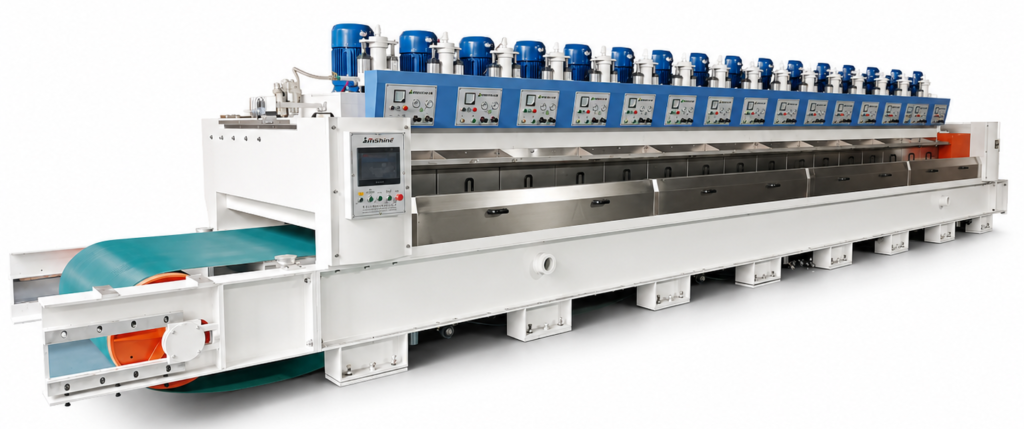
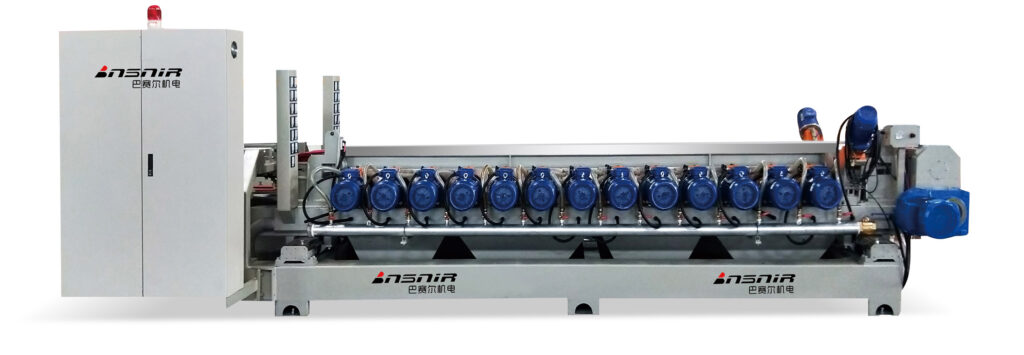
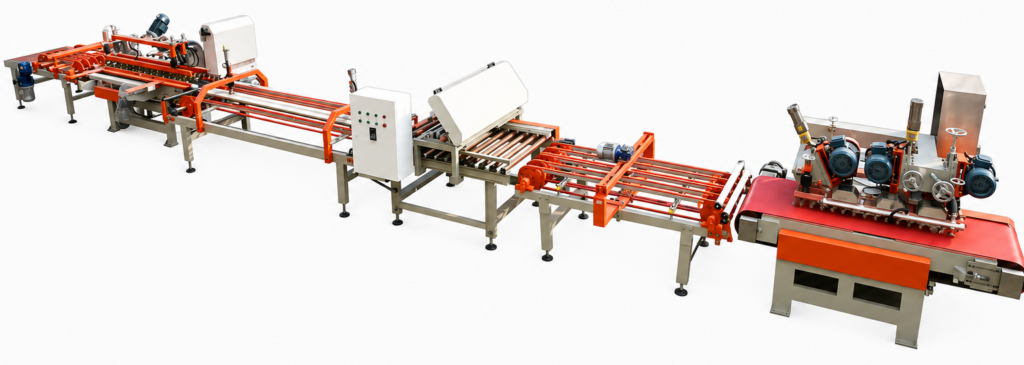
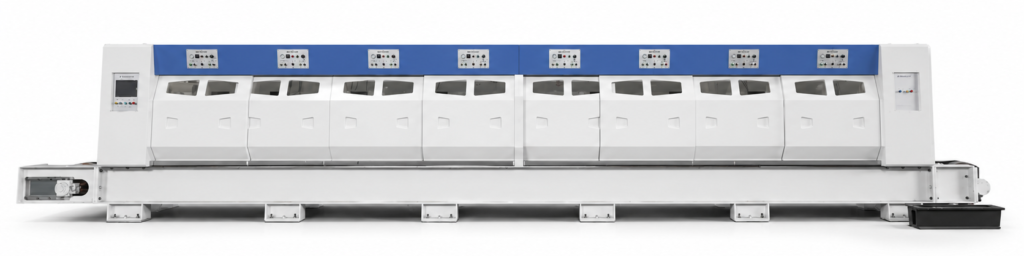
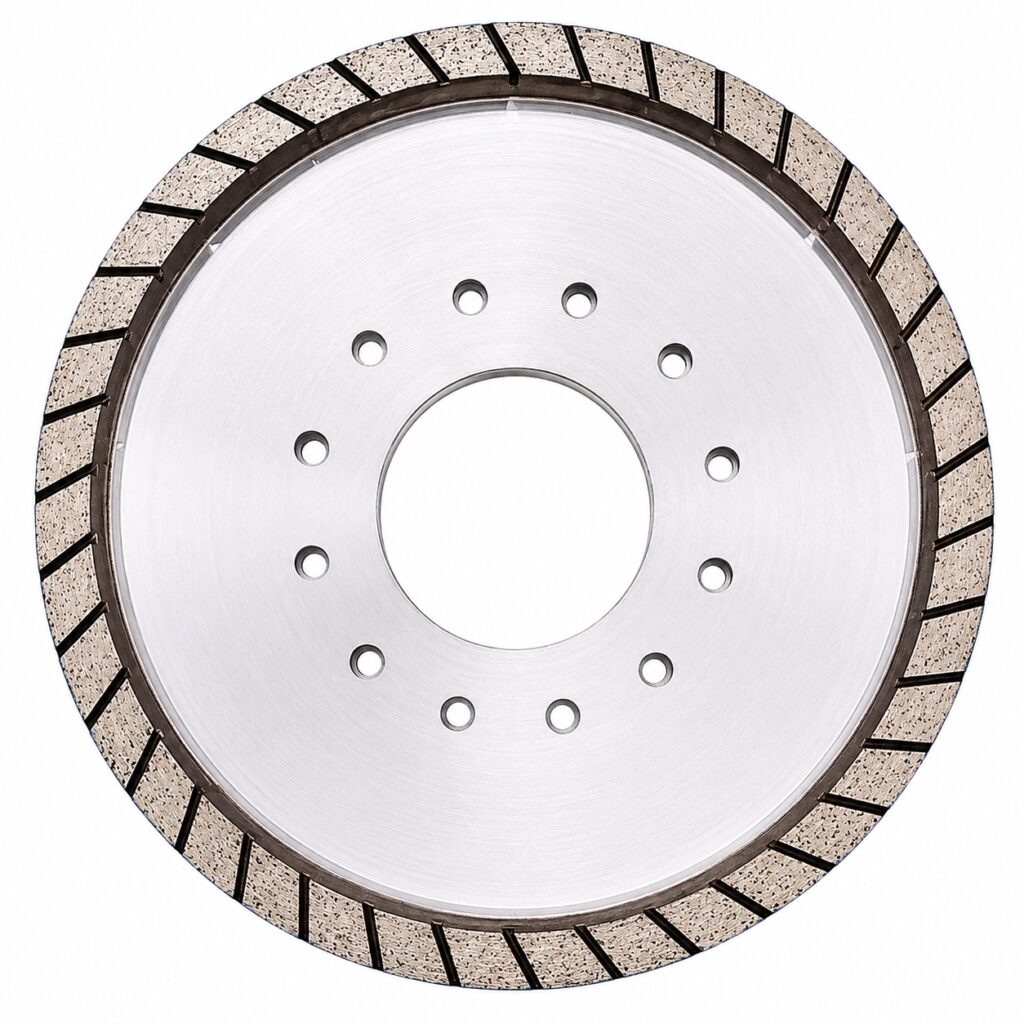
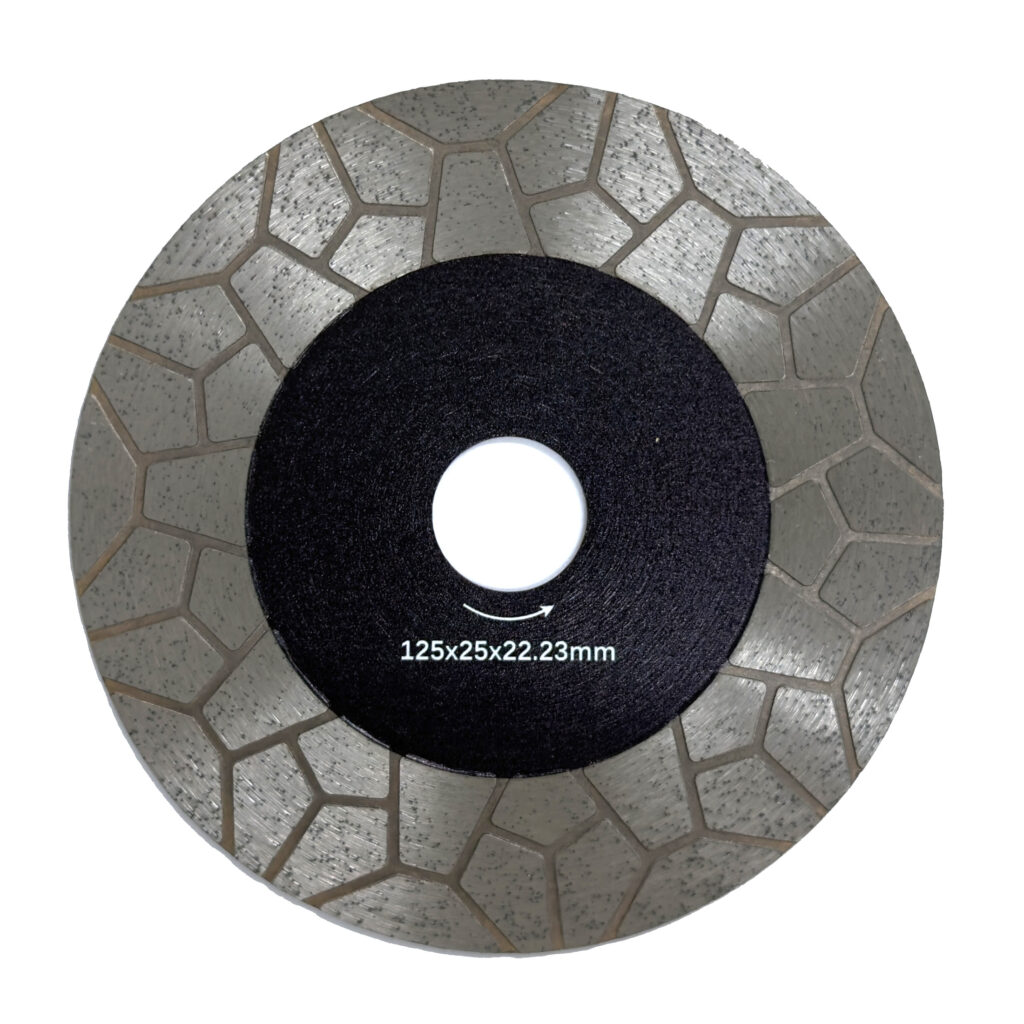
A bounded conclusion does not convert an observed trial result into a promised tolerance, a throughput figure, a tool-life estimate, or an acceptance of the full range. If the trial showed acceptable edge condition on the tested tiles at the tested settings, that is what the conclusion should say — not that the equipment or abrasive will deliver the same result across the factory’s entire product line. Where a supplier’s linha de máquinas de esquadria e chanfradura or discos de esmerilagem diamantados performed well on the tested material, that performance record belongs to the tested conditions until a further trial or written confirmation extends it.
The escalation rule follows directly from the coverage gaps identified earlier. Any tile segment that remains unrepresented, and that could plausibly change the buying decision if it performed differently, should not be left as an assumption. It should be escalated either to a separate trial run under recorded conditions or to a written confirmation from the supplier addressing that specific segment. Where the untested segment is close to what was already run, a written engineering confirmation may be sufficient; where it diverges meaningfully in material, geometry, or process route, a targeted trial is the more defensible path. The factory’s own project information — its range map, its coverage gaps, and its stated decision requirements — is what a supplier needs in hand to give that confirmation or configure a further trial with any precision, which is why this documentation belongs in the conversation before a quotation is finalized, not after equipment has already been selected.
Perguntas frequentes
P: Does a good result on our most common tile cover similar formats automatically?
R: It covers the recorded conditions directly represented by the trial. Similar-looking formats remain untested until their material, dimensions, thickness, incoming geometry, finish target, and process context are compared with that record. Use that comparison to ask whether engineering review or a targeted trial is needed.
P: How can we identify the most important gaps before ordering a squaring line?
R: Map your intended production range against the tested tile, machine, wheel, and process conditions. Distinguish directly represented segments, adjacent but untested segments, and conditions outside the sample envelope, then prioritise gaps that could change the buying decision.
P: What if the trial report omits the wheel identity or operating context?
R: Representativeness remains unknown for the missing condition. Recover the relevant record before relying on the result for a purchase decision; a finished tile observation alone cannot show which wheel, process route, or output context produced it.
P: How should we describe a successful trial in our purchase review?
R: State what was tested, the observed result, the represented tile segment, exclusions, and the next decision. Keep unrepresented conditions subject to a separate trial or written supplier confirmation rather than converting a limited observation into full-range acceptance or promised tolerance, output, or wheel life.