
Surface-finishing tools and consumables develop texture, appearance or a confirmed end treatment after the surface has been adequately prepared. Elastic lappato abrasives, Fickert brushes, polishing/buffing pads and wax or nano-treatment consumables belong to different stages and machine interfaces.
This selection page helps buyers place each family in the process. Final tool and consumable choice depends on the material, glaze or stone surface, machine head, desired finish, line condition and an approved trial method.
Place the tool in the correct finishing stage
| Família | Responsabilidade pelo processo | Do not confuse with |
|---|---|---|
| Abrasivos elásticos do tipo “lappato” | Compatible glazed-tile finishing through a selected tooth form and grit sequence | Heavy calibrating or rough grinding tools |
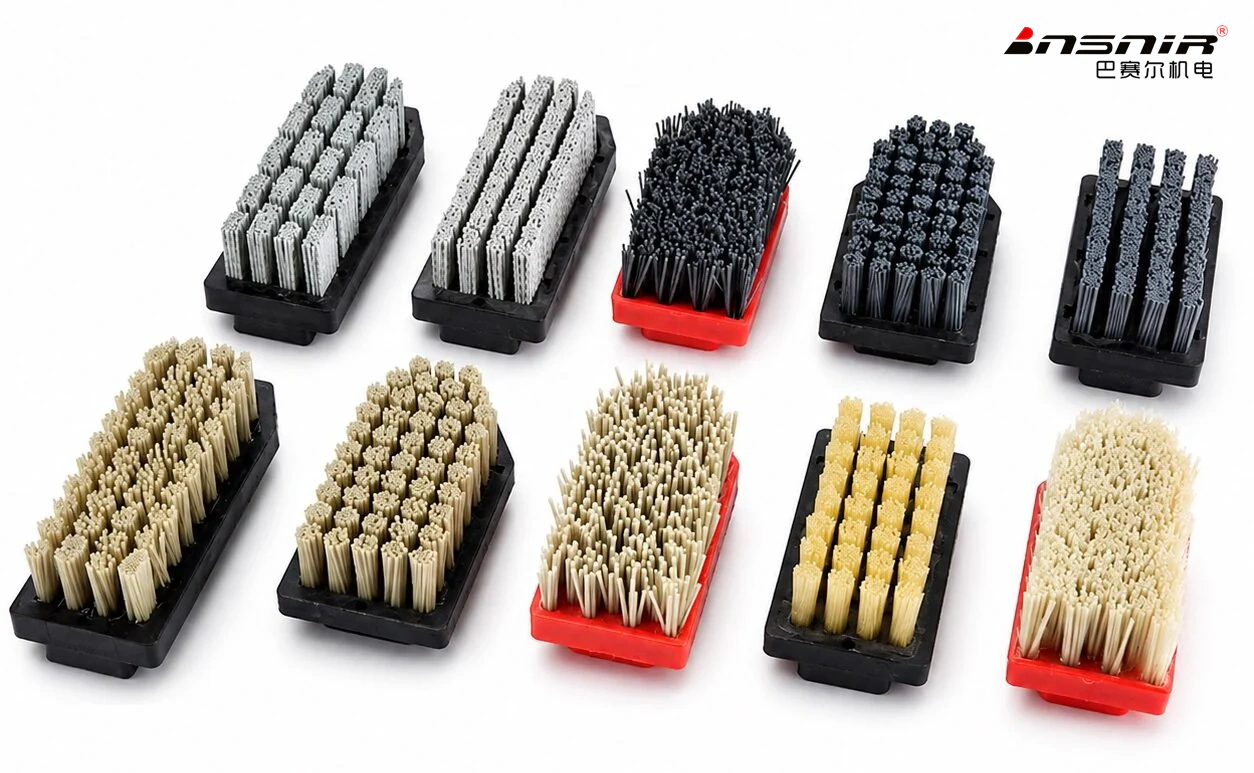
| Escovas abrasivas Fickert | Texture development or surface brushing using a compatible holder and filament/abrasive route | Solid silicon-carbide abrasive blocks |
| Round glaze polishing wheels | Project-confirmed finishing on a compatible round/satellite spindle | Long rectangular Fickert holders |
| Discos de polimento e lustramento | Defined polishing or buffing steps using diamond, PVC, fibre/nylon, wool or sponge families as appropriate | A universal pad selected only by diameter or color |
| Wax/nano-treatment consumables | A confirmed chemical end treatment applied by the correct machine method | Mechanical polishing or an unsupported performance claim |
Lappato abrasives and brushes create different surface effects
Elastic lappato blocks use a working pattern and compliant structure in a staged polishing process. Select length/base, tooth pattern, bond, grit and position from the machine and glazed surface. A tooth shape can change contact and debris clearance, but no shape guarantees a finish without the complete sequence and trial.

Brushes expose flexible abrasive filaments to the surface. Silicon-carbide, diamond, rubber or fibre-based families can be evaluated for different textures and materials, but the final result depends on filament specification, penetration/pressure, speed, water and preceding preparation. Submit an approved surface sample when words such as “antique,” “satin” or “leathered” are not measurable enough.
Magnesite stone abrasives follow a stone-machine and stone-surface route. They should not be assigned to glazed-tile finishing from a shared block shape or nominal grit.
Polishing and buffing pads are selected by function and backing
Diamond pads may perform material removal or polishing; fibre/nylon, PVC, wool and sponge pads can serve different buffing or application tasks. Confirm whether the pad cuts, refines, buffs or applies a treatment. Then match diameter, thickness, backing/attachment, spindle or pad holder, speed range, wet/dry condition and target result.
Pad appearance does not prove composition or grit. For replacement, provide the current label, front/back photographs and a measurement of the attachment interface together with the machine and station.
Chemical treatment is an end-stage system

Wax, nano-treatment or another protective material must be matched to the cleaned, dry and prepared surface, the application roller/pad, dosage, curing or buffing stage and downstream packaging. Request product identity, packaging, technical and safety information for the exact proposed material. Do not assume stain resistance, slip behavior, food contact or regulatory compliance from a generic treatment name.
Information needed for a surface-finishing trial
- Material/body, glaze or stone surface, incoming texture and photographs under controlled light
- Approved finish sample and the agreed measurement or visual-inspection method
- Machine manufacturer/model, head/holder or pad interface, station and working direction
- Current tools and sequence, sizes, bonds/grits if known, line speed, pressure and water condition
- For brushes: filament family, trim/working height, base and current surface result
- For pads: diameter, backing, attachment, speed and wet/dry use
- For consumables: exact material identity, application rate, process steps and required technical/safety documentation
- Trial quantity, defects to avoid and acceptance criteria across representative production
Request a surface-finishing tool review
Tool family, grit or material, sequence, finish, wear and chemical-treatment result depend on the surface, machine, process conditions, selected product and controlled trial.